Yo Ho, Yo Ho, A Pirate’s Life for Me.

Well, friends, I’m afraid y’all are on your own for Clash of the Titans (altho’, FYI, I hear the 3D is a scam, and was added after the film was in the can.) ‘Cause, as of tomorrow morning, I and a group of good friends — all in need of a grand vacation — will be disappearing off the grid, Mosquito Coast-style, for the next ten days or so.

To wit, we’re chartering a 40-ft boat in the Caribbean and sailing ’round the British Virgin Islands for a spell. (Being of the landlubber persuasion, Berk will be holding down the fort in my absence.) So, assuming I don’t go native and learn to live without all these newfangled wired contraptions, see y’all in a fortnight or so — and apologies, me hearties, if those next few logs in the journal be all pirate-y and such

Update: Well, I’m back, and, indeed, much fun was had — I’ll put up a separate post on the trip once I’ve gotten some pictures back. (My camera was a casualty of the seas, so my boatmates are providing the pics and scanning my salvaged memory card.)

Now We’ve Done It.

Don’t say we weren’t warned: In the wake of the historic particle smashing by the LHC earlier this week, strange and potentially life-threatening anomalies have been reported all around the world, and they’re increasing in both magnitude and frequency. “Dr. Isadora Chin, a spokeswoman for the SCP Foundation, said that several of the anomalies had been granted ‘Euclid’ and even ‘Keter’ status, the designation for life-threatening manifestations of unusual size or behavior…Several have already been relocated to an observation facility in Black Mesa, New Mexico, she said.

(Maybe Black Mesa? That was a joke, ha ha, fat chance.) Y’know, to be honest, I blame the time travelers from the future who should’ve come back and prevented these catastrophic rips in the fabric of space-time. Bang up job, you effing slackers.

It’s Shaky in Them Veins.

Not set in stone yet, but it sounds like director Paul Greengrass (Bournes II and III, United 93, Green Zone) may be talking with producer James Cameron about a 3-D remake of Fantastic Voyage. Not sure if the Greengrass shakicam would translate to 3-D very well, but it’s definitely an interesting pairing…and about a thousand times more intriguing than the long-rumored involvement of the hackmeisterly Roland Emmerich.

Pixar goes Old-School.

“‘I’ll quote Dick Cook right after James and the Giant Peach was finished. He said, ‘We don’t believe this is a viable medium anymore, and we’re not going to do it,'” Selick told Daily Variety. ‘A few years later they shut down 2D. It’s great that both of those things are back.'” Good news for fans of the stop-motion arts: The Nightmare Before Christmas and Coraline visionary Henry Selick signs up with Pixar: “Selick hopes to benefit from the Pixar brain trust and technology, but will continue to produce toons using his trademark stop-motion style.

Shine On, You Crazy 8-Bit Diamonds.


The lunatics are in my head…and they won’t stop playing NES. By way of my sis, enjoy the soothing 8-bit syncopations of Pink Floyd’s Dark Side of the Moon, as scored for Nintendo. And, hey, look they have The Wall also. Just got started on that one (my personal favorite Floyd, and an album I listened to pretty much every single day of 1988), but at least so far, “The Thin Ice” actually sounds kinda great.

A Double-Cross Summer.

In the wake of this weekend’s Clash of the Titans reboot (which, btw, is not doing so hot, review-wise), several new summer trailers with a common theme: In probably the most promising of the lot, CIA badass Angelina Jolie has to go rogue for God and Country in the second trailer for Phillip Noyce’s Salt, also with Chiwetel Ejiofor, Liev Schreiber, and Andre Braugher. (I was sorta expecting a No Way Out ending at first, but after this, ten bucks says Schreiber’s the mole.)

Elsewhere, Liam Neeson et al love it when a TV reboot comes together in trailer #2 for Joe Carnahan’s The A-Team, also with Jessica Biel, Patrick Wilson, Bradley Cooper, Sharlto Copley, Quinton “Rampage” Jackson, and Gerald McRaney. Eh, still on the fence about this one — I’ll probably end up seeing it despite myself.

And not to be confused with this squad or the equally double-crossed Losers, Sylvester Stallone leads a team of action stars and 80’s has-beens in search of an easy paycheck in the new trailer for The Expendables, with Jason Statham, Jet Li, Mickey Rourke, Steve Austin, Dolph Lundgren, Randy Couture, Terry Crews, and, briefly, Bruce Willis and Governor Schwarzenegger. Lordy, that looks all kinds of terrible.

Update: Speaking of looking terrible, a restricted trailer for Jorma Taccone’s MacGruber, i.e. Will Forte’s SNL take on MacGyver, is also making the rounds. Along for the ride are Val Kilmer, Ryan Phillippe, Powers Boothe, Maya Rudolph, and the venerable Kristen Wiig, who hopefully gets funnier material elsewhere in the film than she does here.

On the Down Low.


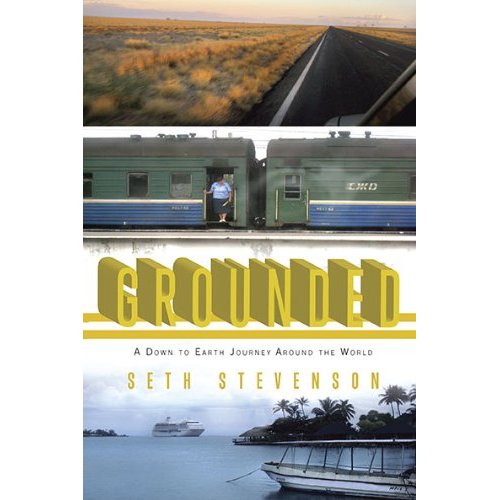
This post should really go out next week, as the book drops next Tuesday, April 6th. But I won’t be around next week (more on that soon), and if I post it tomorrow, y’all might think I’m joking. In any case, Grounded, a tale of travel without planes and the first book by Slate writer (and good friend) Seth Stevenson, will soon be available in a store near you, and I’d suggest picking up a copy. Seth’s a fun, witty guy, and he’s grounded in all the best senses of the term. (And if you like the general tone here at GitM, my guess is you’ll probably cotton to his voice too.) Buy it here or here or even here.

Look Upon My Works, Ye Mighty, and Despair.


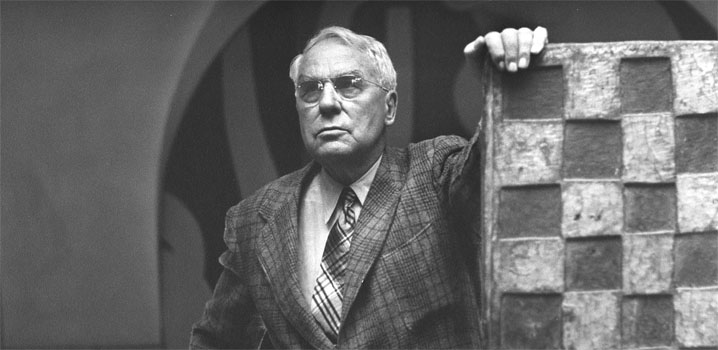
On the surface, an artist tries to frame his ideals in an image, to challenge his audience and make his vision immortal. But the parasites say ‘NO! Your art must serve the cause! Your ideals endanger the people!’ Lacking its own ingenuity, the Parasite fears the visionary. What it cannot plagarize, it seeks to censor; what it cannot regulate, it seeks to ban. Rapture was founded on an idea, and here they are held inviolate.“Hmm…maybe they should’ve moved the Barnes to Rapture, then. Gamers might recognize the rantings above as those of the Ayn Randish industrial magnate Andrew Ryan, whose Journey to the Surface amusement ride is one of the cleverer setpieces in the recently-released Bioshock 2. But they also reflect the basic conceit within Don Argott’s Art of the Steal, a rather aggravating documentary about the recent moving of the Barnes Collection from Lower Merion, PA into downtown Philadelphia.

Art of the Steal starts off as an intriguing albeit confused retelling of this political story: Intriguing in that there’re a lot of interlocking and complicated motivations at work, and confused in that the documentary assumes certain first principles — and, later, malign intent — without backing them up. And while I was willing to forgive Art of the Steal its imbalance for awhile just because it was so clearly compelled by a sense of injustice done, the documentary gradually becomes so grossly one-sided in its telling that it skips right over myopic and naive and ends up feeling downright corrupt.

The story of the Barnes begins with the rise of our Andrew Ryan figure, Albert C. Barnes, a forward-thinking, working-class Philadelphian who, by dint of extraordinary intelligence and a hole in the pharmaceutical market, was a millionaire by the time he was 35. Considered a curmudgeon and misanthrope even by his friends, Barnes also had an undeniably great eye for art, and he started buying up masterpieces of the Post-Impressionist and early Modern periods — Van Gogh, Cezanne, Picasso, Matisse — well before any other museums caught on to the scene. And when his attempts to show off his impressive collection in the town of his birth are ridiculed by the stuffy, conventional Philadelphia swells, Barnes angrily vows that he will never show off his private collection to these philistines, ever again.

Barnes is nothing if not a man of his word. He builds his own palatial gallery-school in Lower Merion, a suburb of Philly 4.5 miles outside the city center, and decides to restrict access to his collection to art students, working-class folks, and anyone else he deems worthy. The good news is Mr. Barnes’ sense of worthy is actually pretty keen: Barnes is a New Deal man well ahead of his time, particularly on the race relations front, and he greatly enjoys ridiculing the Philadelphia glitterati, most notably the Yang to his Yin, the conservative-minded Annenbergs. But even the Great Man cannot live forever, and when he dies in a car accident at an advanced age, the scions of Philadelphia begin their slow, convoluted plot to wrest Barnes’ art from him…for the good of the City, of course.

To his credit, Barnes did anticipate thus, and so his will clearly stipulates that this world-historical collection of art never be shown nor removed from its Lower Merion stronghold. (And, as a final screw-you to the Philly elites he loathed, he leaves it as a last resort to the local African-American college, Lincoln.) But, as time passes, and people die off, and Fortress Barnes itself starts to decay from within, the dead man’s ghostly hold over his property becomes more and more attenuated. To the point where — when a case is made that the art would be better off in Philly — well, the Great Man himself has been gone for fifty years, right?

Art of the Steal is at its best in the first hour, when it sets up the personalities involved and recounts the byzantine, death-by-increments process by which the Barnes collection finally got relocated. But, quite frankly, I thought there were some problems with its central thesis from the start. The documentary goes well out of its way to depict the people in favor of moving the collection as despicable and/or corrupt (and it is clear that some of the shadier operators, like Walter Annenberg, were indeed motivated by personal pique). But, nobody ever presents the counter-argument, that maybe (gasp!) there is really a legitimate case for moving the Barnes to downtown Philadelphia.

For one, the Barnes is an impressive building, and one of the best arguments the Barnes disciples make for keeping the collection there is the Great Man’s — again, extremely forward-thinking — methods of curation. (Unlike most museums, Barnes never subdivided the work by period or artist. He grouped by aesthetic, across cultural, geographic, and chronological lines, thus emphasizing a universality of art which is only now becoming more popular in museums.) But round the decay of that colossal wreck, nothing beside remains. For all intent and purposes, the Barnes really did seem to be falling apart, and attempts to continue using Lower Merion as a home base for the collection — adding parking lots and such — were roundly fought off by many of the same locals (Barnes might call them elites) later shown, when it’s convenient, to be “friends of the museum.”

And if the Ozymandias quote didn’t tip you off, I would also argue there’s a world-historical eminent domain question here that should at least be addressed. Albert Barnes may have been a Great Man, but…Mistah Barnes, he dead. (“God rest his soul, and his rudeness. A devouring public can now share the remains of his sickness.“) He’s as dead as King Tut, who probably would not have signed off on what Howard Carter et al did to his tomb. (In fact, I’d argue Tutankhamun almost assuredly got screwed over worse than Barnes.) And, speaking of which, there’s a reason why Indiana Jones’ usually undisputed refrain is, “It belongs in a museum!

You may disagree, of course, and think that Barnes’ will should be held inviolate from now until the End of Days — Ok, that’s cool, we disagree. But a good documentary would at least entertain this obvious opposing argument. Instead, Art of the Steal keeps making overbroad assertions that merit some serious unpacking. This tale, according to the movie, is a devastating triumph of Unbridled Commerce over the Purity of Art. But wait…wasn’t this about Commerce as soon as Barnes bought the art in the first place? He didn’t paint this stuff. And, according to the movie, the Barnes collection stands for Democracy in the face of the Corporatization of Art. It does? I thought Barnes hated “the mass experience” and wanted to show his collection only to the worthy. That doesn’t sound particularly democratic to me.

And in its final half-hour or so, Art of the Steal just fulminates and rages, barely making any sense at all. It accuses City officials of enacting an elaborate and corrupt scam on the people, and then depicts County officials, as well as the area’s GOP Congressman, as if they’re pure art lovers or something. (Like, I dunno, maybe Lower Merion and Montgomery County, etc., have some financial interests at stake here too?) It accuses the Philadelphia Art Museum’s backers of orchestrating this nefarious plot, but never satisfactorily explains how having a rival art museum moved downtown would benefit them. (Presumably, the argument is a rising tourist tide lifts all boats, I guess. The movie has a better case against the Pew Charitable Trust, who pretty clearly use the Barnes rather dodgily as leverage to improve their tax situation.)

And, with the possible exception of Richard Glanton, an enterprising former Foundation head seen as either the first crack in the Barnes dike or, as he sees himself, Cerberus defending the gates of Hell (Apres moi le deluge), the movie keeps shoehorning everyone involved into either hero or villain, without ever conceding that the issues are more complicated than they first seem. (Julian Bond of the NAACP, for example, is a witness for the prosecution here. But one of his more compelling arguments — that the powers-that-be screwed over Lincoln University, an historically black institution, by Bigfooting them into the move — is mostly elided over.) And the movie generates so much heat in the end that the light is lost. At one point, Governor Ed Rendell says the move of the collection to Philadelphia just seemed like an easy call to him, and after watching this documentary, I didn’t see much to disqualify that claim. Other than following verbatim the will of a man with no heirs who’s been dead for fifty years, what were the reasons again for keeping the collection in Lower Merion?

In choosing to be a one-sided screed rather than an in-depth exploration of the subject at hand, Art of the Steal does its very interesting topic no favors. In the end, the movie works less as a definitive statement on the thorny entanglement of art and commerce than as a sad testament to the narcissism of petty differences. And from the muddled picture one gets of Mr. Barnes here, the Great Man deserved a better advocate.


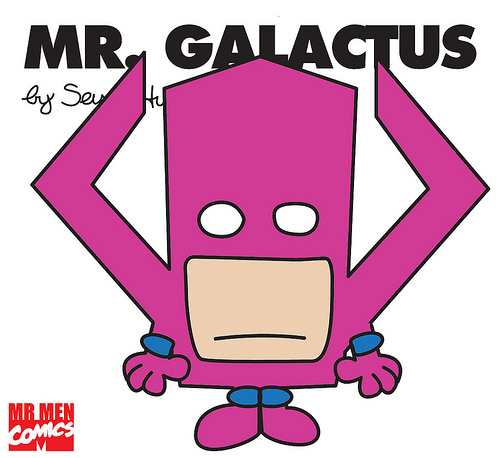
Who Watches the Mr. Men?

“The idea basically sparked from the realisation that Mr Happy from the Mr Men, looks a lot like the Comedians badge from Watchmen… and a quick doodle of this lead to the question ‘Who Watches the Mr Men?’ and assigning various Mr Men personalities to their Alan Moore counterparts…” By way of my sis and as you may have already seen in my twitter feed, various Marvel and DC superheroes done up as Mr. Men (a staple of my early years).

Frat to the Future.


To get in the proper mood for Steve Pink’s ’80s throwback (in more ways than one) Hot Tub Time Machine after a long week at work, I made sure to sidle up to the bar just beforehand — conveniently located, at my “local” (Regal Gallery Place in DC’s Chinatown), just below the theater — and knock down a shot-and-pint (of Jamesons and Guinness respectively, of course.) And my best advice for those of you still thinking about testing these bubbling, lurid, time-traveling waters: Better make that a double.

My feelings about Hot Tub Time Machine are pretty close to how I came down on The Hangover last summer. It’s got some funny moments, sure, and I admire its throw-everything-and-see-what-sticks, Anchorman-y approach to humor. (This is vastly preferable to the “let’s make the audience better people in three acts” schtick that was in comedy vogue for awhile — See, for example, Anger Management.) It’s also sort of a kick to see John Cusack, after fighting it for decades, willingly slumming back to his Savage Steve Holland years, and, I’ll concede, the “I want my two dollars” joke made me smile.

At the same time, and maybe even more than The Hangover (which is no small feat), Hot Tub Time Machine feels like it was penned by and for the Bill “Sportsguy” Simmons nation. You could argue its casual misogyny, homophobia, and dumb raunchiness-for-the-sake-of-it is all part of the return-to-the-’80’s experience, but my guess is it’s really all about catering to the army of 21st century mooks that enlist under the Sportsguy’s standard. I mean, do you know the street value of that mountain? (As an aside, I actually think Simmons is a decent writer, and am crawling through his Book of Basketball at the moment. The problem isn’t his talent or his bball savvy, but his judgment and his (lack of) taste. Nor do I blame him for creating mook culture — he’s just one of its clearest expressions.)

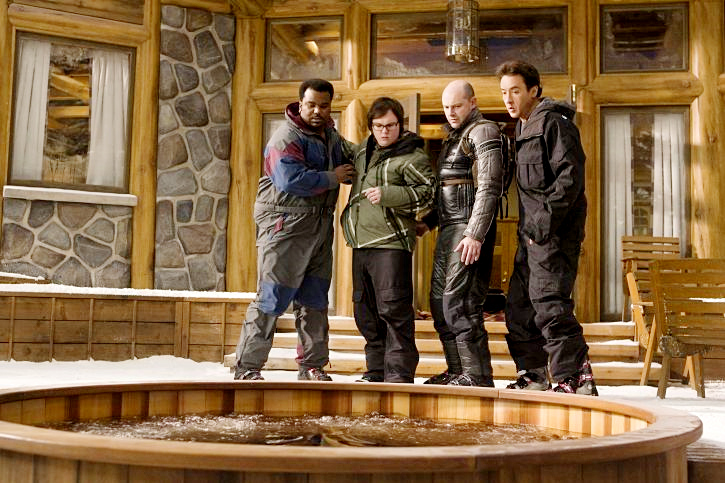
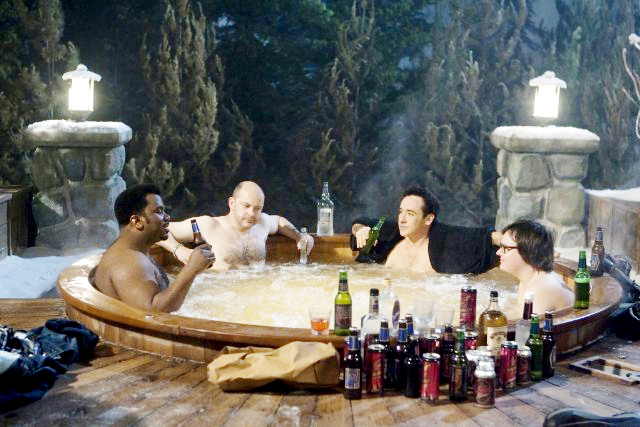
More on the mookness of it all in a bit, but, first, the high-concept gist: Just like The Hangover, we have three friends (Cusack, Rob Corddry, Craig Robinson) and a hanger-on (Clark Duke) trying to find themselves by taking a memorable, life-altering Lost Weekend — only this time, it’s in The Past. Adam (Cusack) has just been dumped by his girlfriend and has his Second Life-addicted nephew (Duke) living in the basement. Nick (Robinson) is a once-promising singer who gave up his dreams for a girl and now spends his day as a personal trainer for dogs. (He touches poo. Ha. That’s funny. Poo.) And Lou (Corddry), the Galifianakis of the bunch, is a perennial loser who may or may not have recently tried to kill himself. (A wasted Corddry plunking out ’80’s power-chords on his dashboard is funny, and one of the many ways he often rises above the material here.)

So, because of Lou’s maybe-meltdown, this ungainly foursome head back to the ski resort idyll of their youth for some manly bonding. Problem is, the Great Recession has hit hard and the place has gone to hell — there’ll be no skiing the K-12 here. And, just when the weekend seems like a total wash, our heroes stumble into the hot tub in question and stumble out 24 years earlier, in the year of our lord 1986 — Adam is still with the “Great White Buffalo” he never should’ve dumped, Nick is still rocking the Kid-‘n’-Play-style hi-top, Lou is…well, still a loser, and Jacob the nephew shouldn’t even exist, and thus has a phasing-in-and-out, Marty McFly in Back to the Future II problem. (And speaking of the McFlys, Crispin “George McFly” Glover is skulking around too, as is Chevy Chase.) Fire up the day-glo and the hair metal, y’all, ’cause it’s time to partay like it’s the MTV era…

And so they do, meaning all the fashion faux-pas and Wang Chung-ish blasts from the past you might imagine from living in the Eighties. But, while there are still a few funny moments here and there, this Hot Tub loses steam and falls ever more flat the longer they spend in the Me Decade. I find legwarmers and Members Only jackets as ridiculous as the next guy, but there are only so many “lordy, the sartorial sense was terrible back then” jokes you can make over the course of two hours. And, other than that, the movie just meanders through its second half without much purpose, or even much sense. Cusack ingests enough shrooms to give the good doctor pause, and is playing Sixteen Candles kissy-face with Lizzy Caplan half an hour later.

And then there’re all the fratboyisms and mookish behavior. To be clear, I wasn’t offended by Hot Tub, per se. (Case in point: I put Jackass in my top 100 films of last decade.) And, to be sure, the sensibilities were different back then in Ronald Reagan’s America — just look at much of Police Academy or Revenge of the Nerds, or even the aforementioned Back to the Future, where, as @kellyoxford recently noted, George wins Marty’s future mom’s heart basically by stopping her from being date raped.

Still, by too often resorting in puerile shenanigans — look, Rob Corddry just got pee on his face! — and particularly in portraying every gal that comes along (Caplan aside) as a dim-witted sex toy, the movie just feels lazy, half-assed, and, well, mook. I don’t want to be the Billy Zabka of this tale, but, while I’m all for nostalgifying the ’80s for a few laughs, at some point, quite frankly, it’s time to grow up.