The Only Way to Live in Cars.


Well, I’ve been meaning to pair this review with the other Ryan Gosling movie of the moment, George Clooney’s The Ides of March. But since I still haven’t caught Ides and this has been languishing in neutral at the back of the queue…

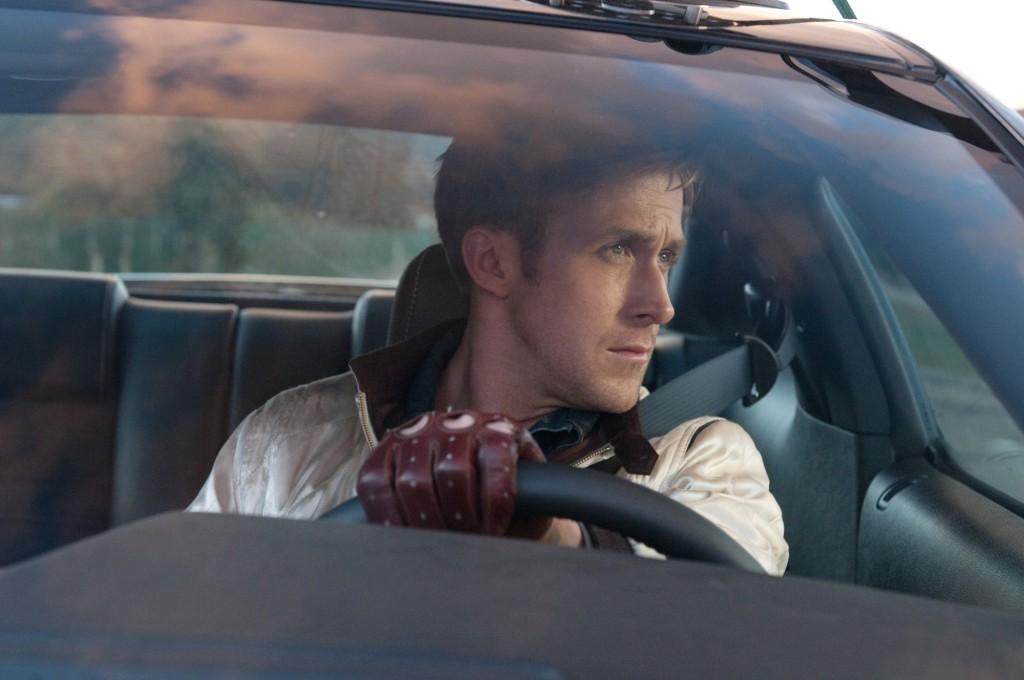
Boasting a retro feel, catchy synth-pop soundtrack, New Wave credit stylings, and Lynchian bursts of graphic violence, Nicholas Winding Refn’s Drive basically attempts to be a high-minded, crazysexycool throwback to the Cinemax thrillers of yesteryear. (Put simply, what The American was to the European arthouse, this film — despite its nods to 70’s flicks like Vanishing Point and Two-Lane Blacktop — is to 80’s trash.) In this regard, Drive is half-successful: It’s well-made, stylish, and often-entertaining trash for sure. At the same time, the movie fails to live up to the promise of its first hour or so, and ended up feeling a bit hollow.

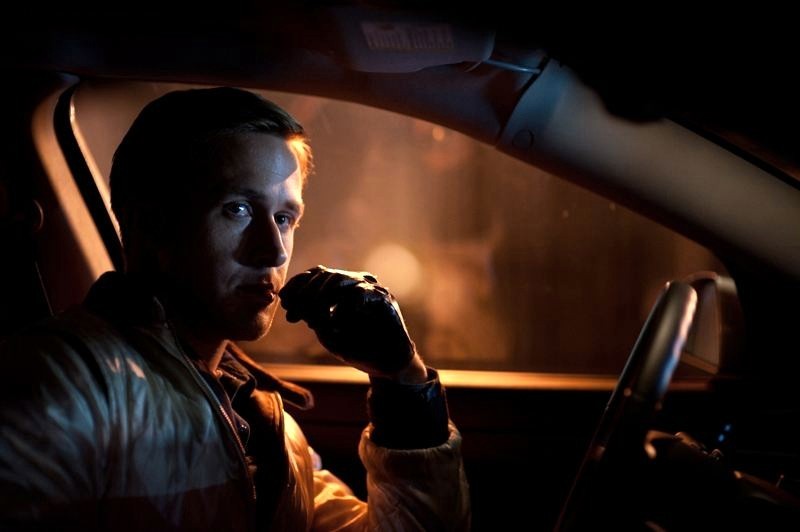
It doesn’t help that the film probably peaks in its opening minutes, when — after it is quickly established that our main character (Ryan Gosling) is a wizard behind the wheel who moonlights in LA as a getaway driver — we watch him conduct a nighttime job to the Chromatics’ “Tick of the Clock.” Rather than go all Grand Theft Auto in fleeing the scene of a warehouse robbery, Gosling’s Driver (yes, that’s his name) specializes in subtlety, misdirection, and knowing the lay of the land better than the cops do — More often, he’s just hiding the car rather than gunning it…and why is he listening to that Clippers game the whole time? (There’s a reason, and it’s a smart reveal.)

As it happens, Driver’s day jobs are Hollywood stunt man and mechanic for Shannon, a fatherly but perpetually unlucky grifter (Bryan Cranston). Recognizing the kid’s obvious talent, Shannon has been forging alliances with local gangland kingpins Bernie (Albert Brooks) and Nino (Ron Perlman) – who crushed Shannon’s pelvis for non-payment years earlier — to raise the money to get his charge into stock-car racing. While this plays out, Driver begins to woo Irene, the cute single mother next door (Carey Mulligan). (This usually involves Gosling stoically doting over her ten-year-old son.) But all plans get thrown for a curve when Irene’s ex-husband (Oscar Isaac) is released from the joint, with one last bit of unfinished business ahead of him — business that will, despite the hugely unlikely odds of such a coincidence, bring Driver’s work and home lives crashing together like a multiple vehicle pile-up on the 405…

Drive nicely zigs where you expect a zag in making Irene’s ex-con husband, Standard, a fundamentally decent guy. (And like Robin Hood and Sucker Punch, this is another film where Isaac makes a strong impression.) But soon thereafter, as Driver, Standard, and out-of-nowhere third wheel Christina Hendricks find themselves on that one last job that goes terribly wrong, Drive slips off the road and veers toward B-movie triteness. From here on in, it just becomes a not-particularly-interesting revenge flick. (This is also the point where the movie shifts gears from contemplative “lonely samurai” character study to visceral gore-fest.)

The thing is, for a movie called Drive, there’s actually not much driving to be had here. Now, obviously, the world doesn’t need another Fast and the Furious — We’ve got plenty of those already. But, aside from a quick getaway from that aforementioned botched job, the film never really makes much of the driving aspect of the story after the bravura opening sequence. Instead, Drive just becomes a standard-issue, the-mob-shouldn’t-have-messed-with-THIS-man action-noir, except this time the tortured loner in question tends to wear fancy leather driving gloves.

The other major problem, for me, at least, is Gosling, which is one of the reasons I was going to wait to pair this movie with Ides of March. I still haven’t seen Half-Nelson, but in the films I have seen him in — Blue Valentine, for example — he’s been underwhelming. And, for whatever reason, I just couldn’t buy the Steve McQueen-ish badass bit from him here. (There’s an excessively violent moment here in an elevator which is as ludicrous as it is gratuitous. Er…Gosling is not Jason Statham — that mob enforcer guy would break him in two.) When George Clooney played this sort of deeply recessed, melancholic character in The American, I thought it worked. But Gosling just seems…well, dweeby and desperate to me, one bad moustache away from restraining order territory. A real human being he may be, but I just could not take him seriously as a real hero.
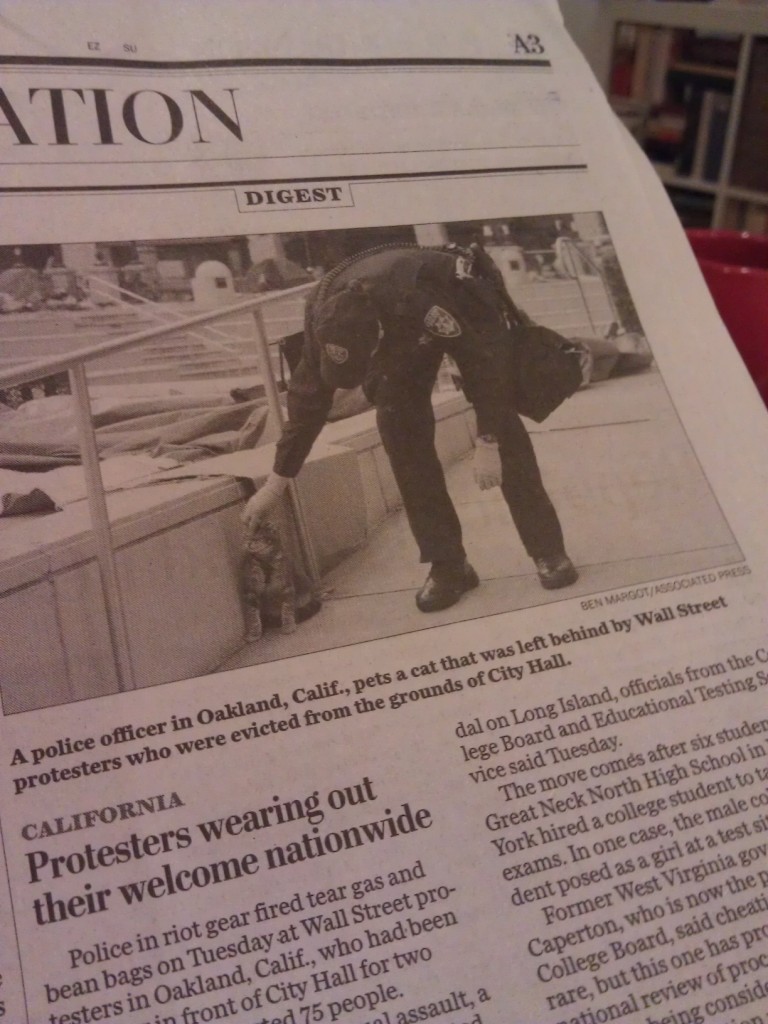
Why does #OWS hate the kittehs?

Everything you need to know about today’s Washington Post. Here is what happened in Oakland yesterday and today at the Occupy Wall Street protests:


The protests in the evening were characterized by increasingly violent encounters between protesters and law enforcement officers. Police officers launched canisters of tear gas into crowds of protesters on Broadway at 14th Street in front of Frank Ogawa Plaza at least four times Tuesday night, sending hundreds of people scattering down Broadway.

And here, via Shani O’Hilton of City Paper, is how the WP covered the #OccupyOakland clash:


Awww, a peace officer patting a kitteh! A kitteh left behind by evil protestors! And note the headline below-the-pic: “Protestors Wearing Out Their Welcome Nationwide.” Fair and balanced. (To be fair, the online coverage is better.)

Update: In the wake of the head injury that has put Iraq War vet Scott Olsen in critical condition, the WP‘s photo editor explains the kitteh decision.

Half- and Half-Man Marathons.


To follow up on items mentioned here:

  • Two weeks ago, I did in fact finish the Baltimore Half-Marathon: Total running time was 2 hours, 3 minutes, 35 seconds, so I clocked in at just under nine and a half minute miles. I’m totally fine with that, especially given that I only got in six weekend-warriorish weeks of training beforehand. And, other than not being able to walk so well for a day or two afterwards, no serious damage done – I may be up for another long race as early as December. (This is quite a contrast with my failed attempt to run the DC Cherry Blossom ten-miler earlier this year: Then, my feet fell apart. I’m now an enthusiastic convert to the Vibram toe-shoes.)

  • Also, after a slog through A Feast of Crows in particular, I am now totally caught up with George R.R. Martin on A Song of Ice and Fire. And, well, there is a definite drop in quality after the first three books: Four and five are far more meandering (Martells and Tyrells? 1100 pages and Tyrion still hasn’t met up with Dany?) and repetitive (drink every time somebody says “words are wind“) than they need to be. Still, I’ve read worse: Count me in for Winds of Winter, if and when it ever drops. In the meantime, I’ll be ensconced in Steve Erikson’s ten-tome Malazan Book of the Fallen.

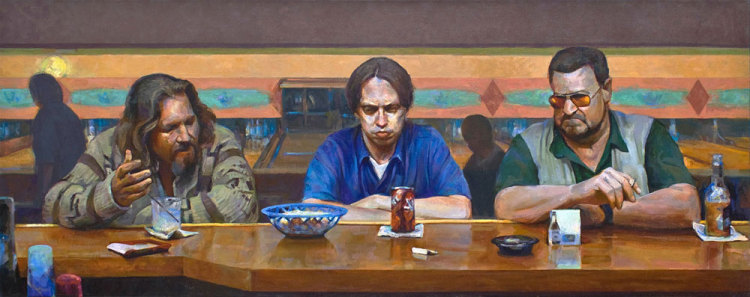
Take Oasis, Karl Hungus Bathing.


“‘In the movie, they play it like it’s a drama,’ said Forkan…’There’s no mugging for the camera. Everything has this level of seriousness. In the “Oath of the Horatii” they’re talking about the future of Rome. In the film they’re talking about a rug that got peed on, but they’re as serious about that as the characters in the painting were. I liked that level of drama in these images that were also loaded with humor.’

Hey, I know that guy – he’s a nihilist. From the Twitter archives, artist Joe Forkan discusses his Lebowski cycle with the LA Times. (A gallery is available here.)

Wikileaks on Empty.


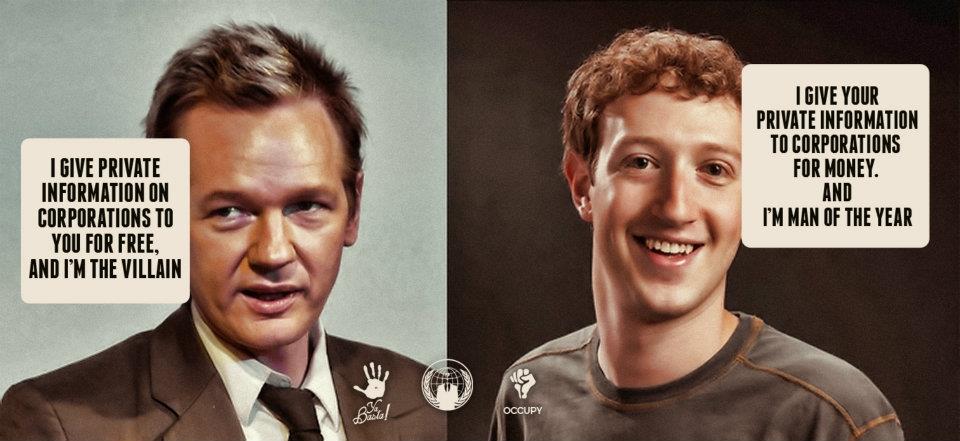
Calling the blockade a ‘dangerous, oppressive and undemocratic’ attack led by the United States, Mr. Assange said at a news conference here that it had deprived his organization of ‘tens of millions of dollars,’ and warned, ‘If WikiLeaks does not find a way to remove this blockade, we will not be able to continue by the turn of the new year.’

Another scalp for the War on Whistleblowers: Strapped for cash thanks to Visa, Mastercard, PayPal, and Western Union blocking transactions, Julian Assange warns that Wikileaks may have to close its doors soon. That would be a shame: In this day and age, we need something approaching real and undomesticated journalism. (Pic above via, ironically, Facebook.)

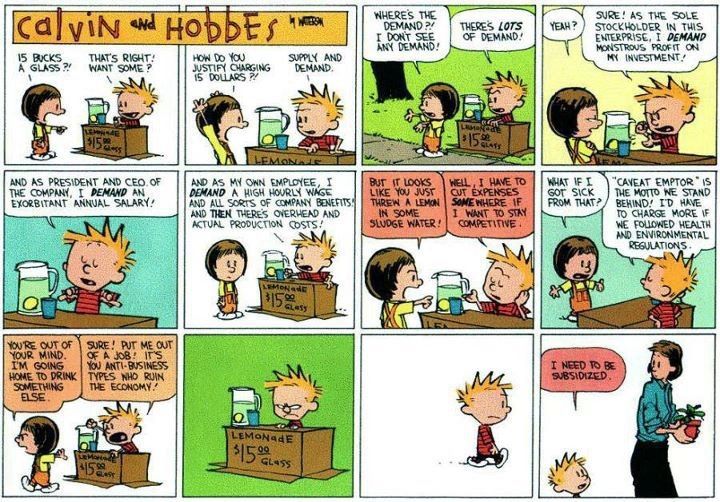
Calvin, Job Creator.


Also making the rounds on Facebook, this ancient Calvin & Hobbes strip anticipates the socialized-losses-for-me-but-not-for-thee mindset of contemporary “job creators.” Thank goodness they only have one-and-ahalf major political parties behind them to back their play.

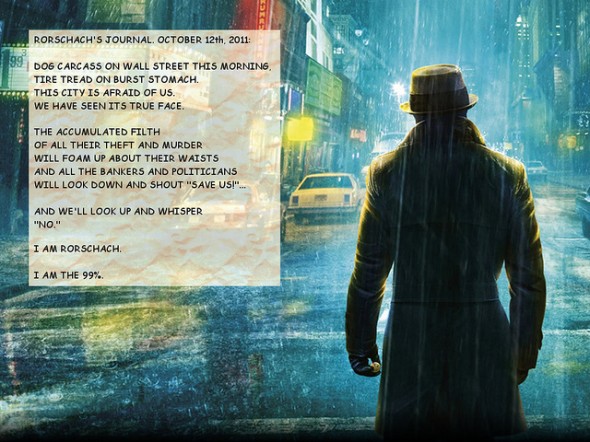
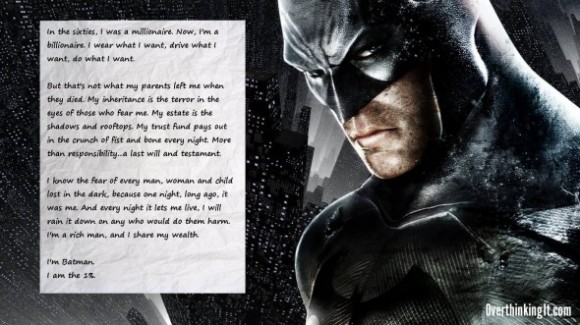
We’re the 99% (except Bruce Wayne).


Although, let’s be honest: Rorschach is more like the original Tea Partier, no? Anyway, it’s not just Calvin. By way of Mary Sue, comic book characters weigh in on Occupy Wall Street. Speaking for the 1%: Lex Luthor, Uncle Scrooge, Victor Von Doom, and, my evening alter-ego these days, Bruce Wayne…but he’s cool.

Just a Bunch of Guys.


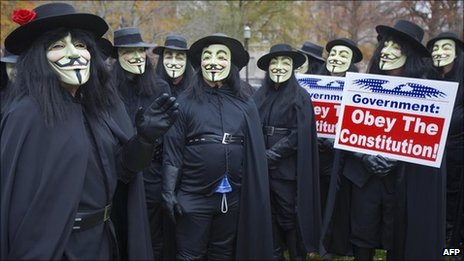
‘”The Guy Fawkes mask has now become a common brand and a convenient placard to use in protest against tyranny – and I’m happy with people using it, it seems quite unique, an icon of popular culture being used this way.

People should not be afraid of their governments…Speaking of Alan Moore iconography and #OWS, BBC News surveys the subversive popularity of the V for Vendetta Guy Fawkes mask. “[Vendetta artist David] Lloyd says he has already heard anecdotes about police in the US searching for the masks in people’s houses to be used as evidence of involvement with Anonymous hacker attacks, ‘which is scary but also ridiculous – you wouldn’t prosecute someone for having a t-shirt with Che or CND on it.’” (via LinkMachineGo.)

Decades of Divergence.


In its report, the budget office found that from 1979 to 2007, average inflation-adjusted after-tax income grew by 275 percent for the 1 percent of the population with the highest income…By contrast, the budget office said, for the poorest fifth of the population, average real after-tax household income rose 18 percent. And for the three-fifths of people in the middle of the income scale, the growth in such household income was just under 40 percent.

A brand-spankin’ new CBO report concludes what we all already know: Income inequality has surged since 1981, and government, post-Reagan, has consistently failed to address the problem. “‘The equalizing effect of federal taxes was smaller’ in 2007 than in 1979, as ‘the composition of federal revenues shifted away from progressive income taxes to less-progressive payroll taxes,’ the budget office said.” But, hey, let’s sweat that deficit.