
Mickey Rourke signs on to play The Wrestler for Darren Aronofsky, set to begin shooting this January. (He replaces Nicolas Cage in the role.) And, more casting on the Star Trek reboot front: Bruce Greenwood is Capt. Christopher Pike, Winona Ryder is Spock’s mother, Amanda Grayson, and House‘s Jennifer Morrison and P2‘s Rachel Nichols are in too, possibly as Yeoman Rand and/or Nurse Chapel. Well, ok then. Update: Another Trek addition: Clifton Collins Jr. of Capote will play Big Bad Eric Bana’s #2.
Category: Cinema
In the Country of Last Things.
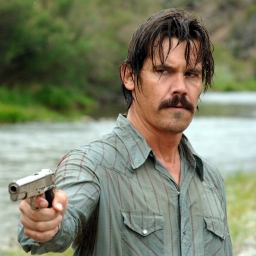 “Seen the arrow on the doorpost, saying, ‘This land is condemned’…” Well, Bob, East Texas may seem rough, but trust me, West Texas is even worse. I’m always going to have a soft spot for Miller’s Crossing, and The Big Lebowski is its own strange and beautiful beast, but the Coen Brothers’ tense, brooding No Country for Old Men, which I caught this morning, is right up among their best work, and that is no small thing. Admittedly, in some ways the Coens don’t seem quite right for a Cormac McCarthy adaptation: They usually thrive on witty, motormouth dialogue, but McCarthy’s men (Woody Harrelson’s character notwithstanding) are invariably strong, silent types. And you can feel the brothers trying to restrain their usual mordant sense of humor through much of the otherwise bleak No Country. (It still leaks out here and there: the mariachi band, “I pre-visioned it,” “these look to be managerial types,” the constant noting of the dead dog, and so on.) Nonetheless, for all intent and purposes, they nailed it. No Country is easily one of the better films out this year, and, if you harbored any doubts about the Coens after their botched remake of The Ladykillers, fret not. The brothers are back in form.
“The crime you see now, it’s hard to even take its measure.” No Country opens on the arid, forbidding landscape of west Texas, as we hear local sheriff Ed Tom Bell (Tommy Lee Jones, doing a lot of soul-searching this autumn between here and Elah), in voiceover, lament what the world has come to. As if to prove his point, we are then introduced to one Anton Chigurh (Javier Bardem, unforgettable), a chilling, wide-eyed psychopath with a lousy haircut, an air-powered cattle gun, and a penchant for making coin tosses with weighty implications. While Chigurh calmly breaks out of police custody (by strangling a deputy to death and murdering an unlucky motorist), a down-on-his-luck local named Llewellyn Moss (Josh Brolin) happens upon the scene of a horrific shootout in the middle of the desert, one which has all the markings of a drug-deal-gone-bad…including $2 million in a black briefcase. Thinking his ship has come in, Moss decides to takes the money and run. But, he’s savvy enough to expect some blowback, and thus sends his wife (Kelley MacDonald, of Trainspotting) off to her mother’s place in Odessa and vacates his old trailer park before hitting the road, traveling from motel to motel across west Texas. But right behind him, ruthless, inexorable, is Chigurh, armed with a transponder that follows the money. And, if Moss can’t stay one step ahead of the madman, or if Sheriff Bell doesn’t find a way to reach him before Chigurh does, there’ll be hell to pay like West Texas hasn’t seen since…well, probably since this morning.
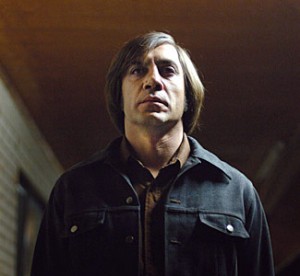 Having read the novel a few summers ago, I knew what I was getting into here, and thus (as with Chris Nolan’s The Prestige) I was prepared for a third-act jag that’s irritated a few moviegoers out there who expected a more conventional resolution. But, frankly, that’s the book. Near the end of No Country, one of the men we’ve been following tells us about two dreams he’s had recently: While it may seem in the early going that this movie is about the first, it’s actually more about the second. (Put another way, I’m guessing people who saw Lord of the Rings and thought the story was about the ring found all the endings to Return of the King more unnecessary and unsatisfying than those who thought the story was about Frodo and the fellowship.)
Yes, No Country is a crime yarn a la Fargo and Blood Simple, but it also has bigger game in its sights. One of the scariest aspects of Anton Chigurh is that he seems to believe himself an Agent of something else, something completely and utterly out of his control, and perhaps the scariest notion of all is that he might be right. “If the rule you followed brought you to this,” Chigurh tells one victim, “what was the use of it?” And would following any other rule have made any difference? Sheriff Bell is heartsick over the madness and grotesque violence that seeps out of the corners of society, and another aging lawman tries to lay the blame for “the dismal tide” on “kids with green hair and bones in their noses.” But, as another character reminds us, the West, and the world, has always been like this. You can’t stop what’s coming. At best, all you can do is light a fire in the dark.
Risky Business.
As Claus von Stauffenberg, Col. Tom Cruise (sporting a funky, funky eyepatch, man) plots to kill Adolf Hitler in the new trailer for Bryan Singer’s Valkryie, also starring Kenneth Branagh, Bill Nighy, Tom Wilkinson, Terence Stamp, and Eddie Izzard. Hmmm, maybe.
Tears of a Clown.
“Let me be the way I’m not in interviews. I’m furious. I’m furious…They never asked me about a sequel with the Joker. I know how to do that! Nobody ever asked me.” Strangely enough, apparently Jack Nicholson wanted another run at the Joker for Christopher Nolan’s The Dark Knight. “Well, the Joker comes from my childhood. That’s how I got involved with it in the first place. It’s a part I always thought I should play.” Well, maybe so, but even back in 1989 Nicholson seemed like stunt casting, and his performance hasn’t aged well. Here’s to a new take on the character.
The Devil Inside.
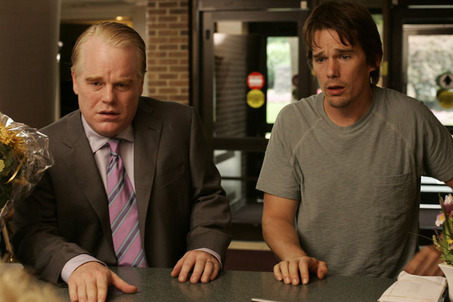
“The world is an evil place. Some people make money from it, and some people are destroyed by it.” Capping a weekend stand of venal cops, missing children, and murderous ballet was yet another feel-good film, Sidney Lumet’s sparse, harrowing amorality tale, Before the Devil Knows You’re Dead. (The title is taken from an Irish proverb, “May you be in heaven half an hour before the devil knows you’re dead.”) All in all, I quite enjoyed the film, although it may not be everyone’s vial of acid. A dark and ugly story of corruption, desperation, and family betrayal, its pleasures reside in being told simply and told well. As in Lumet’s classic Dog Day Afternoon, Before the Devil dwells on the consequences of a badly bungled crime perpetrated by two increasingly desperate men. But here, the crime is of a more personal nature than the bank robbery of Dog Day, and the planners and victims have more in common than just being in the wrong place at the wrong time. Here, the road to Hell is a well-traveled one, and nobody sends you careening down it faster than your immediate kin.
After briefly visiting the sex life of Manhattan real estate broker Andy Hanson (Phillip Seymour Hoffman) and his trophy wife Gina (Marisa Tomei) — While it may at first seem tawdry and gratuitous, this is Hank’s “half hour in Heaven” moment, setting up everything to follow — Before the Devil Knows You’re Dead begins with a really bad day at an average, suburban strip mall in Westchester. To wit, a matronly woman (Rosemary Harris, best known as Aunt May) opening a jewelry store is suddenly beset upon by a masked villain brandishing a gun, who barks orders at her and begins filling a sack with the store’s wares. Alas, Spiderman is not forthcoming this time, and the attempted robbery ends in tragedy. After a getaway car flees from the scene, we then flash back to the days before the botched theft, and discover that it was originally the simple plan of Andy, who needs money in the worst way to cover up his flagrant embezzling from a forthcoming company audit, to knock off “a mom-and-pop operation” and fence the lucre.
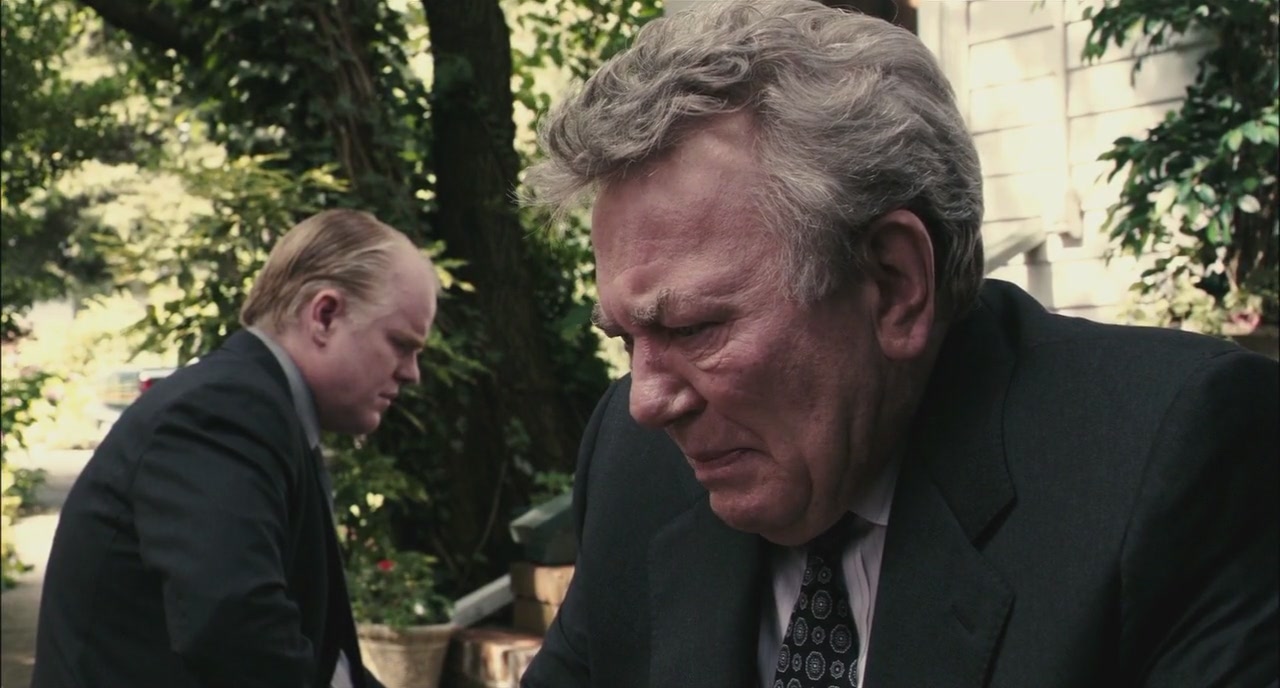
Moreover, Andy has enticed his obvious screw-up of a little brother, Hank (Ethan Hawke), into the scheme. (Hank has money problems of his own: he’s three months behind on child support, as his ex-wife (Amy Ryan, late of Gone Baby Gone) keeps reminding him, and even his young daughter, in between her middle-school performances of King Lear(?), now realizes he’s pretty much a loser.) Complicating the perfect crime even further, of course, Hank is having an affair with Gina and has fallen in love with her; Hank, not the brightest bulb on the tree by anyone’s measure, decides to outsource the actual deed to a tough-guy bartender friend of his; Andy is a barely functioning heroin and cocaine addict who’s close to veering off the rails in any event; and, most importantly, the jewelry store in question is owned and run by Hank and Andy’s parents — in fact, it was meant to be their father (Albert Finney), who Andy might well have considered acceptable losses, behind the counter on game day. And now, as Hank puts it, “it just came apart“…so what are these two criminal masterminds going to do?
There are no heroes in Before the Devil, just a lot of deeply flawed people each caught in a tightening vise of circumstance. Even notwithstanding his money problems, Andy is drowning in self-loathing. His wife Gina is an obvious manipulator (note her purring, Lady Macbeth moment when she catches wise to the crime.) Hank is a spineless wheedler, who can’t stop trying to skate by on his boyish looks even when it’s obvious they’ve long since failed him as a negotiating tactic. Even Charles, the pater familias, has issues: If he can’t be directly faulted for the sins of his children here, it’s clear he’s responsible for some of the family dynamic at work, and his turning into R.E.M.’s “The Apologist” after the crime doesn’t help matters.
Still, if there are no good guys here, there are a number of very good performances. The cast is excellent across the board, and the sheer quality of the ensemble work here helps this otherwise bitter tonic go down smooth. If you like your family sagas or crime stories served up ice-cold, give Before the Devil a run for its money. As Lumet’s film reminds us, when it comes to the best-laid plans of mice and men, the devil is in the details, and the evils that we all may be quite capable of lurk only a few bad days away.
Little Girl Lost.
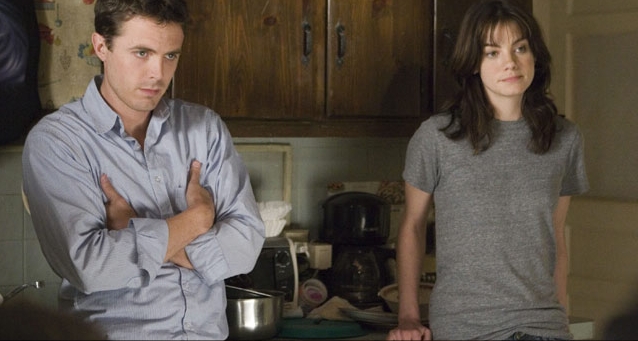
Wading into the same dark, turbid, and clannish Boston waters as Mystic River (also by author and Wire contributor Dennis Lehane) Ben Affleck’s Gone Baby Gone is another wicked-smaht tale of horrible crimes and neighborhood secrets in and around the Hub, and marks a promising debut for Affleck as a director (and another step for brother Casey, after The Assassination of Jesse James by the Coward Robert Ford, towards leading-man status.) The last act unfolds a mite too slowly, I thought, but for the most part Gone Baby Gone — for its ruminations on the meaning (and inescapability) of place as much as its attention to Beantown detail — is an intelligent and gripping crime story that’s worth catching. Affleck, Lehane, and co. are confident enough here to ask tough questions without definitive answers, and it’s those uneasy ambiguities in Gone Baby Gone, as much as the local color, that ultimately sticks with you.
As another day dawns in Dorchester (one of what could be almost any of the white working-class neighborhoods surrounding Boston), Amanda McCready, age 4, is still missing, 72 hours after disappearing from her mother’s unlocked second-floor apartment, and where she is now we can only guess. By this point, the press are having a field day with the abduction story, the police are starting to have doubts about the girl’s survival, and Amanda’s Aunt Bea (Amy Madigan) and Uncle Lionel (Titus Welliver, of Deadwood) are looking to bring flesh blood to the search, namely private investigators Patrick Kenzie (Affleck) and Angie Gennaro (Michelle Monaghan). Kenzie and Gennaro have doubts about taking the case — neither particularly wants to turn up a dead girl — but, as lifelong locals, they know they can find people and go places the badges can’t. In the manner of films immemorial, the police officer in charge of the case (Morgan Freeman) doesn’t take too kindly to these P.I. interlopers on his heels, but assigns them two ornery cop liaisons (Ed Harris and John Ashton) regardless. And, once Kenzie and Gennaro have re-interviewed Amanda’s troubled, hard-partying mom, Helene McCready (The Wire‘s Amy Ryan, giving a Best Supporting Actress-worthy performance) and checked out some of her sketchier haunts, they — sure enough — turn up some new leads in the hunt. But the trail’s growing colder by the minute, and as both P.I.’s know, few child abduction stories ever result in a happy ending — why would Amanda’s be any different?
Dennis Lehane, Amy Ryan, Michael Williams (a.k.a. Omar) appears briefly here as a cop…if I keep making connections here to The Wire, it only speaks in Gone Baby Gone‘s favor. As with that show and Bal’more, this movie relishes its urban environment — this is a Boston story through and through, and that strong sense of place brings the film to life more than anything else. Also like The Wire, Affleck’s film doesn’t refrain from acknowledging that the world is often not a storybook place. (The second act of the movie is particularly dark, and while I thought Affleck perhaps overrelied on aerial establishing shots of Boston and images of “regular” people at times throughout, his delicate handling of this potentially explosive section of the film in particular suggests his potential as a director.)
True, much of what is excellent about Gone Baby Gone must be attributed to Lehane’s book. But, there have been a lot of lousy movies made about excellent books over the years, and if nothing else, Affleck (and his co-screenwriter Aaron Stockhard) have brought Lehane’s story to the screen without sacrificing any moral complexity or narrative momentum. As I said, I think the film lags slightly in the third act (and I do have some issues with Monaghan’s character arc by the end, which I can’t really discuss without giving the film away), but the quietly haunting coda at the end redeemed a lot of those issues for me. The occasional shocks and disruptions notwithstanding, it seems, people are what they are, and life goes on as ever in the old neighborhood.

The Haint of Harlem.
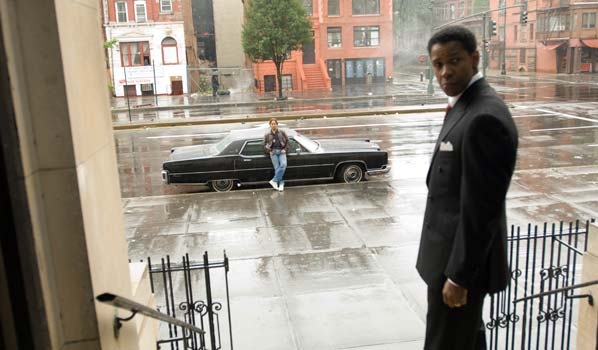
Superfly, Serpico, The French Connection…Ridley Scott’s American Gangster plays for most of its run like a greatest hits cover-medley of the cop and gangster thrillers of the 1970s. But, while well-made and eminently watchable, Gangster never becomes truly engaging. (EW’s Owen Gleiberman pretty much nailed it when he called the film “a ghost version of a 70’s classic.”) It’s hard to fault the superior production values or the large, impressive cast, which is chock-full of ringers in even the smallest of roles. But for all the quality on display, American Gangster doesn’t come close to matching the mischievous vibrancy of Denzel Washington’s last 70’s homage, Spike Lee’s Inside Man, nor is it even the best attempt at a throwback 70’s cop flick this year — that would be David Fincher’s haunting Zodiac. Gangster hits its beats well enough, which isn’t surprising given that Ridley Scott’s at the helm. But, however gritty and lived-in at times, it’s still missing the pulse that would make it a truly memorable movie. Frank Lucas may be an O.G., but Gangster, frankly, could’ve benefited from more in the way of originality.
As Gangster opens, we witness the aforementioned Frank Lucas (Washington) lighting a bound man on fire and then unloading a clip into him — from the get-go, this guy clearly has a dark side. We then watch him watching his mentor, “Bumpy” Johnson (Clarence Williams III) doling out Thanksgiving turkeys to the people of Harlem from the back of a truck, driving home, a la Willie Stark in All the King’s Men, the importance of public perception in maintaining a criminal empire. Bumpy lives just long enough in the film to impart some choice lessons in vertical integration before he succumbs to a heart attack, leaving Lucas to take over and consolidate the Harlem drug trade. This Lucas does by bypassing all the usual middlemen — the Italian mafia, crooked cops, etc. — and procuring his heroin supply direct from the source, deep in the jungles of Southeast Asia, thus enabling him to sell purer stuff on the streets at a cheaper price. (The product gets into the country by way of U.S. military planes coming back from Vietnam.)
As this new drug empire grows — and stays mostly under the radar, thanks to Lucas’ emphasis on ignoring flash — we also follow the story of one Richie Roberts (Russell Crowe). As cops go, Roberts is old-school: He prides himself on his honesty and incorruptability despite his intimate connections with some mid-level mafiosi, his flagrant sleeping around (which has turned his failed marriage to Carla Gugino into an ugly custody battle) and the fact that every other po-lice in his unit — and in NYC, for that matter — seems to be on the take. Eventually, of course, Det. Roberts sets his sights on Lucas, and the game truly begins…
But, game or no, everybody knows the dice are loaded. Part of the problem with American Gangster is that there’s no real mystery about how it’ll all turn out in the end. Even if you don’t know a thing about Lucas going in (and I didn’t), these sorts of movies invariably follow a rather predictable pattern, and all the police procedural work, Harlem vignettes, or heroin house of horror asides throughout here can’t hide the fact that Gangster follows it to the letter. Also, while Washington and Crowe are both among some of the best actors working today, neither is given much to work with here. As a hard-working, quick-witted family man who prizes loyalty and doesn’t take any guff from those around him, the Frank Lucas character is right in Denzel’s usual wheelhouse, even despite the additional sociopathic streak. (His turn in Training Day seemed more of a stretch.) And Crowe’s Roberts is well-played but, frankly, not all that interesting as written. Crowe can definitely do conflicted cops — Exhibit A, L.A. Confidential — but this is the first performance by him that I can remember that doesn’t make much of an impression.
And that doesn’t just go for the top two. American Gangster boasts a veritable Murderer’s Row of quality, likable character actors in its credits — not only Williams and Gugino but Chiwetel Ejiofor, Idris Elba, Josh Brolin, Joe Morton, Jon Polito, John Hawkes, John Ortiz, Ruby Dee, and rappers RZA and Common (as well as Cuba Gooding Jr. and Norman Reedus) — but more often than not they just get lost in the shuffle here. (That being said, Armand Assante, overplaying his genteel mafia don to the hilt, does manage to squeeze in a particularly lousy performance.) Not to be too harsh, Gangster isn’t a terrible film, nor even really a bad one. But, however well-made, it’s more by-the-numbers than it is blue magic.

Blood and Iron.
“I can’t keep doing this on my own…with these people.” Making it online of late, a new domestic trailer for Paul Thomas Anderson’s There Will Be Blood, and a new international teaser for Jon Favreau’s Iron Man. (The original clips are here and here.)
Parnassus Passes.
Who knows what Faustian bargain he made this time, but Terry Gilliam’s Imaginarium of Dr. Parnassus is happily off the ground, and will begin shooting next month. (The script leaked last March.) Imaginarium will star Christopher Plummer (as the titular doctor), Heath Ledger, Verne Troyer, and, in a choice bit of casting, Tom Waits as the Devil.
Mrs. Smith & Mr. McAvoy.
The Matrixish trailer for Timur Bekmambetov’s Wanted is now online. Based on a Mark Millar graphic novel I haven’t read, it stars James McAvoy, Angelina Jolie, Morgan Freeman, Terrence Stamp, and Thomas Kretschmann. Well, that’s a solid cast, but I dunno…this looks goofy, and I didn’t really cotton to Night Watch.