The Activist, the Loner, and the Clairvoyant.

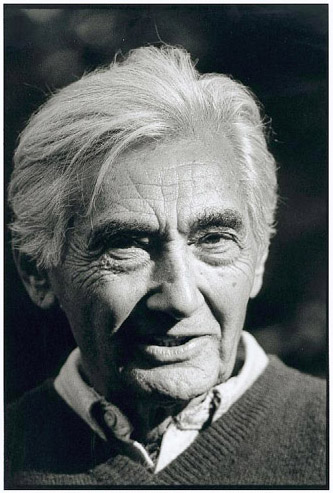
Dissent is the highest form of patriotism.” — Howard Zinn, 1922-2010.

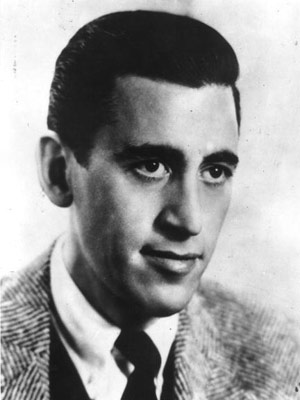
It’s funny. All you have to do is say something nobody understands and they’ll do practically anything you want them to.” — J.D. Salinger, 1919-2010. [The Onion mourns.]

You’re not an actor if you’re just a person that fits into a cute costume. You’re a prop.” — Zelda Rubenstein, 1933-2010.

(500) Days of Gwen.

“Webb said, ‘This is a dream come true and I couldn’t be more aware of the challenge, responsibility, or opportunity. Sam Raimi’s virtuoso rendering of Spider-Man is a humbling precedent to follow and build upon. The first three films are beloved for good reason.'” Well, actually, not many care much for Spidey 3. In any event, the post-Raimi reboot of Spiderman at Sony has found its director in Marc Webb, previously of (500) Days of Summer.

A solid choice, although two things give me pause: 1) It’s hard to escape the sense that Webb was picked mainly because the studio suits think that, unlike Raimi, he’ll be more malleable than a lot of the A-list names floating around (Fincher, Cameron). 2) The ramifications of the following sentence might just end up being terrible: “The touchstone for the new movie will not be the 1960s comics…but rather this past decade’s ‘Ultimate Spider-Man’ comics by Brian Michael Bendis and Mark Bagley where the villain-fighting took a back seat to the high school angst.”

Tender Mercies 2: Sing Tenderer.

Ok, so maybe Texas is a Country for Old Men. A kissing cousin to 2008’s The Wrestler and a close nephew to 1983’s Tender Mercies, Scott Cooper’s Crazy Heart, which I caught last night while fighting off a nasty cold, is, well, thoroughly ok. If you see it, you won’t feel cheated. If you don’t, well, you haven’t missed all that much.

Like its main character Bad Blake, a former country-and-western star now way past his sell date, the movie sorta grows on you in its middle hour with its sly, drawling wit. But, taken as a whole, we’ve heard this particular song — Old Guy in a Rut slouches toward a New Leaf — quite a few times recently, in The Wrestler, Gran Torino, The Visitor, About Schmidt. And, as such, there’s not really enough new here to recommend the experience, not even the admirable (and likely Oscar-procuring) performance by the consistently excellent Jeff Bridges.

Here, Bridges is a washed-up country singer and (barely-)functioning alcoholic, not unlike Robert Duvall (who also appears here as Bad’s bartender pop) in Tender Mercies. Left behind, financially speaking, by his ex-sidekick and protege Tommy Sweet (Colin Farrell, playing it nu-country), Bad now ekes out a living as a King of the Road: In his long-suffering ’78 Suburban, Bad drives hundreds of miles a week to play run-down bars and out-of-the-way bowling alleys with pick-up bands for petty cash. (In fact, Bad’s first line is something along the lines of “Ugh, another g*dd**n bowling alley.” — So, yes, the Dude is rolling again, although now he’s been pretty-well fused with Sam Elliot’s Cowboy.)

Anyway, it’s a godforsaken living and no mistake, and it’s either made slightly better or considerably worse by Bad’s trademark penchant for McClures (re: cheap) whiskey, not to mention his tendency to smoke like a chimney. And so he rambles on through Texas and the Southwest, nursing his grudges and his booze as best he can. Until one day, he makes the acquaintance of a bright-eyed new ladyfriend (Maggie Gyllenhaal) and her young son Buddy (Jack Nation) — (More shades of Tender Mercies here, which, by the way, is a movie I saw in English class in high school and didn’t much care for. But, given my age, it could’ve been a pearls-before-swine type of thing.) Will Bad take this opportunity to change his ways, maybe mend some fences with both his former apprentice and the son he left behind years ago? Well, old habits die hard, and at least so far, the bottle’s never let him down.

For most of its run, Crazy Heart is decently entertaining from moment to moment, although I suppose folks who don’t dig bar-band-type country may well get sick of some of the extended musical scenes. And, until the last half-hour or so, when the movie bogs down in both child-in-peril cliches and rehab platitudes — it ain’t much fun once he quits drinking — I felt like this flick was slow-paced but pretty engaging. It mostly follows a tried-and-true chord progression, sure, but the film still plays it lively and switches up the melody enough to make it seem like you were experiencing something new.

But by the end, when everything falls into order just a little too tidily, Crazy Heart loses its rhythm and starts to feel more than ever like just a country-style cover version of The Wrestler — or worse, like The Wrestler for folks who wanted a little more sugar to ameliorate that film’s downer ending. (And weirdly enough and compounding the Wrestler similarities, it looks like Bridges will be the Mickey Rourke to Colin Firth’s Sean Penn in this year’s Oscar race. That is, of course, Clooney notwithstanding, and despite the fact that I’d probably still go with Sam Rockwell in Moon.)

Speaking of which, Bridges is a consistently great actor who by now deserves an Oscar for something. But I’m not necessarily sure that the collection of boozehound, Leaving Las Vegas-y tics on display here is really what I’d honor him for. It’s not a bad performance by any means — To the contrary, Bridges rings true throughout. (And in fact, the Dude isn’t even all that bad a country singer. Just don’t ask him to play the f**king Eagles.) But, however much Bridges wisely underplays his character, Bad’s story here feels so thrice-told and Oscar-baitish at times that I found it hard to feel too much for the guy. There’s a Devil in the Bottle? There’s a Tear in My Beer? If that ain’t country, I don’t know what is.

We are still in the desert.

“‘As a David Lynch movie, I loved it,’ he said of the 1984 “Dune” adaptation by the famously trippy ‘Twin Peaks’ filmmaker. ‘As a “Dune” fan, I was not such a big fan.‘” Taken and From Paris with Love director Pierre Morel talks about his next project, Dune, and so far he’s saying all the right things: “I’ve been reading it over and over again – well, I’m 45 now, so for 30 years…[B]y the time I bought the sixth book I had already read the first one six times! So, I’m a hardcore fan.

Evil Twin Theory.

And now to the third and final film of last Friday’s quality triple-feature, Miguel Arteta’s solidly entertaining Youth in Revolt, based on the novel by C.D. Payne. (I haven’t read this book, but judging from its Wikipedia entry and a la A Single Man last week, it sounds quite different.)

As I said back over in the Daybreakers review, my view of all three of these back-to-back-to-back movies is pretty similar — Each accomplishes what it aspires to do pretty well. If you like clever, gory, unabashed B-movies, you’ll enjoy Daybreakers. If you warm to the tics (and foibles) of Terry Gilliam unleashed, you’ll probably like The Imaginarium of Dr. Parnassus. And if you find Michael Cera and his awkward attempts to score inherently amusing, you’ll probably dig Youth in Revolt.

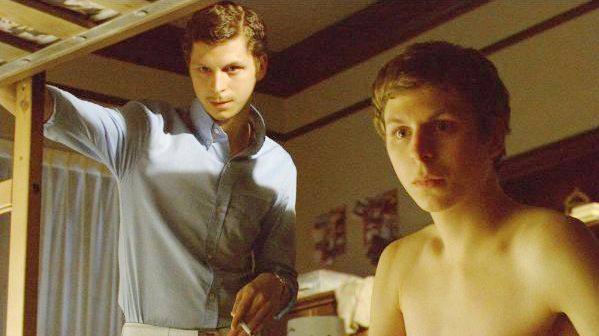
So, yes, this is another film in a long line of them where Cera, deeply uncomfortable in his own skin as usual, is trying to figure out What Women Want. (And, by that, I mean that, as in Superbad, he’s frantically trying to lose his virginity once more, and, as in Juno, he may or may not succeed.) The wrinkle this time is that Cera has willfully concocted his own Tyler Durden to help him out — a lascivious, mustachioed, (creepily) blue-eyed Frenchman named Francois Dillinger. In other words, imagine Cera playing both his and the Jonah Hill role in Superbad. Or, to go back to the source, just pretend George Michael had another cousin other than Maeby, and he was Gob’s kid.

So that’s the basic gist. Cera’s Nick Twisp has a few other hurdles to navigate — his mom (Jean Smart)’s worthless trucker boyfriend (Zach Galifanakis), his dad (Steve Buscemi)’s refusal to fund him, his neighbor (Fred Willard)’s general strangeness, his increasing problems with the law (as represented by cop-for-life Ray Liotta). But, mainly, he’s just trying to get to know his new girlfriend Sheeni (Portia Doubleday) a bit better. And, to do that, he’ll have to get past her uber-Christian parents (M. Emmet Walsh and Mary Kay Place), the considerable shroom collection of her older brother (Justin Long), the many impressive qualities of her other squeeze, Trent (Jonathan B. Wright), and all the long-distance problems involved. At least Nick has Francois aiding and abetting him in his shenanigans and providing that alpha-male tang when needed. But, as Nick fast discovers, there’s a reason the real Dillinger died in a hail of lead.

I know Michael Cera is verging on over-exposed right now, and I’ve also heard from several corners that people are tiring of him. Ok, fair enough. I kinda felt the same way going in, and I even skipped Nick & Nora’s Infinite Playlist and Year One. But it didn’t take long before Cera won me over again. The guy’s got impeccable comic timing, and nobody — not even Anthony Michael Hall in his prime — does awkward teen quite as well. Scott Pilgrim vs. the World aside, I’m not sure how much longer he’ll be able to milk this character — he’s getting a bit long in the tooth at this point — but he’s darn good at it. And, at least with Francois, he gets to play outside his usual sandbox for awhile.

In the end, the occasionally bawdy, mostly good-natured Youth in Revolt reminded me less of Superbad or Juno than it did the John Cusack/Savage Steve Holland teen-classics of the ’80s, Better Off Dead and One Crazy Summer. (This may be partly because, like the former, Youth in Revolt goes for the hand-drawn animated credit sequence.) And, you know what, Cusack pretty much always played the same guy back then too — you could argue he’s still doing it now. So let’s cut Cera a break already. After all, if we keep pushing him, he may up and pull a Francois and burn down the banana stand again later this year

Squashed (and Hammered).

A decade ago we set out on this journey with Sam Raimi and Tobey Maguire and together we made three ‘Spider-Man’ films that set a new bar for the genre. When we began, no one ever imagined that we would make history at the box-office and now we have a rare opportunity to make history once again with this franchise.

Um, ok. Apparently as a result of continuing tensions between Sam Raimi (still gunshy after being forced to include Venom in Spiderman 3) and the studio suits (who wanted him to move ahead anyway), Sony puts the kibosh on Spiderman 4 and sends Raimi, Maguire, et al on their way. Next up is a reboot, scripted by Zodiac‘s James Vanderbilt and slated for 2012. (Here’s a tip — Don’t give the Green Goblin a cruddy mask this time.)

Also, in much less interesting Marvel firing news, Stuart Townsend is out as Fandral in Kenneth Branagh’s Thor, and has been replaced by Joshua Dallas of the forthcoming Red Tails and The Descent 2. Hmm…Perhaps he was still bitter about the whole Aragorn thing.

Unfinished Symphony.

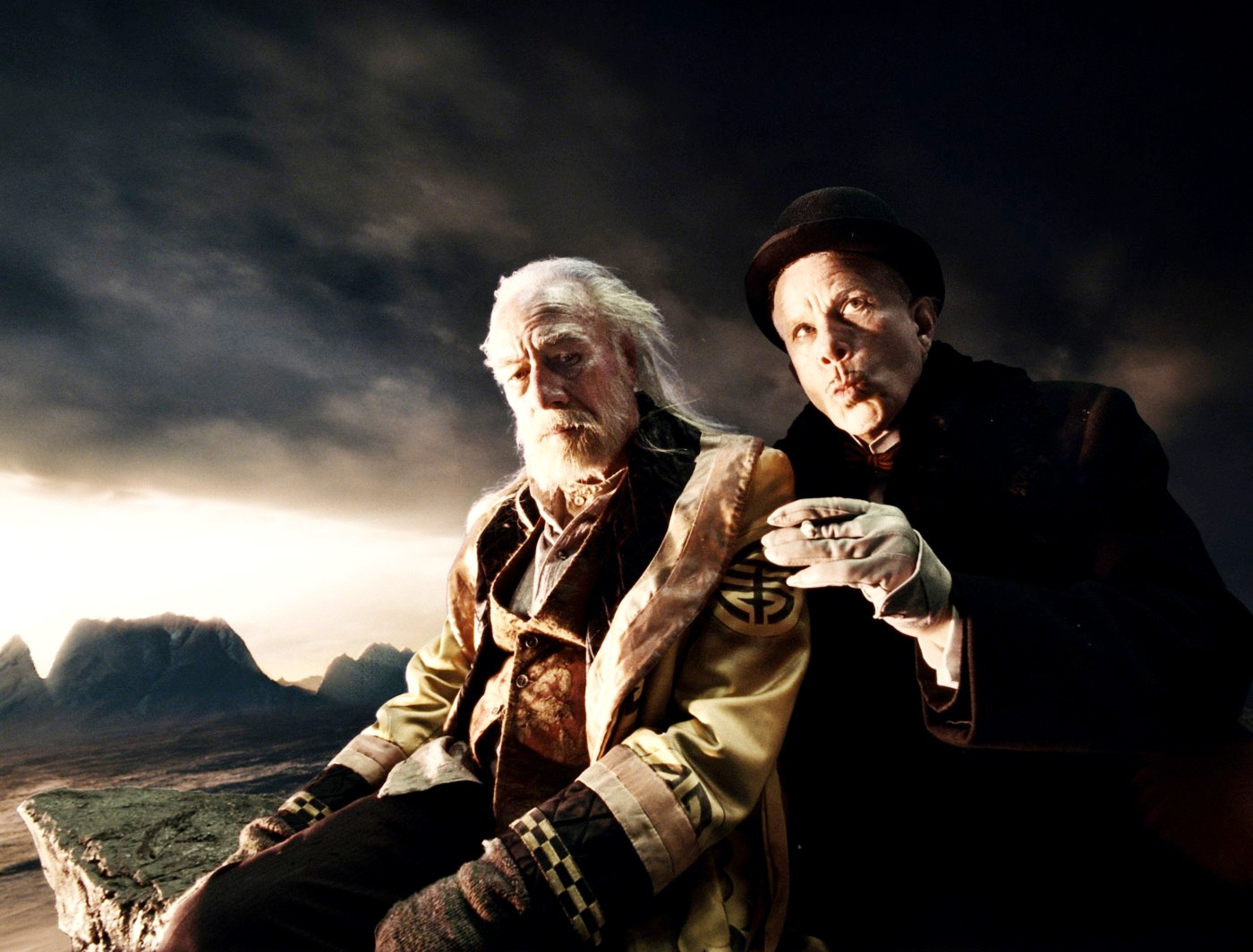
The second installment of Friday’s triple-threat, Terry Gilliam’s The Imaginarium of Dr. Parnassus is an often meandering, occasionally magnificent beauty, and a film that I expect will satisfy Gilliam fans, and those with a tolerance for his indulgences, more than it does people just looking to take in Heath Ledger’s last curtain call.

To be honest, this motley extravaganza ends up running a bit too long. And Parnassus is a ragged carnival at that, becoming more inchoate as it spins its wheels. Plus, Ledger’s final performance, alas, is mostly just set-up without the follow-through — Other actors play the meat of the character. Still, despite the movie’s very visible faults, Imaginarium nonetheless feels like a loving throwback to the days of Gilliam’s “Trilogy of Imagination,” particularly Time Bandits and The Adventures of Baron Munchausen. (In fact, Gilliam now argues that this film replaces Brazil in that trilogy.) And, if, like me, you have any fondness for the old-school, crazy-cartoonist, anything-can-happen Gilliam, Imaginarium is a very worthwhile experience nonetheless.

True, Parnassus is nowhere near as good or as perfectly formed as Brazil, which remains Gilliam”s magnum opus. (Although one reason this movie may have that “classic” Gilliam feel to it is the presence of co-screenwriter Charles McKeown, who helped pen Brazil and Munchausen, and appeared in the former as “Harvey Lime,” Sam Lowry’s desk-mate.) Nor is it as taut and self-contained as the three quality entrants in Gilliam’s “Trilogy of Americana” — The Fisher King, 12 Monkeys, and Fear and Loathing in Las Vegas. All that being said, Parnassus is the best movie Gilliam has made in over a decade, and it definitely allows him the chance to let his freak flag fly.

For Imaginarium centers on a portal — a magic mirror — that keeps leading into a “world of pure imagination,” one that bears some unmistakable glimmers of the old Monty Python scrapbook-cartoons. Kept in the possession of an immortal sage named Dr. Parnassus (Christopher Plummer, in the plummiest (Plummiest?) role he’s had in years), this mirror has been used as a field of not-so-friendly wagering between he and the Devil (Tom Waits, a casting coup) for thousands of years. Through this garden of Gilliamesque delights wander the unknowing souls who happen upon Dr. Parnassus’ roadshow and walk through the mirror. And, more often than not — people being people — they make lousy decisions and end up in the bad company of Old Nick.

Now, thanks to another ill-advised bet with the Devil, the eternal soul of Parnassus’ only daughter, Valentina (Lily Cole), is at stake. And, given that this good Doctor only has two allies in the world — Percy, his diminutive and long-suffering #2 (Verne “Mini-Me” Troyer), and a young orphan lad named Anton (Andrew Garfield) — it doesn’t look like there’s much help on the horizon. (Troyer, by the way, [a] cannot act worth a damn and [b] seems game for pretty much anything. But Garfield is really good. I kept thinking “Who is this guy? he’s solid” throughout. And, unlike Sam Worthington, he actually seems deserving of some of the Next-Big-Thing hype he’s getting right now.)

Anyway, as the tarot cards predicted, Dr. Parnassus’ troupe encounters a hanged man underneath a bridge (Ledger — yes, this intro is more than a bit eerie now.) Once revived, this fellow — Tony, formerly a charity organizer who ran into trouble — is something of an X-Factor in the age-old battle between Parnassus and the Devil. Whose side is he on? Well, as it turns out, he’s on Tony’s side. And, once he gets wind of the mirror, and the world that lies on the other side, he finds himself contemplating, almost despite himself, how he might best take advantage of the situation…

So, the elephant in the room — Heath Ledger. As it turns out, The Imaginarium of Doctor Parnassus represents both an amazing stroke of luck and a mild disappointment. The stroke of luck is that very few stories out there could accommodate Ledger’s unfinished turn as well as this one. Here, the fact that Tony’s appearance changes every time he steps into the mirror-world — he becomes Johnny Depp, Jude Law, or Colin Farrell — feels almost intuitive and organic, as if it could have been written this way in the first place. But that being said, most of Tony’s major character-beats happen in the mirrorverse, and so Ledger’s role in “our” world — which is mostly just set-up — feels unfinished all-the-same.

In fact, “unfinished” is a good way to sum up both the weaknesses and the strengths of Imaginarium. About 20 minutes in and after several early mirror-world reveries, right as we venture into the past to witness the Doctor’s first Faustian wager, I was thinking this was turning out to be easily one of Gilliam’s best films. But the movie loses its way in the muddled middle going, and by the time, late in the show, when Valentina dances with the Devil in the pale mirrorlight, I had sorta emotionally checked out of Parnassus. (Even then, it’s still fun to watch random items well up from Gilliam’s mindscape — say, the upscale shopping mall and dowdy, pearl-clutching madam of Brazil (“My complication had a little complication“), or the fantasy-on-the-social-fringes aspects of The Fisher King. There’s even a random musical number — sung by policemen in fishnets, no less — which just about screams Monty Python.

So, yes, Ledger’s performance seems only half-there, and the rambling story at hand could’ve probably done with some screw-tightening. But, Imaginarium also feels “unfinished” in a happier sense. Whether this was a strange example of kismet or the script was tinkered with after Ledger’s passing, several of the scenes — most notably Johnny Depp’s — seem to comment directly in tribute to the fallen actor. (“Nothing is permanent, not even death.“)

And in a sense, the whole movie works like that too. As we find out in flashback, Dr. Parnassus once headed a devout order of shamans committed to the Tinkerbellish proposition that, so long as somebody was telling a story, the universe would always continue to exist. Similarly, so long as people keep watching The Dark Knight or The Patriot, I’m Not There or Brokeback Mountain, Ten Things I Hate About You, or, yes, The Imaginarium of Dr. Parnassus, so too will Heath Ledger.

Before Sunrise.

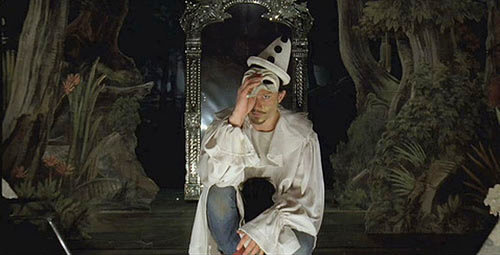
Twilight, True Blood, The Vampire Diaries, Let the Right One In…it seems creatures of the night are everywhere these days. The conceit of the Spierigs’ clever and satisfying Daybreakers is to go the next step and make the situation literal: Everyone’s a vampire now, and blood — particularly the primo-quality human stuff — has become the new oil. Also, there are no sparkling teenage nosferatu here — quite the opposite, really. If you don’t get your hemoglobin fix on the regular…well, let’s just say you won’t end up looking like Robert Pattinson.

Daybreakers was the first leg of a Friday night triple-feature for me, and, if you’re not one for reading long-winded reviews today, I had much the same reaction to all three films: If this particular genre is your cup-of-tea, you’ll probably have a grand ole time. In this case, if you’re someone who enjoys a smart, unabashed B-movie with several dollops of gore, a side of cheesy action, and a patina of political allegory, then Daybreakers should definitely satisfy your nocturnal cravings. On the B-movie scale, I’d say Daybreakers is quite a bit better than, say, Equilibrium or Reign of Fire, and hits at about the level of minor-canon John Carpenter, like They Live! or Prince of Darkness. And, while I think I prefer Stephen Norrington’s Blade in the end, this vampire-noir outing by the brothers Spierig sits very comfortably next to those two flicks on the vampire B-movie shelf.

After an opening tone poem involving a pre-adolescent vampire suicide (a la Claudia in The Vampire Lestat), Daybreakers begins in the near-future: 2019, to be precise. (Given all the vampire-friendly tech on display here — camera-driven cars, “subwalks” to get about during the day — I might’ve moved that date a little further down the line.) We’re now a decade into the infection that turned everyone — or all of those who weren’t eaten, at least — into vampires, and blood is getting scarce.

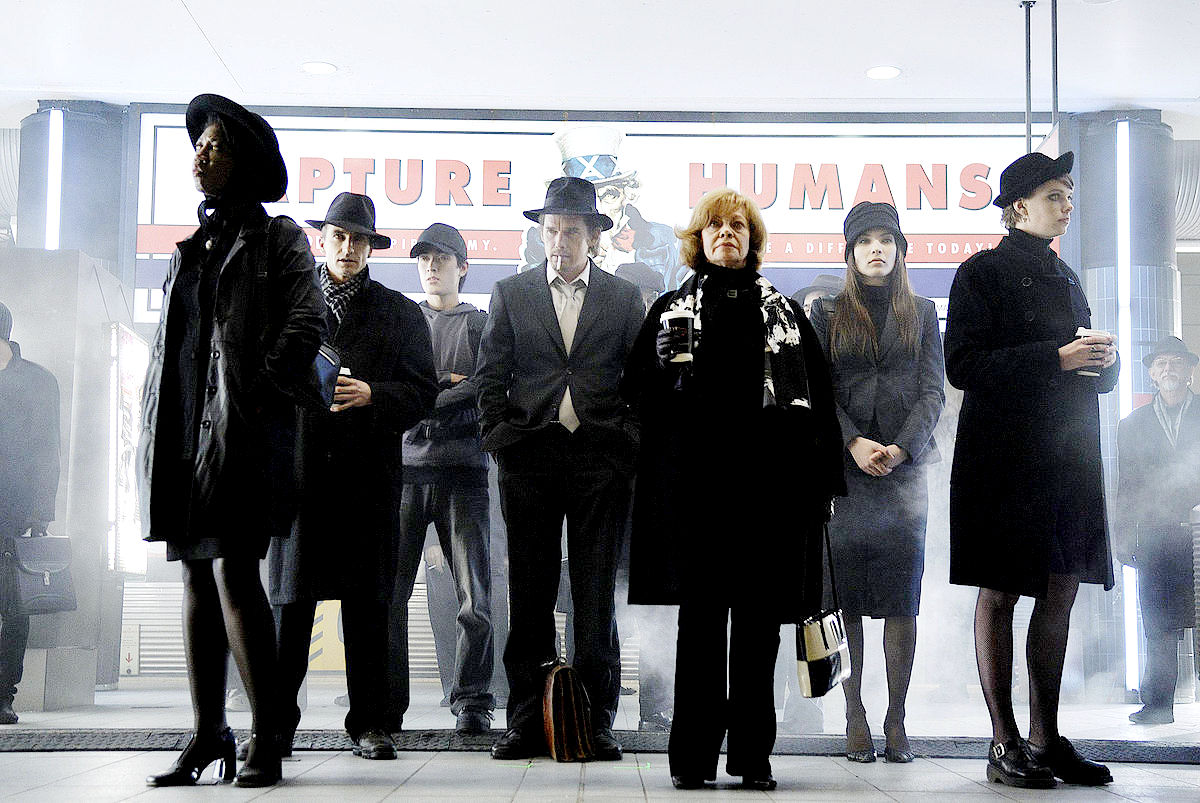
Enter vampire hematologist Edward Dalton (Ethan Hawke), who has been tasked by the now-reigning Big Pharma overlords (most notably Sam Neill) to develop a safe and adequate blood substitute and prevent panic in the streets. But, unlike his military-minded kid brother (Michael Dorman), who loves being a vampire and hunting down the last remnants of humankind, Edward is conflicted about his condition: He’s basically a vampire-vegetarian, who refuses to drink human blood and tries to help the food he encounters whenever possible.

As such, after a chance encounter with a gaggle of humans where he acts surprisingly honorably for his kind, Edward gains the trust of one Audrey Bennett (Claudia Karvan). And she, in turn leads him to Elvis (Willem DaFoe), a mechanic and now ex-vampire. Ex-vampire, you say? Yep — apparently there might be a cure for the blood thirst, if the strange happenstance that un-turned Elvis can be recreated. But, of course, many folks enjoy their new lifestyle, and have no desire to be “cured.” And, be they human or vampire, pharmaceutical companies tend to operate along similar principles: Namely, who wants a cure when they you can just string out a financially lucrative “treatment” over the course of a lifetime?

Kicking the vampires of Big Pharma in the eyeteeth is just one of the reasonably clever political analogies at work here — there are also some Syriana, Crossing Over, and Food, Inc nods along the way, as well as a class-war aspect within vampire society and an exceptionally gory military fracas near the end that has its own allegorical resonance.) But, mainly, the Spierig brothers just want to tell a cool vampire story, and I like the way that the film sets down a few basic ground rules — 1. Everyone’s a vampire and needs blood. 2. Not getting blood will turn vampires into crazed man-bat-type beasts. 3. Drinking vampire blood will accelerate this process — and then just lets the story unfold from there. (That being said, I do think the story opens itself to trouble by giving these vampires some of the old mythic qualities, like not appearing in mirrors and being susceptible to stakes in the heart. If that’s the case, why aren’t all these humans wearing garlic necklaces and carrying crosses?)

Similarly, almost all of the scares here fall on the cheap side — a sudden loud noise or a man-bat leaping out of the darkness. Otherwise, as you might expect from a story where the protagonist is already a vampire, the film isn’t what you’d call particularly frightening. But for what it is — a fun, vampire-centric B-movie with a lot of grist to think over once safely back in the daylight — Daybreakers delivers the goods rather well. And, if you’re a genre fan, there’s a certain pleasure to be taken simply in watching Sam Neill play the Big Bad, not unlike seeing Michael Biehn showing up in Robert Rodriguez’ Planet Terror. (In fact, it’s exactly the type of fanboy thrill one gets from seeing Tom Waits play the Devil, but more on that in due course.)

Hannibal Rising. | Kick to the Dome.

In the weekend trailer bin, our first look at Joe Carnahan’s 21st-century revamp of The A-Team, with Liam Neeson (Hannibal), Bradley Cooper (Face), Quinton ‘Rampage’ Jackson (B.A.), Sharlto Copley (Murdoch), and Jessica Biel. Hmm…ok, maybe. What with that tank and all, this looks aggressively stupid, but I mean that in the best way possible — we are talking about The A-Team here. And the tagline is worth a chuckle.Update: Actually, there is a plan-B. (In fact, I think I’d give my case to Hit-Girl and the Bad Lieutenant before it got anywhere near the likes of Bradley Cooper.) Witness the four-color carnage of Matthew Vaughn’s second Kick-Ass trailer, if you dare.