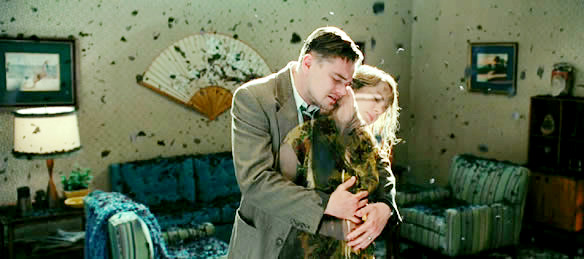
Congrats to the 2010 Oscar winners, which I got…mostly right. The back-to-back Best Director and Best Picture wins for Kathryn Bigelow and The Hurt Locker were a nice surprise, particularly given all the grief the film’s been getting lately. (I was also kinda glad to see The Secret in Their Eyes upset the Best Foreign Film category, given that I didn’t much care for The White Ribbon. As for Sandra Bullock…well, ok. I’m still not seeing The Blind Side.
Category: Cinema
Where There’s a Whip.
Five movies this past weekend and I didn’t catch this one (although I did see the fun Tron: Legacy teaser): With Sam Rockwell’s Justin Hammer making an appearance, here’s the second trailer for Jon Favreau’s Iron Man 2. This is only two months away? Wow, that was fast.
Cold Danish.

Well, David Lynch…not so much. (I presume the reviewer was thinking of Twin Peaks, but there really aren’t very many Lynchian flourishes here — There’s no Roy Orbison, red lights, flaring matches, or dream logic to be had.) But Terribly Happy definitely wears its Coenesque heart on its sleeve, paying brief homage to three of the Coens’ oeuvre in the first three minutes. The movie begins exactly like No Country for Old Men — a grizzled voiceover talking about crime and the olden ways, over shots of the strangely forbidding Danish countryside. We are then warned, a la Fargo, that this is based on True Events. (In fact, it’s from a novel by Erling Jepsen — Before that, provenance unclear.) And, then we cut to behind a police car on a long stretch of highway, one that pretty quickly conjures reveries of Raising Arizona.
Of all the Coens’ output, tho’, Terribly Happy ultimately feels most like Blood Simple — a sordid tale of small-town crime, seedy bars, and village ne’er-do-wells. (See also: great small-bore, character-driven crime flicks like One False Move and A Simple Plan.) This is not to say that Terribly Happy is derivative, because it isn’t. Rather, the film feels like it tips its hat to its influences before setting off on its own quite unique story. (In fact, Happy seemed unique even tho’ this is the third fish-out-of-water crime story I’ve seen in a row, and despite its reliance on the tried-and-true “new cop in an old village” tradition that includes Hot Fuzz, The Wicker Man, the aforementioned Peaks, and any number of old-school Westerns.)
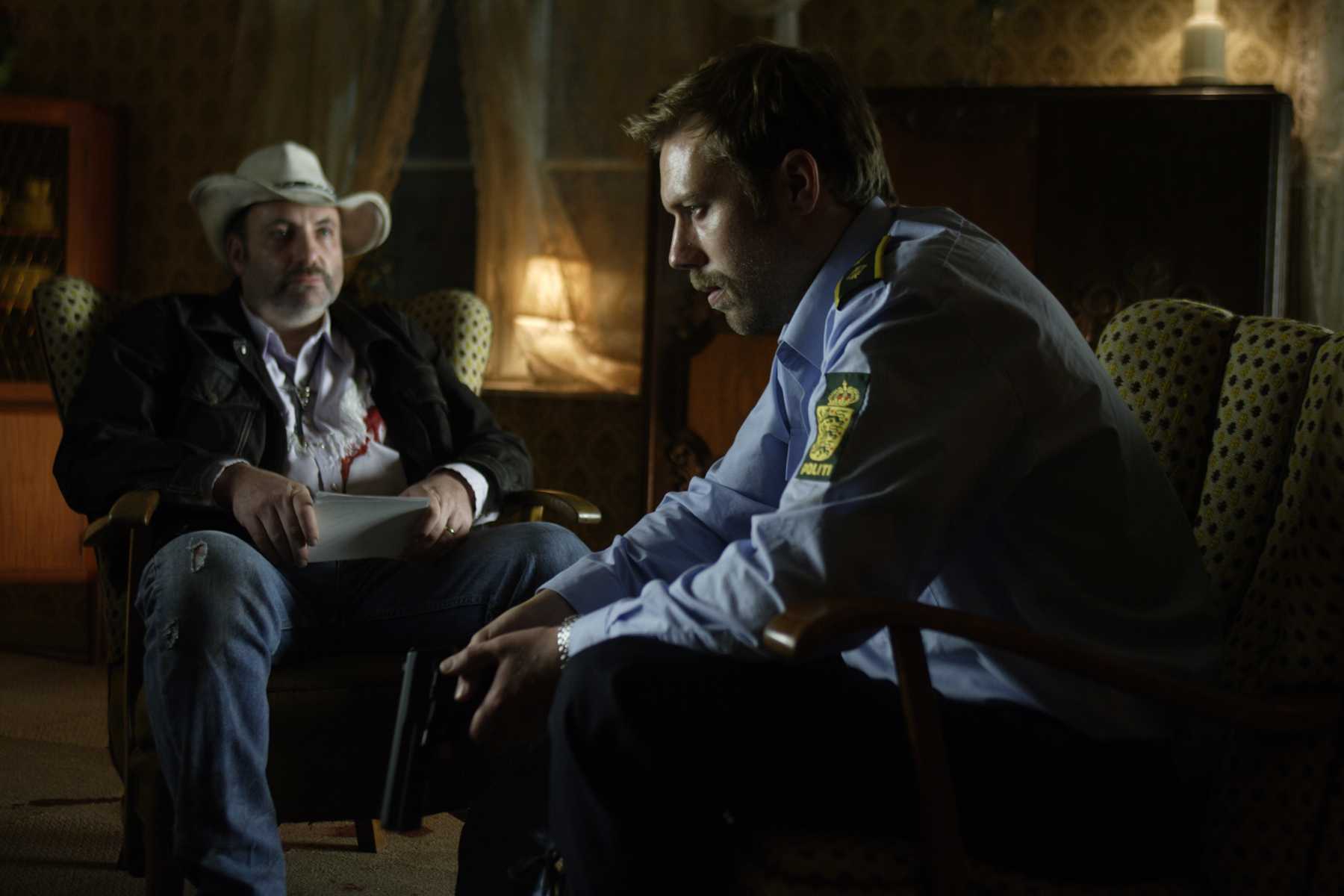
If it seems like I’m just comparing Terribly Happy to other movies rather than talking about the film itself…well, best not to give away too much. But, in brief: Robert (Jakob Cedergren) is a Copenhagen cop who had a little bit of a breakdown, and has subsequently been dispatched to the sticks to rehabilitate his name. In the tiny hamlet where he ends up, people say “Mojn” like Hawaiians use “Aloha.” The village elders play cards all night long, short-handed. A local woman (Lene Maria Christensen) keeps showing up at the station with new injuries. The entire town seems deeply frightened of her husband Jorgen (Kim Bodnia). A strange little girl (Mathilde Maack) insists on wheeling her squeaky baby carriage around at all hours of the night. And people keep disappearing…
So, yes, there’s something rotten in the State of Denmark — more than a few things actually. And, as you might expect, it is Robert’s task to get to the bottom of it all. But in the Danish lowlands, the bottom can be treacherous, and our White Hat here is, well, not entirely stable, particularly after a beer or six. In fact, he’s the type of fellow who might just draw on his own kitty-cat, especially when it also starts saying “Mojn” back at him. (And, really, can you blame him? It’s only a short step there to “I can haz…“)
Sure, there are a few tells along the way — the last five minutes are telegraphed pretty much from the start. Still, Terribly Happy definitely takes a few jags I was not expecting, and the journey is the reward regardless. It doesn’t have the artsy ambition of The White Ribbon (and I have yet to see the well-regarded A Prophet), but nonetheless, Terribly Happy is my favorite non-English-language film of the year so far. It is, simply put, a solid crime story, well-told. (And if you get a chance, check it out before the inevitable American remake.)
The Wicker Frog.
Much has been said of the Muppets of yore…In the venerable tradition of “I still think of you, Jim Henson,” a pious Kermit the Frog gets more than he bargained for as the Muppets are mashed up with The Wicker Man (and I mean the creepy-great 1973 original, not the godawful Neil LaBute-Nicholas Cage stinker.)
Nite-Owls and Cherry Bombs.
Word abounds that the Tron: Legacy trailer will be popping up very shortly on the petticoats of Tim Burton’s Alice, but no sign of it yet.
Until then, Zack Snyder follows up Watchmen with Hugo Weaving and animated owls in the rather meh trailer for Legend of the Guardians. Eh, doubtful…As per the Snyder norm, he lost me with the cruddy frat-rock.
And, for some more encouraging rock ‘n’ roll, Dakota Fanning is all grown up as Cherie Currie to Kristen Stewart’s Joan Jett in the second trailer for Floria Sigismondi’s The Runaways. Hmm, maybe…I can see Michael Shannon being a good bit of fun.
A Ghost in Blair House.
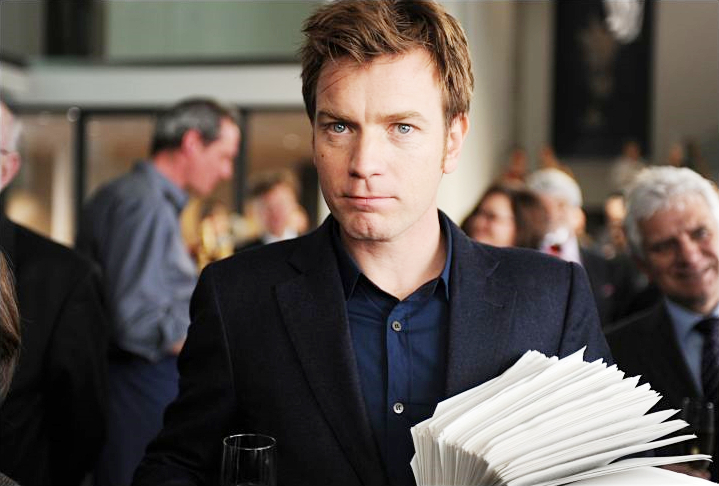
Tho’ I doubt it will get much favorable play in Tony Blair’s household, Roman Polanski’s The Ghost Writer, which I caught last Saturday, is a brisk and competently-made 70’s-style paranoia thriller that also manages to be subversively amusing for most of its run. If you enjoyed the “noir exercise” aspects of Scorsese’s Shutter Island, and you have no strong moral qualms about throwing money Polanski’s way these days, I’d say it’s definitely worth checking out. (Note: I briefly discussed my thoughts on Polanski’s criminality in my nod to The Pianist (#41) on the Best of the Oughts list two months ago. That’s still about all I have to say on that ugly subject.)
Like Shutter, The Ghost Writer is a highly cinematic thriller in-the-key-of-noir that probably works better as a mood piece than it does in terms of plot. (For that matter, once again we have a cast of ne’er-do-wells at a remote island off the coast of Massachusetts, acting suspiciously under gray, portentous skies.) The film is also, not to put too fine a point on it, a resounding eff-you to Tony Blair. Based on a 2007 book by Robert Harris (Fatherland, Enigma), it clearly sets it sights on the ex-PM for getting-in-deep with Dubya and subsequently greenlighting torture in the UK.
If that makes The Ghost Writer sound heavy or preachy, it isn’t, really. The torture and “Special Relationship” stuff forms the background and connective tissue of this particular 70’s-style conspiracy, yes. But the movie cares less about the details than its does just the existence of a nefarious plot at all. In other words, just like Marathon Man or Three Days of the Condor, most all of the political content here is really just a device to get Ewan MacGregor’s low-key, amiable, and boozy-but-talented “Ghost” slowly and inexorably in over his head…and increasingly having to look over his shoulder.
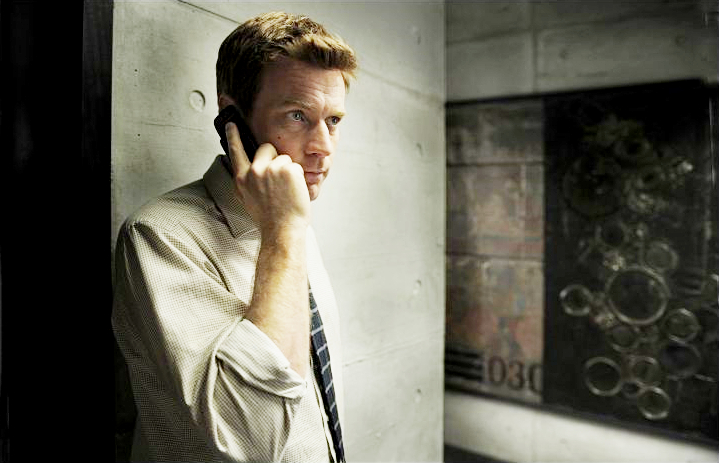
Here, unlike the last time we saw him, MacGregor’s scribe isn’t looking for “the Story” at first so much as a fat paycheck. So, when the ghostwriter for former British PM Adam Lang (Pierce Brosnan) washes up dead off the coast for America, he — after being talked into it by his unctuous agent (Jon Bernthal) — puts his name in the hat as a well-paid replacement, even though he doesn’t give a whit about politics. And after getting looked over by a gruff Haldeman-ish aide (James Belushi) and an obviously sleazebag lawyer (Timothy Hutton), he somehow, miraculously, ends up with the job.
But, be careful what you wish for: Within an hour of landing the gig, Ewan’s Ghost gets mugged on the street for carrying what appeared to be a copy of the current manuscript. (It was a ringer — Nihilists, dude.) Soon thereafter, he finds himself whisked away to Lang’s Island, where he spends his days with a distracted and often visibly angry ex-PM, the beautiful-but-distant missus (Olivia Williams, who I love, but she’s too young for the part), a sultry top assistant (Kim Cattrall, doing her thing), and more security than you can shake a stick at. And when Lang becomes the center of a huge media maelstrom, on account of revelations that he authorized illegal detentions and torture when he was prime minister, well all of a sudden Ewan’s Ghost finds himself trapped in a very well-oiled and dangerous Machine…
Speaking of ghosts in machines, I’ll concede I was probably more tickled by The Ghost Writer than a lot of people might be, just because this is a movie about my trade. Who knows? Maybe cops, lawyers, and doctors feel like this all the time. Still, his irritating penchant for reading everything out loud notwithstanding, when Ewan was puttering around the island on his bike and/or typing away in his schoolboy sweaters, I confess I felt a twinge of happiness that here was a thriller-type movie where I could actually see myself in the predicament. (Speaking of which, yes, there are a lot of dramatic licenses taken with the job of ghostwriting here, but you’re not going to see me complaining to Newsweek about it. That’s what movies do.)
But, all that being said, I think The Ghost Writer has enough of a sneaky sense of humor to it that it would’ve worked for me even without the j-o-b connection. For example, one running gag throughout is that, as per movies of this type, all sorts of shady operators desperately want their hands on Lang’s manuscript. But, like the vast majority of political memoirs in real life, this ghostwritten Maguffin is so platitudinous and vapid (“My years at Cambridge…”) that Ewan’s character can’t figure out why the hell anybody wants to go near it.
And, while the actual conspiracy here is even more implausible than the last turn in Shutter Island (and, again, doesn’t make much sense given what’s come before in the movie), I chuckled at the sheer screw-you audacity of it — You’ll know what I mean if you see it. So, all in all and despite its occasional goofy turns, I found The Ghost Writer a pretty fun afternoon at the movies. I just wish that one of the film’s other driving conceits — that the world will rise up and demand criminal accountability for Dubya-era torture — didn’t seem quite so far-fetched to me as it does these days.
Dr. Watson: One Hoopy Frood.
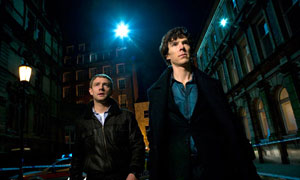
“I’m so proud of this particular group of programs,’ says ‘Masterpiece’ executive producer Rebecca Eaton. ‘These three series say everything about what ‘Masterpiece’ aims to be: iconic, rich with wonderful actors, witty, literate, and timeless. I can’t wait to see them all.'” Along with Upstairs, Downstairs and a take on the Aurelio Zen novels, Sherlock Holmes will get a 21st century revamp for BBC’s Masterpiece Theater, starring Benedict Cumberbatch (of Atonement, although I don’t remember him) as the eponymous detective and Martin Freeman (i.e. the original Tim and most recent Arthur Dent) as Dr. Watson. In addition, new Who guru Steven Moffat is co-producing. (Via Dangerous Meta and cdogzilla.)
Coruscant Travel.
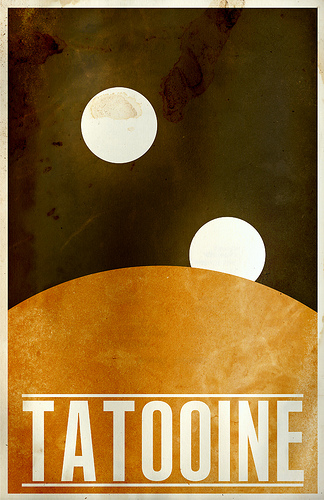
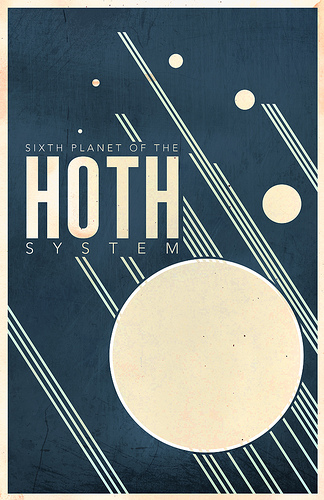
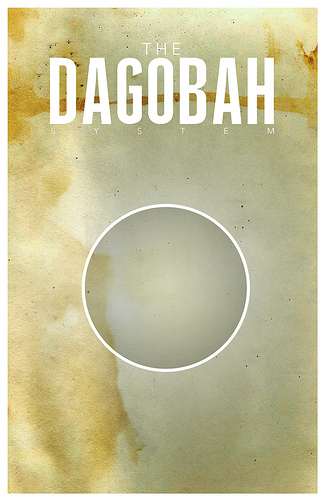

In brightest day, in blackest night…
I’ve been watching the casting fly-by on this without commenting, and I still kinda wish they’d gone with Mad Men‘s Jon Hamm for Hal Jordan over the getting-overexposed Ryan Reynolds (who already has two other comic properties to his name in Deadpool and Blade III.) Nonetheless, Mark Strong has joined the cast of Martin Campbell’s Green Lantern as Sinestro, the Lantern’s arch-nemesis. He joins Reynolds, Blake Lively (Carol Ferris), Peter Sarsgaard (Hector Hammond), and Tim Robbins (Sen. Hammond, Hector’s pa.)
Well, that’s a pretty solid cast on the villain side. But I fear this is just going to feel like an attempt to cash in on DC’s second-tier (a la Iron Man on the Marvel side)…unless they go really big and space-age with it. Like Green Lantern Corps, Oans, etc.
The Island of Arkham.
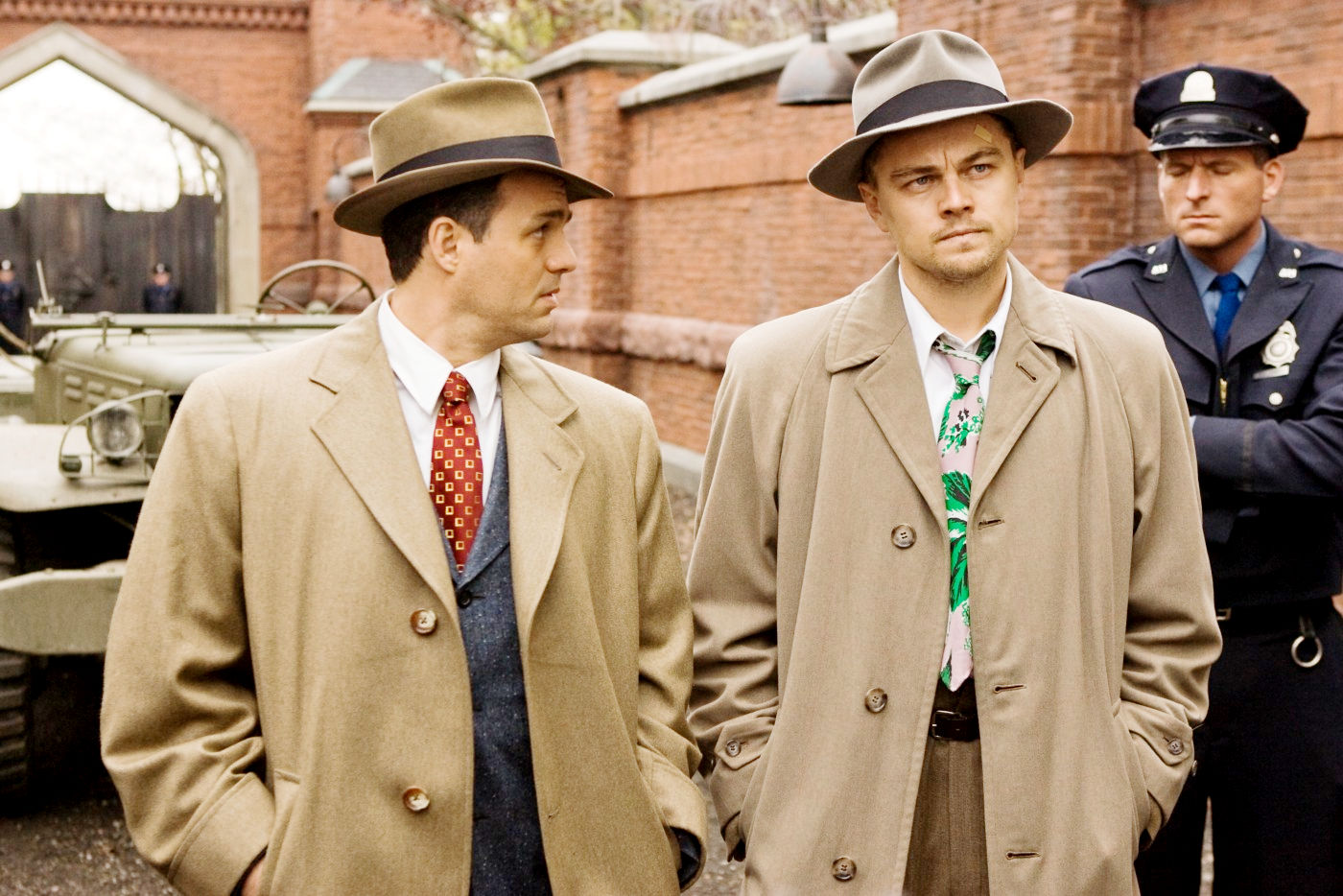
Admittedly, the opening moments of our tale are more than a little creaky, as Scorsese — as per his 1991 remake of Cape Fear — perhaps over-telegraphs the fact that we’re in noir-homage territory here. The year is 1954, and as a rickety ferry chugs along beneath an ominous, very cinematic-looking gray sky, a seasick US Marshall Teddy Daniels (Leonardo di Caprio) fills his new partner Chuck (Mark Ruffalo) in on all the requisite exposition. To wit, these two seafaring gumshoes are checking out a mysterious disappearance on a creepy Island for the Criminally Insane. Teddy’s beloved wife (Michelle Williams), whom he still sees in visions, has passed on account of smoke inhalation after an apartment fire. And — wouldn’t ya know it — one of those Gimongous Storms that fill the nearby Gloucestermen with dread is bearing down on this remote Massachusetts madhouse, right at about the time our two heroes will disembark.
This is all rather ungainly revealed in the first ten minutes or so. But, when our two fedora-topped detectives are met by the officious and strangely aloof deputy warden of the complex (John Carroll Lynch), Shutter Island starts to find its nightmare-at-Arkham groove. It helps that we then meet a few old pros to move things along in that regard. First, the benevolent-seeming Man of Science running the asylum, Dr. Cawley (Ben Kingsley). And then his avuncular, hail-fellow-well-met, and vaguely sinister colleague (old pro Max Von Sydow), who happens to have a Teutonic tendency toward slipping consonants. And that, coupled with the waifish cheekbones of the missing patient (Emily Mortimer), sets off all kinds of unpleasant memories for Teddy of W-W-eye-eye, and the liberation of Dachau…
It is in this first seventy-five minutes or so where Shutter Island really works best. For awhile there, with its melancholy remembrances, plush smoking rooms, fifties detectives, and lurking horrors, the movie is a real triumph of atmosphere. I felt like I’d settled into a really good noir text-adventure like Deadline, Suspect, or even Maniac Mansion, where the crimes are sordid, the suspects range from kindly to malevolent, the atmosphere is gothic through-and-through, the backstory is ever-so-slightly overripe (there may be Nazi-style experiments funded by HUAC going on), and the environment is finite and well-bounded — Nobody’s getting off the island in this here Storm of the Century. And there’s a nightmare at one point, involving Dachau and Ms. Mortimer, that set my teeth on edge as much as anything I’ve seen this side of the Grady sisters. (Some borrowing from The Ring here too, quite frankly.)
Unfortunately, the increasingly aimless Island doesn’t manage to sustain this splendidly eerie vibe throughout its run. Instead, it starts to pile incident upon incident, until the rotting manse of cards eventually tumbles over. When Elias Koteas and Jackie Earle Haley turn up as horribly scarred prisoners of the complex an hour or so in, I thought, ok, this could be creepy. When Patricia Clarkson pops up as a haggard escapee half an hour later, I was thinking ok, but it’s a bit late in the game to be introducing all-new characters like this. And by the time Ted Levine of Monk gets his turn as the exceedingly weird Chief Warden who, in this day and age, would probably relish gladiator movies and the Discovery Channel, I wondered if Shutter Island was actually building toward anything at all.
The answer is, yes, but it too takes awhile. [Some spoilers ahead.] As you may well have expected going in, there’s a Shyamalan-style ending to the case that takes us in a new (but not entirely unforeseeable) direction. The problem is, this ending takes about 25 minutes to play out when it should’ve taken five, including a long digression into a past event that we have fully pieced together on our own by now. I wouldn’t call this ending a cop-out, really, although several earlier scenes (and most notably Ruffalo’s behavior in them) don’t make a lot of sense once we’re privy to the new intel. The problem is more that, like an aircraft taxiing to the gate, it just takes far too long to close the story once this final act is set in motion.
Still, as I said, Shutter Island has its moments. As far as exercises in noir cinema go, I’ve definitely sat through worse than these two and a half hours of Scorsese playing with his haunted mansion playset. If nothing else, you can tell that Marty has a deep and abiding love of the crime-noir genre. And, for at least a good hour or so, his madness is contagious.