
Space-Time in a Bottle.


‘This is an epic result,’ adds Clifford Will of Washington University in St. Louis…’One day,’ he predicts, ‘this will be written up in textbooks as one of the classic experiments in the history of physics.’

Using “the most perfect spheres ever made by humans,” a NASA experiment known as Gravity Probe B finds evidence of space-time curvature, as Einstein predicted under general relativity. “Everitt recalls some advice given to him by his thesis advisor and Nobel Laureate Patrick M.S. Blackett: ‘If you can’t think of what physics to do next, invent some new technology, and it will lead to new physics. Well,’ says Everitt, ‘we invented 13 new technologies for Gravity Probe B. Who knows where they will take us?’

Ich Bin Ein Heidelbergensis.


Although Homo heidelbergensis has generally been seen as a precursor to Neanderthals, its precise relation to us has been less clear. This fossil analysis is some of the most compelling evidence yet that we can in fact trace an evolutionary lineage back through Homo heidelbergensis.”

From a 400,000 year-old skull found in Ceprano, Italy, scientists believe they may have locked down humankind’s parent species. “The idea is that, aided by the favorable climates of the Middle Pleistocene starting around 780,000 years ago, Homo heidelbergensis spread far and wide throughout the Old World. Around 400,000 years ago, this mobility began to decrease and Homo heidelbergensis became more isolated, paving the way for the clear emergence of Neanderthals and modern humans in Eurasia and Africa respectively.

Mr. Lincoln’s Army.

Finally setting off on his long-rumored Lincoln biopic — with Daniel Day-Lewis and Sally Field as Abe and Mary Todd respectively — Steven Spielberg fleshes out his cast in impressive fashion. Joining Mr. Lincoln, among others, are Tommy Lee Jones (Thaddeus Stevens), Joseph Gordon-Levitt (Robert Todd Lincoln), James Spader, John Hawkes, Bruce McGill, Joseph Cross, Hal Holbrook, and Tim Blake Nelson. A team of rivals, and no mistake.

Enabling the Hucksters.

‘Trump’s presidential run is no longer being treated as serious by the easily distracted and resolutely frivolous political press that covered it so thoroughly just a few short weeks ago. While it was always an unamusing joke…we had what felt like a lifetime of New Hampshire trip coverage and Piers Morgan interviews and ‘President Trump? It might be more likely than you think!’

With last month’s embarrassing Trump boomlet seemingly run its course in the Village, Salon‘s Alex Pareene comes to bury, not praise, the Donald. “[T]ransparent idiocy didn’t cause the press to take Trump less seriously, but it did lead people to gradually grow to hate Trump, which made his ratings suffer, and the exposure of the artifice of the Trump persona was decidedly damaging to his ‘brand.’ Once your ‘brand’ has been damaged, say goodbye to credulous political press coverage!

To be honest, I couldn’t care less about Trump, and mostly avoided all of his Birther shenanigans as they were unfolding two weeks ago for the same reason I try to avoid any political coverage — from right or left — of the “You won’t believe what Sarah Palin just posted on Facebook!” variety. It’s lazy, it’s boring, and it’s actively pernicious given all the real problems we face right now. (But at the very least, both Trump and Palin are noteworthy indicators of how far the GOP done fell.)

I’m only posting on this now to point out that the Trump boomlet was by no means a one-time-thing. When the President of the United States actually had to come on TV two weeks ago to prove he was an American citizen, there was much pearl-clutching by the Village press about what a travesty this had all become. “What a sad day in American political history,” lamented MSNBC’s Chuck Todd. Meanwhile, the Washington Post opined that the release “says something embarrassing — actually, make that disturbing — about the state of American politics” — soon after that newspaper of record invited Trump to the White House Correspondent’s Dinner. (An evening, by the way, that’s as good as reflection as any of how desiccated and domesticated today’s establishment press has become.)

For his part, ABC’s Jake Tapper — a fellow who, let’s remember, got his big break as a hard-hitting journalist by kissing-and-telling on Monica Lewinsky back in the day — tried to defend the press by pointing to a Pew study which found that the deficit debate was actually the most-covered news story of the week. The problem with this line of argument is that conducting lousy journalism in one arena does not absolve you of conducting lousy journalism in another. And in fact, Village criers have been just as incompetent and/or duplicitous on the deficit.

For months, as you all know, the Serious People in the media have been banging the drum of the deficit witchhunt even though, from an economic perspective, austerity at this hour makes about as much sense as Birtherism. And, in the past few weeks, they have doubled down on this idiocy by trying to elevate the most recent flavor of the month, Wisconsin Congressman Paul Ryan, as a Serious Man, come to tell us hard truths about the need for sacrifice.

In fact, Congressman Ryan is scarcely any less of a huckster than the Donald. This is a guy who laments the intrusions of the welfare state at every turn, but only made it to college thanks to Social Security benefits received upon the passing of his father. (To be fair: Ryan is only emulating his hero with this sort of hypocrisy.) This is also a guy who, when confronted with the Clinton budget surpluses of a decade ago, then lamented that the debt was too small.

And this is a guy whose budget proposal — which he was quick to deem not a budget, but a cause — is basically the same vile, stale concoction of malice and magical thinking that the right has been peddling for decades. It uses made-up numbers to argue that privatizing Medicare (and leaving seniors with the bills), slashing the social safety net, and lowering taxes on the rich will somehow end deficits and save America. (Short answer: It won’t.)

By any reasonable standard, the Ryan budget should have been laughed out of the room as soon as it dropped. But, no, the press needed A Serious Man™ on the right for its lazy he-said, she-said approach to any political story. And, so Ryan got the Trump treatment and the rest is history. Ostensibly liberal pundits fell over themselves praising Ryan’s budget. In response, the president eventually drew progressive kudos for pitching his own deficit reduction plan. (More on that in a sec.) With both sides established, the press can now continue to happily indulge in the usual medley of content-free, he-said, she-said inanities that, to them, constitutes political journalism. And everyone in Washington can continue to ignore the fact that, actually, more spending, not cutting the deficit, is what is needed to fix the economy right now. Win-win!

Regarding President Obama’s deficit proposals, he delivered an eloquent speech on the subject last month, to be sure — one of his best as president. But, even if we hadn’t already been burned far too many times by his rhetoric not matching up to his policies, it’s hard for me to take his remarks as some great moment of the left just because he finally articulated what should be pretty basic principles of American government. Particularly when you consider that the Obama plan is, of course, center-right-leaning, and yet it has nevertheless become the left pole in an exceedingly narrow economic debate.

(By the way, if you’re really worried about the long-term deficit, the answer isn’t rocket science. Try raising taxes on the rich. Or passing real health care cost controls. Or going where the money’s at. Or growing the economy and putting people back to work. Or, y’know, doing nothing — that would work too.)

In sum, the Trump boomlet of last month was not the exception. It was a clear and distilled expression of the rule, a sideshow to a sideshow. And because the Village press is so terrible, our entire politics is distorted — We are living out the consequences of this disaster yet again in the deficit debate. Only the sheer amount of money flooding the system right now is a bigger political problem than the broken state of the newsmedia.

Confederates at Gitmo.


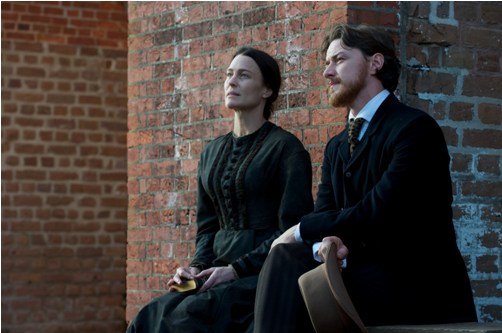
The military trial of civilians is an atrocity!” Why, yes, yes it is. And, if you didn’t think so already, Robert Redford’s The Conspirator, an occasionally flat but still edutaining courtroom drama, aims to sway you to that point of view by coming strong with the history — in this case, the 1865 trial of Mary Surratt for her alleged role in the murder of President Lincoln.

The good news is The Conspirator is nowhere near as preachy and inert as Redford’s last attempt at liberal muck-raking, Lions for Lambs. (I’ll confess I don’t have much patience for didactic message movies that bray at me to embrace opinions i already hold — See also Paul Greengrass’ Green Zone.) Nonetheless, this film still occasionally suffers from the same mix of well-meaning blandness and dramatic torpor that characterizes almost all of Amistad, Steven Spielberg’s similar 19th century courtroom exercise: The values being reified are all laudable, to be sure, but the story as told is strangely lifeless (and I say that as someone who probably enjoys the genre of movies-to-be-shown-in-high-school-history-when-the-teacher-is-out more than most.)

Fortunately, the movie grew on me after awhile. Its depiction of broader Washington DC often feels stagy, and some of the acting support here doesn’t help matters. (As Surratt’s daughter Anna, Evan Rachel Wood overdoes it in her every scene, and the very 21st-century Justin Long is just miscast here as a Union veteran.) But as the lens of the story narrows down to the nitty-gritty of the court case in its middle hour, The Conspirator finds a surer footing. At its best moments, Redford’s film feels like an episode of Law and Order: Civil War Unit, one whose resonances — military tribunals, indefinite detentions, victor’s justice, and whatnot — still feel “ripped from the headlines.”

After establishing that our protagonist here, Frederick Aiken (James McAvoy, with an impressive American accent — he should help out his countryman Ewan) is a Union war veteran wounded in his nation’s service, The Conspirator begins with the terrible crime that will concern us. On the night of April 14, 1865, only five days after Lee’s surrender at Appomattox, several men attempt to kill President Lincoln, Vice-President Johnson, and Secretary of State Seward, with mixed results. Seward manages to survive some nasty stab wounds, Johnson’s killer loses his nerve…but, as we all know, the flamboyant actor-turned-assassin John Wilkes Booth manages to kill the 16th President of the United States in cold blood. It is a horrible act of treason, the first assassination America has ever seen, and, make no mistake, everyone involved will pay.

And so, under the direction of Secretary of War Edwin Stanton (Kevin Kline, only slightly less Cheneyesque than Richard Dreyfuss in W) the conspirators (minus Booth, who is shot during capture) are rounded up and put on, for all intent and purposes, show trial — one headed by military men and quite clearly designed to come back with guilty verdicts. (FWIW, this film mostly elides over the Manhunt part of the story.) Nonetheless, according to that quaint old Constitution, even such dastardly criminals as these deserve defense counsel, and ultimately the young Union lawyer we met at the outset is roped into defending Mary Surratt (Robin Wright) by his mentor, Maryland senator Reverdy Johnson (Tom Wilkinson).

Captain Aiken takes to his new position reluctantly, especially since he feels pretty certain that Surratt — the proprietress of the boarding house where the conspirators plotted — is guilty as all Hell. But as he learns more of Surratt and her pious Christian, Ur-mother ways, he starts to wonder if maybe she’s just taking the fall for her son John (Johnny Simmons of Jennifer’s Body), who is still on the lam. And, as he grows ever more sick of the obvious railroading happening at trial under the direction of Judge David Hunter (Colm Meaney) and prosecutor Joseph Holt (Danny Huston, doing his officiously sinister bureaucrat thing), Aiken becomes a convert to his duties, even as proper Washington society begins to shun him for seeming to take on the Confederate cause. Sometimes a man has to make a stand, etc. etc.

I don’t know much about the Mary Surratt trial other than what Wiki has to offer, so I can’t tell you if Redford and screenwriter James Solomon have done justice to the specifics of the story — It seems to have a versimilitude about it, at any rate. But one place where I thought The Conspirator faltered is in establishing the Big Picture. True, the film begins grimly with Lincoln’s assassination — hard to fault it there, I suppose. But particularly once the courtroom scenes take hold, it doesn’t do a very good job of putting everything in emotional context — that all of this is happening mere days and weeks right after the close of America’s bloodiest war. (Nor, for that matter, is slavery mentioned.) And so, while the Law and Order aspects of the story are often compelling in their own right, the trial also feels flat, and strangely disconnected from all the events that put it in motion.

Which is too bad, really. Since, if anything, that Civil War backdrop adds depth to the viewpoint Redford seemed to be trying to uphold. There we were after four years of bloody war, 600,000 dead and the president assassinated, and Aiken is still taking a stand for the constitutional rights of Mary Surratt — even though an innocent verdict might well put the sides at each other’s throats again. (Contrast this with the cowardly behavior our past two administrations have shown with regard to tribunals, detentions, Gitmo, etc, even though, neither on 9/11 or since, has Al Qaeda ever represented the kind of existential threat to our republic that we faced in 1865.)

Speaking of the Civil War angle: In a way, I admire the shrewdness of this film: It tries to pitch a civil liberties morality play in such a way that the people who will feel most aggrieved about the injustices being shown, civil libertarians notwithstanding, are the folks among us with residual sympathy for the Confederacy — not normally a left-leaning or libertarian bunch. But, let’s get real: They’re not going to see this film, or, if they do, see it as anything other than lefty propaganda. Like Inside Job or Casino Jack and the United States of Money, The Conspirator is for the most part just preaching to the choir. One of the best things you can say about it is that, for the middle hour at least, you may not mind humming along.

Bicycle! Bicycle!

The popularity of the program is due to the attractiveness of the sturdy red bikes–every distinctive Capital Bikeshare vehicle on the street is a rolling advertisement for the program–and its incredible convenience. The system is very easy to use, and riders may pick up a bike at any station and drop it off at any station, perfect for short, one-way trips. The first 30 minutes of each trip are free, making a year’s membership a bargain for $75 if one uses the bikes for in-city commuting and errands.

Bicycle sharing is coming your way, so forget all your duties, oh yeah… From Kevin Spacey to Fratty McFrattersons, Kaid Benfield briefly surveys the rise of DC’s Capital Bikeshare in The Atlantic. “‘Capital Bikeshare’s success right out of the gate has far exceeded our expectations,’ said program director Terry Bellamy.” (LivingSocial helped.)

I joined in March after my crappy Target bike was stolen, and, while it definitely has logjams at the morning and afternoon rush hours (hopefully soon alleviated by 25 more stations), it mostly works out for my daily commute. Now if only they could get users to wear helmets.

Groundhog Train.


If Hanna was Run Lola Run meets Bourne meets True Grit, then Duncan Jones’ enjoyable B-movie Source Code — another film that has sat in both the viewing and reviewing queues for several weeks — is Groundhog Day meets Deja Vu meets Quantum Leap. Jones’ second film is nowhere near as great or gripping as his heady sci-fi debut, Moon, but it doesn’t really aspire to be either. Instead we have an amiable and breezy popcorn flick that hits at about the level of a quality episode of Amazing Stories, and I mean that as a compliment.

The agreeable, low-key feel of Source Code matches not only its two leads, Jake Gyllenhaal and Michelle Monaghan — both of whom have their usual affable guy/girl-next-door appeal about them here — but also the patron saint of the reliving-the-past-so-we-can-make-it-right genre: Scott Bakula, formerly of Quantum Leap. (He’s here not just in spirit — Bakula also has a voice cameo late in the film. Well-played, Mr. Jones.) And if you enjoyed the time-traveling do-gooderism of Dr. Sam Beckett at all back in the day, you basically know what you’re getting here — A slightly longer and more high-budge episode of the show (alas with no Dean Stockwell — although Vera Farmiga is here, doing a lot of talking to a television screen, and Jeffrey Wright has fun muttering and puttering around in the background as a mad scientist of sorts.)

If for some weird reason you’ve never seen Quantum Leap, the conceit of Source Code is this: Captain Colter Stevens (Gyllenhaal) — a helicopter pilot who thought he was on duty in Afghanistan — wakes up on a train bound for Chicago, sitting across from a comely brunette (Monaghan) who seems to think he’s a teacher named Sean Fentress. Eight minutes later, before he can disentangle what’s happened to him or what’s going on, that train goes boom, killing all aboard. Then Capt. Stevens wakes again to find himself strapped within a futuristic-looking metallic pod, a la Jodie Foster at the end of Contact, with a military handler (Farmiga) trying to ping him over the radio. Most expensive training simulation evar?

Sort of. As the disoriented captain soon discovers, Stevens is actually the Army-donated guinea pig for a new time-traveling technology called (wait for it, wait for it) Source Code, which allows him to relive the last eight minutes of a dead man’s life — but only for informational purposes. In this case, his charge is, a la pretty much every season of 24, to figure out who the bomber of the train is before, in real time, he or she can strike again in downtown Chicago. And so Stevens dives back in, and in again, until he knows exactly when the coffee get spilled and where the gun on board is, all the while developing a closer rappaport with Monaghan. Is it possible he could use Source Code to change the past, rather than just learn from it, and save her life? Be a whole lot cooler if he could…

So, like I said, Quantum Leap — although there’s a lot of Groundhog Day here as well, particularly as Stevens gradually hones his eight-minute runs through trial and error (and learns how to get on the good side of some of his crustier travelmates.) More than anything, tho’, Source Code feels like an exercise in video game logic. Replace the train blowing up with “you have been eaten by a grue,” and for all intent and purposes Stevens is just playing an Infocom game here (or, for the unplugged, reading a Choose Your Own Adventure book.) And so there’s not much sense of danger here in Source Code — The pleasures to be had are less of the will-he-beat-the-ticking-time-bomb variety than of watching someone work out a “Bombing on the Orient Express”-style text-adventure puzzle.

Still, the movie is good fun, not the least since Gyllenhall (who’s already done time as [spoiler] an already-dead time traveler in Donnie Darko) moves along the story at about the pace of the audience: The script is a smart one — Once Stevens understands the ground rules, he runs with it, trying the things that you or I might try to sort his way through the situation.

Now, that being said, the movie’s ending doesn’t make much sense when you think about it. (It’s also unwittingly creepy, in a Being John Malkovich kind of way, if you take time to remember that somewhere before all this started there existed a teacher named Sean Fentriss.) But, hey, it’s a time-travel flick. More often than not, the logic is going to break down at some point regardless. Take it for its B-movie worth and Source Code is a fun, smooth, and involving ride, and a perfectly fine way to spend 90 minutes on a spring or summer day. And if you really like it, you can go ahead and relive it again — just watch out for the grues.

The Last Debt Fight.

After the Civil War, political leaders in the defeated South announced their intention of resuming their seats in Congress and of using their power…to compel the federal government either to pay off all debts of the Confederacy or to default on the national debt which had been borrowed to finance the Union war effort…For this reason, [Reconstruction Republicans] wrote into our fundamental law an absolute prohibition against defaulting on the national debt. Its language establishes a complete firewall against the misuse of governmental power by one political faction to get its way by wrecking the public credit.

As congressional Republicans try to bluff their way through another round of hostage-taking with the American economy, this time vis a vis the debt limit, Garrett Epps reminds us that the debt limit idea is actually unconstitutional, by way of the 14th Amendment (already not the GOP’s favorite accomplishment.) “This requirement is absolute. It is contained in Section Four of the Fourteenth Amendment, which directs, in no uncertain terms, that “the validity of the public debt of the United States, authorized by law…shall not be questioned.

Silence will Fall.


‘There is a huge irony,’ said SETI Director Jill Tarter, ‘that a time when we discover so many planets to look at, we don’t have the operating funds to listen.’ SETI senior astronomer Seth Shostak compared the project’s suspension to ‘the Nina, Pinta and Santa Maria being put into dry dock.’…This is about exploration, and we want to keep the thing operational. It’s no good to have it sit idle.

Another casualty of the lousy economy and the budget crises (in this case, California’s) SETI’s Allen Telescope Array goes dark. “‘We have the radio antennae up, but we can’t run them without operating funds,’ he added. ‘Honestly, if everybody contributed just 3 extra cents on their 1040 tax forms, we could find out if we have cosmic company.‘”

The Companion.


Those sweet memories of happy days with Lis Sladen, the lovely, witty, kind and so talented Lis Sladen. I am consoled by the memories. I was there, I knew her, she was good to me and I shall always be grateful, and I shall miss her.Elizabeth Sladen, a.k.a. the Doctor (and K-9’s) most beloved companion Sarah Jane Smith, 1946-2011.