
Meanwhile, over in the newly Democratic Senate: With Wednesday’s House cleaning spurring similar ethics reform in the upper chamber, a progressive dream team of Russ Feingold and Barack Obama unveil the Senate Dems’ ethics reform package, which includes a provision for an independent Office of Public Integrity, a key element of reform which failed 67-30 last year on the GOP’s watch.
Author: KcM
Madam Speaker | Fiscal Constraint.
 “For our daughters and granddaughters, today we have broken the marble ceiling. To our daughters and our granddaughters, the sky is the limit.” On a day marked by celebration and the temporary cooling of partisan rancor, the Speaker Pelosi era officially begins in Washington. And, true to their word, the Democratic House got an early start on their “100 Hours” platform, passing a comprehensive ethics reform package 435-1 on Thursday (right-wing nut-job and former Clinton nemesis Dan Burton was the sole opposing vote) and a “pay-go” commitment to a balanced budget (as well as an end to anonymous earmarks) on Friday. “‘The one thing we can say about George Bush and his economic policy is: “We are forever in your debt,”‘ Rep. Rahm Emanuel (D-Ill.) told his colleagues on the House floor. ‘On day number two, Democrats have said, “Enough is enough with running up the debt of this country. We’re going to put our fiscal house in order.”‘”
Musical Chairs for Team Dubya.
In not-unrelated news, the Dubya White House shuffles its deck to make ready for divided government, replacing failed Supreme Court bid Harriet Miers as White House counsel (likely in favor of someone more aggressive, so as to counter Dem subpoenas), kicking national intelligence director Nicholas Negroponte over to State (to be replaced by Vice Admiral Mike McConnell), appointing Thomas D’Agostino as new nuclear chief (the old one, Linton Brooks, seems to have been of the “Brownie” school of management), putting Iraq ambassador Zalmay Khalilzad in John Bolton’s former position at the UN (his job goes to Ryan Crocker), and overhauling their top military team in Iraq. As the WP‘s Dan Froomkin reads the tea leaves, “I see a possible theme: A purge of the unbelievers.”
Ban Ki-Moon (and Spitzer) Rising.
Other important leadership shifts, these in and around New York: Having officially replaced Kofi Annan at the UN earlier this week, new general secretary Ban Ki-Moon cleans house, announces his own team and sets the Darfur crisis as a top priority. And, over in Albany, New York governor (and future presidential contender?) Eliot Spitzer delivers both his first Inaugural [text] and his first State of the State [PDF]: “In an hourlong address that was largely a repudiation of the policies of his predecessor, George E. Pataki, the new governor said he would seek to broadly overhaul the state’s ethics and lobbying rules. He said he would make prekindergarten available to all 4-year-olds by the end of his term, overhaul the public authorities that control most of the state’s debt and make New York more inviting to business by reducing the cost of workers’ compensation.“
The Postman Always Reads Twice.
“‘The administration is playing games about warrants,’ Martin said. ‘If they are not claiming new powers, then why did they need to issue a signing statement?‘” New year, more of the same. Channeling Albert Sidney Burleson, Dubya creates consternation among civil liberties advocates with another recent signing statement reinvoking the right to read anyone’s mail. Let me know if y’all figure out what the best student loan consolidation plan is.
Compass Heading.
More images from The Golden Compass emerge online, including new looks at Lyra (Dakota Blue Richards), Lee Scoresby (Sam Elliot), Mrs. Coulter (Nicole Kidman), and Lord Asriel (Craig. Daniel Craig.) Also in the mix, Eva Green (as Serafina Pekkala) and Ian McShane (as the voice of Ragnar Sturlusson). [They’re also posted here.]


Secrets of the Hive.
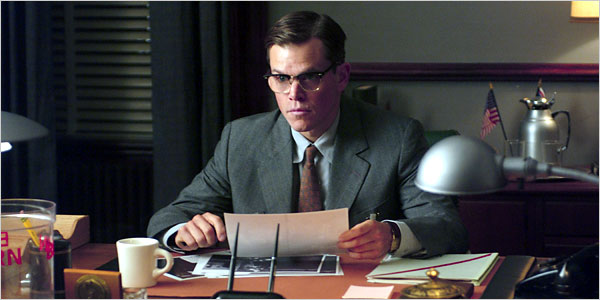
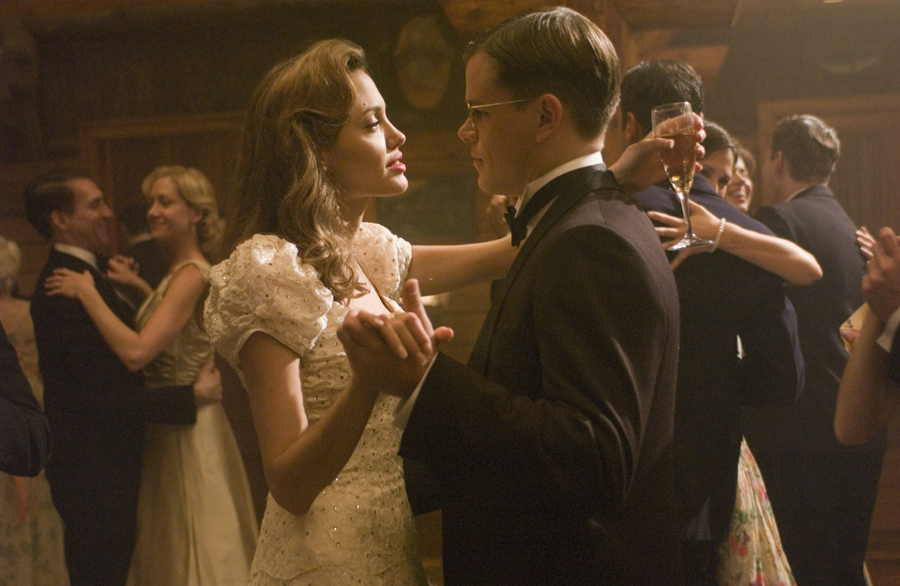
Robert De Niro’s The Good Shepherd, the first entrant in my ongoing end-of-2006 movie marathon this week, makes no secret of its Oscar-bait aspirations. Basically the WASP version of The Godfather, as told against the creation and Cold War consolidation of the CIA, Shepherd boasts a crisp look, a grand historical sweep, high-quality production values, and a stellar cast (including Best Supporting Actor-type turns strewn all over the place, like the wreckage from a better, more interesting movie.) But it’s also a film that never lets you forget how serious and sober-minded it aims to be. As such — however well-meaning and nice to look at, with all its chiaroscuro fedoras on hand — it’s also sadly a bit of a bore. Throw in an occasionally clunky script (note the particularly egregious God/CIA line near the end, for example) and some considerable miscasting issues (Matt Damon is a good actor, but is thoroughly implausible as a middle-aged man, and Angelina Jolie is too much of a star presence to be wholly believable as the ignored wife) and you have a respectable but ultimately somewhat pedestrian night at the movies. Shepherd gets the job done, I suppose, but it takes no pleasure in it.
When we first meet intelligence analyst Edward Wilson (Matt Damon), the bespectacled Everyman and titular shepherd of the film, it’s the spring of 1961, the Bay of Pigs invasion has just gone FUBAR, and America’s new president is looking for a few heads to roll over at Langley. In this middle of this spate of job anxiety, Wilson is mysteriously sent a photo and audioreel of a couple in the throes of passion, seemingly somewhere in the Third World. As he sets to work on deciphering this arcane message, Wilson’s thoughts wander all the way back to 1939, when he — a young, idealistic student of poetry at Yale — was recruited first by the infamous Order of Skull and Bones (a.k.a. preppy fratboys gone wild) and then, after war breaks out in Europe, by the OSS. Along the way, he takes on a number of varied mentors, ranging from a Nazi-sympathizing poetry professor with then-shocking proclivities (Michael Gambon) to a congenial if hobbled general and spymaster (De Niro, playing a variation on Wild Bill Donovan) to a gaggle of fellow scions of the WASP Old Boy Network (representing the Eli’s, William Hurt and Lee Pace; representing the Oxford-Cambridge crowd, Billy Crudup with a slipping accent.) He also falls in love, with a (note the symbolism!) kindly, open-hearted deaf co-ed (Tammy Blanchard), and falls, in lust, with a needy, easy, and borderline-psycho socialite (Angelina Jolie, verging on typecasting in a terribly written role, but still quite good.) As the years drag on and the world freezes into Cold War, Wilson finds himself not only engaged in high-stakes cloak-and-dagger gamesmanship against his Soviet counterpart, codenamed Ulysses (Oleg Stefan), but inexorably ceding more of his dreams, his morality, his family, and his very soul to that hungering bastion of the Eastern Establishment mafia, the Central Intelligence Agency. And every time he tries to get out, they keep pulling him back in…
Comparisons to The Godfather are probably as unfair as they are inescapable. Still, for all the striving and sweating on display here, Edward Wilson is ultimately no Michael Corleone. In fact, Damon, while trying admirably, can’t plausibly sustain the second “middle-aged” half of the film, and portrays Wilson as too much of a blank (clearly De Niro’s decision) to garner much in the way of sympathy or empathy. More resonant in The Good Shepherd are many of the supporting turns, particularly Gambon, John Turturro as Wilson’s tough-talking (non-WASP) #2, and Alec Baldwin in a minor role as a hard-living G-man. But they’re not enough to put Shepherd over the top, and for every vignette in the film that contains real emotional power — most notably the interrogation of defector “Valentin Mironov” (Mark Ivanir) — there are two that, through a combination of directorial straining and an overly intrusive score, spill over into overcooked blandness. (See for example, the plane and letter-burning sequences at the end of the film, both of which are carried for several beats too long and which suffer from paint-by-numbers swelling strings on the soundtrack.) The Good Shepherd is by no means a bad film, but, alas, it’s not particularly a good one either. Like a veteran CIA hand, it fades effortlessly into the background, and offers little that might be considered truly memorable.
Just Like Tom Thumb’s Blues, Redux.
Hey all…I’m now back in New York City, tan, rested, and ready for whatever 2007 may bring. (I hope.)
The People’s History.
“History is a doomed enterprise that we happily pursue because of the thrill of the hunt, because exploring the past is such fun, because of the intellectual challenges involved, because a nation needs to know its own history. Or so we historians insist. Because in the end, a nation’s history must be both the guide and the domain not so much of its historians as its citizens.” By way of the always-scintillating Late Adopter, Arthur Schlesinger Jr. contemplates the importance of history to our republic.
Keeping Up with the Joneses.
We’ve heard it a few times before, but apparently this time it’s for real: A Steven Spielberg-directed Indy 4 is a go, with a David Koepp script and a planned May 2008 release.