
“‘At its core, Warcraft is a fantastic, action-packed story,’ said Raimi. ‘I am thrilled to work with such a dynamite production team to bring this project to the big screen.” This is old news by this point, but just to get it down for the record: Sam Raimi is confirmed for the upcoming World of Warcraft movie. Sigh…I get out, they keep trying to pull me back in.
Author: KcM
The Other Side of Summer.

But I’m not one of those people. For me this definitely goes on the Garden State “vaguely-guilty pleasure” pile. (500) Days of Summer tells such a particular and yet relatable story that I readily fell for it. Like our unfortunate protagonist, I was willing to think the best of Summer, and forgive its obvious flaws, once I’d chosen to succumb to its charms. It’d be hard to sum up (500) Days better or more succinctly than the tagline at the official site: “Boy meets girl. Boy falls in love. Girl doesn’t.” If this has ever happened to you, and lordy has it happened to me, I suspect you’ll enjoy 500 Days of Summer quite a bit as well.
(500) Days tips its doomed-romance hand right away, opening with a Fargoesque gag about the film’s provenance: “Note: The following is a work of fiction. Any resemblance to persons living or dead is purely coincidental…Especially you, Jenny Beckman. B***h.” From there, we briefly glimpse our star-crossed lovers on day 488 of their 500-day story, before venturing back to Day 1. Tom (Joseph Gordon-Levitt) is a would-be architect slumming it as a writer of greeting cards. Summer (Zooey Deschanel) is the boss’s comely new assistant. Tom has spent a lifetime listening to mopey acts like The Smiths, New Order, and Joy Division (check), and has convinced himself that there is a One out there for him, somewhere amid this sea of despond. (And when he meets her, it’ll be Fate! There’ll be a Light that Never Goes Out!) Summer, meanwhile, is a child from a broken home, one who long ago gave up on capital-L Love, and now she prides herself on keeping a distance from everything and everyone around her. Did I mention this will end badly?
Nonetheless, Tom falls head-over-heels for Summer, and, going with the flow, she reciprocates his affections, even though she warns him she wants nothing “serious.” Weeks and months go by — They shop for records, they indulge their IKEA nesting instinct, they reveal intimate details to each other. But all the while Tom is falling deeper in passion, Summer is skating along the surface of things. The problem is, Tom can’t see it because he’s living out his own romantic reverie (and because the object of his affection is played by the adorable Deschanel), but Summer is actually kinda awful. She’s a bit of a poseur. She’s a relentless Debbie Downer. She’s needlessly and almost unwittingly cruel, in the way that madly self-absorbed women often tend to be. And, really, how can you trust a gal whose favorite Beatle is Ringo? (Not that Tom wasn’t warned. Early on, he asks his best friend (Geoffrey Arend, most recognizable as the wacked-out college kid from Super Troopers), “Why is it that pretty girls think they can treat everybody like crap and get away with it?” The obvious answer: “Centuries of reinforcement.“)
If you’re sensing a certain amount of raw post-traumatic breakup disorder pique issuing forth from (500) Days, it’s definitely there. (Co-screenwriter Scott Neustadter has been admitting in interviews that this film was basically therapy for him after a particularly virulent dumping.) But, with two to five crappy, by-the-numbers romantic comedies coming out a weekend, I find it a bit refreshing to see a closer-to-real-life alternative for once. Thing is, this isn’t really a romantic comedy at all, so much as a story of a guy who once felt like Han Solo when ’round a certain girl (check), now digging in the dirt, trying to figure out how he ended up in such a godforsaken hole. And, in that regard — I’ve lived down there, so don’t go there — I definitely warmed to it.
The film’s got problems, for sure — There’s a half-baked voiceover (by Leslie Nielsen) that fades in and out whenever a point needs to be hammered on. There are a lot of scenes out of Indie Screenwriting 101 — the hipster karaoke date, the Howard Beale breakdown at work, the 7-11 trip in the Lebowski bathrobe. But, like I said, you either go along with things like, say, Tom’s confessor being his preternaturally mature 12-year-old sister (Chloe Moretz), or you check out. For me, I went along with the ride. The worst thing you can say about (500) Days of Summer in the end is that it’s Annie Hall-lite. (And, funnily enough, Joseph Gordon-Levitt has already been in Miller’s Crossing-lite with Brick.) Well, to my mind, there are worse things in the world than rehashing Annie Hall for a few hours. Getting dumped, for example.

Stampp of Excellence.
“‘He was really a pioneer, demolishing the magnolia and mint juleps view of slavery,” said Eric Foner, a professor of history at Columbia. ‘And the Reconstruction book was in the same revisionist mode, sweeping away myths. Among serious history scholars, nobody is going to go back before Stampp.’” Kenneth Stampp, 1912-2009. (By way of Ted.)
Next Stop Wonderland(s).
In the trailer bin of late:
And, as Comic-Con 2009 is just kicking off:
Back on the Grid.
So, after a deep-end immersion into the Capitol Hill throng (as you might expect, it’s been busy ’round these parts, particularly by grad student standards) and a slow but steady establishing of a new home base here in the Beltway (I’ve secured a dog-friendly 1BR apartment in downtown Dupont, done 99.44% of the unpacking, acclimated the sheltie, and made the requisite investment in Swedish modular infrastructure — hat-tip, IKEA), I think I’m about at the point where I can officially log back on the grid.
All of which is to say, tho’ I’m jumping the gun by a day here — the Comcast guys come tomorrow to wire the new pad, which should greatly facilitate posting — I expect normal updates at GitM should now resume. Hey y’all, good to be back.

So, since the Comcast powers-that-be have posited the existence of a deep and unbreakable connection between having a screen to show a TV signal and the Internets, another week of relative quiet, I suspect. But back soon.
One Small Step.

“I always knew I’d live to see the first man walk on the Moon. I never dreamed I’d see the last.” — Jerry Pournelle. Forty years after Apollo 11, it’s time to reach for the stars once more.
Efficiency and Honesty.

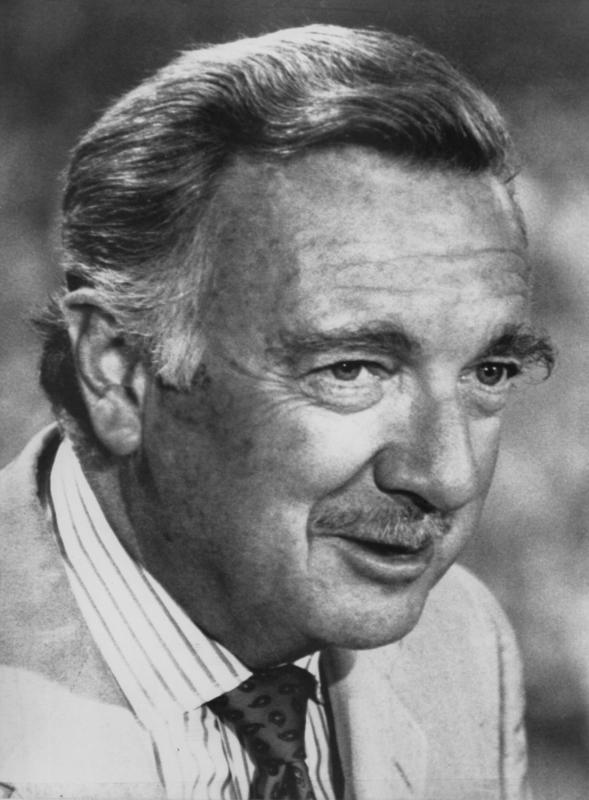
“What do I regret? Well, I regret that in our attempt to establish some standards, we didn’t make them stick. We couldn’t find a way to pass them on to another generation.” — Walter Cronkite, 1916-2009.
The District, Take Two.

My job, in case y’all were wondering: I’m going back into full-time political speechwriting. More specifically, I will be working on the Hill, House side, as a “foot-soldier in the Obama revolution,” to borrow a frequent McCainism. And I hope and expect I’ll be getting a first-hand look at how the legislative sausage is made from the ground floor.
If you’re curious to know who exactly I’m working for, feel free to drop me an e-mail sometime. Why so coy about it? Don’t worry — it’s a Democrat! Still, after close to ten years of posting here at GitM, this feels like a good time to establish some modicum of healthy distance between my life and blog. If anybody’s still reading from my last DC tenure way back when, I acknowledged openly back then that I worked at the FCC, and it’s not like this became the go-to place for inside scuttlebutt on the AOL-TW merger or anything. (Nor, during my Carville stint, did I post about any work goings-on in this space either. I may not have been blogging per se in ’97 and ’98, but I was nevertheless writing here pretty often.)
But, in those days, the Internet was more of a Wild West frontier town, blogging was a relatively new fad — back then, it wasn’t “What do the bloggers think?!” but “Why are you bothering to post that stuff online?!” — and I think it was easier to get away with more. Now, I’m under no illusions that GitM has or ever will enjoy a large readership — In fact, in terms of visitors this site peaked probably five or six years ago. And, from the beginning, I’ve always been conscious that this is a public forum, and have tried to be relatively temperate in my posts accordingly. I think the archives here reflect pretty well on me, all in all, and I’m not really concerned about hiding anything. Even if somebody did make the effort for some ridiculous, unlikely reason, the worst headline a right-wing blogger type might come up with after perusing the past decade of posts is “Democratic Aide is Overgrown Boy, Won’t Shut Up about Lord of the Rings.“
But, obviously, I have been a partisan here over the years. And so, by establishing a little more distance between my blogging and working life, I hope it’ll emphasize the fact that both the ten years of posts already here, and the posts to come, reflect on me and me alone. As far as GitM goes in the future, I won’t be posting on my day-to-day business as always, and, as always, I’ll be erring far on the side of discretion in my choice of topics. Still, unless Congress suddenly takes a decisive stance on movie trailers, fanboy-to-film properties, random science and culture articles, and the occasional items of historical or progressive interest, I’m sure the usual content here won’t shift all that much.
Phew! Now that all the caveats are out of the way, let me say that I’m very happy to be both rejoining the ranks of the employed and returning to political speechwriting. (Yes, some aspects of DC life do rankle, but I have a lot of friends there, and it’s definitely a fun, interesting town.) To be honest, this is a career move I’ve been considering since I first set off for grad school in 2001, so my returning to the political fold on the other end of the PhD process (give or take a few months) feels like a natural and very satisfying progression to me. (The Ivory Tower isn’t losing much anyway, particularly given that the existence of academic jobs in this recession economy, as many poor souls out there can tell you, is proving to be almost entirely theoretical. Besides, over the long term, I don’t really see the academic and speechwriting paths as mutually exclusive anyway. And never say never — with any luck, I have a ways to go yet before the final bell tolls.)
At any rate, I’m off for a hopefully MacArthuresque return to DC. I expect updates here will be more sparse than usual over the next few weeks as I make the move and settle in. But, I’ll be back, in due course. Until then, a very happy July 4th to you and yours.
Enemy of the State.

In Public Enemies, Michael Mann’s strange and striking naturalistic recounting of the last year in the life of John Dillinger, you can catch glimpses of several other movies Mann has made over the years. Most obviously, the film’s basic plot is much like that of Heat with Johnny Depp and Christian Bale taking the bank-robber (DeNiro) and crusading-cop (Pacino) roles respectively — Here Depp is Dillinger, the charismatic Depression-era outlaw whose string of notorious bank jobs unwittingly help to forge modern techniques of law enforcement, and Bale is Melvin Purvis, the stalwart, if somewhat plodding, lawman who leads the effort to bring him to justice. And Enemies also shares the hyperreal hi-def aesthetic and in media res “just another day in the life” presentation of Collateral and Miami Vice, which is particularly impressive given that this one takes place in 1933.
But what I found most interesting in Public Enemies were the parallels to probably my favorite Mann film, Last of the Mohicans. Both are tales of American history, of course, and both involve unbounded loners — Mann-ly men beholden to no one but themselves — who find their priorities and “no-strings” life philosophy challenged once they meet that certain special woman, be it Cora Munro (Madeleine Stowe) or Billie Frechette (Marion Cotillard). (Now that I think about it, that same dynamic holds for the DeNiro (Amy Brenneman) and Colin Farrell (Gong Li) characters, and to a lesser extent even those of Val Kilmer (Ashley Judd) and Jamie Foxx (Naomi Harris), in Heat and Miami Vice respectively.)
But, even beyond that, Public Enemies is, like Last of the Mohicans, mainly about the demise of a certain type of freewheeling individual, a man who cannot continue to exist under the tenets of the New World Order being born at that very moment. In this case, it’s not the armies of Europe, and the mores and treaties of “civilization” that they carry with them, that are ratcheting up the pressure. Rather, it’s the swiftly emerging enforcement arm of Big Guvmint, and the corresponding reaction by Organized Crime, as personified here by Capone underboss Frank Nitti, that are hemming our (anti-)hero in. (While I don’t think he ended up being that successful at it, Martin Scorsese seemed to be going for much the same idea at the close of Gangs of New York, when the arrival of the Union army from Gettysburg basically makes the gang war brewing all movie irrelevant. There’s a new boss in town, and it’s called the U.S.A.)
As such, when you think about it, Mann and Depp’s John Dillinger is not unlike Hawkeye (Daniel Day-Lewis) from Mohicans. In fact, he’s what you might call the Last of the Honest Bank Robbers. It used to be a fella in trouble with the law could just jump the state line and find respite over in, say, Ken-tuck-ee. But that’s not how it’s plays anymore, not after J. Edgar Hoover (Billy Crudup) gets through fashioning a brutally effective and fully federal law enforcement system to hunt down Dillinger and his cohort of “Public Enemies.” (Yep, in his own way Crudup is as much of a paradigm-changer here as he was in Watchmen. Instead of heralding the Atom, he’s now the harbinger of Federal Power. Either way, the new age he represents makes the old ways of doing business irrelevant.)
Just to help get this point across, Mann has Bale’s Melvin Purvis shoot gangster Pretty Boy Floyd (Channing Tatum, blink-and-you-miss-him) dead early in the first reel. Best remembered from the Woody Guthrie social protest ballad (“Some will rob you with a six-gun, and some with a fountain pen“), “Pretty Boy” Floyd is another member of the same dying breed, so of course he’s brought low by Hoover’s G-men right away in this telling. The new Federal state has no use for charismatic outlaws, even if they are rumored occasionally to dole out “a whole car load of groceries” to “the families on relief.” (Why is this telling of Mann’s purpose? Well, mainly because it’s blatantly wrong. Floyd, like fellow outlaws “Baby Face” Nelson (Stephen Graham) and Homer Van Meter (Stephen Dorff) actually all outlived Dillinger, which, frankly, are some rather large liberties to play with a supposedly true story.)
Anyway, if the last few paragraphs have seemed more unmoored and stream-of-consciousness than a lot of the reviews around here, well, so is the movie. Public Enemies is a strange bird, an alternately compelling and occasionally lumbering biopic that moves to a beat of its own. In the end, I’d definitely recommend the film, if nothing else than for its hi-def visual flair, occasional moments of real grace, and documentary recreation of the thirties. But particularly in the film’s first hour, it’s sometimes hard to get a grasp on what exactly is going on. (Our couple runs into some trouble at the track, for example, which seemingly comes out of the blue if you weren’t already familiar with the contours of Dillinger’s story.) And eminently recognizable faces — Giovanni Ribisi, Lili Taylor, David Wenham, Emilie de Ravin, Leelee Sobieski, Herc and Judge Phelan of The Wire — often flit in and out without introduction, such that it sometimes becomes hard to keep track of who’s important and who’s not.
Still, I’d almost always be challenged by a movie by being given too little information rather than have it overexplain everything. I expect some people will find Public Enemies maddening (and others maddeningly dull), but it’s undoubtedly pure, undiluted Michael Mann. And — like Billie — I’m glad I took this ride.

Kent Brockman was Right.
“The colony may be the largest of its type ever known for any insect species, and could rival humans in the scale of its world domination.” By way of FmH, scientists discover that Argentine ants seems to have developed a multi-continental mega-colony. “[W]henever ants from the main European and Californian super-colonies and those from the largest colony in Japan came into contact, they acted as if they were old friends…In short, they acted as if they all belonged to the same colony, despite living on different continents separated by vast oceans.” Well, one thing is for certain, there is no stopping them; the ants will soon be here. And I, for one, welcome our new insect overlords.