
Sorry, Battle Angel Alita and Aquaman: James Cameron announces the secretive Project 880 will be his next film. “‘We’ve moved “Project 880” into first position,’ Cameron said. ‘It’s as classified as the Manhattan Project.’ Many believe it is actually a version of Avatar, the director’s oft-rumored love story set against interplanetary war.” Both it and Alita (to follow) will be filmed in high-definition 3-D.
Gitmo Begone.
“We’ve always said that Guantanamo Bay was something that shouldn’t have happened.” A report by the UN Human Rights Commission argues that the US should shut down the Gitmo gulag immediately, a conclusion shared by Kofi Annan and — apparently — the British government. As to be expected from this gang, the White House is shrugging the criticism off.
Mediscared.
“Spawned by a White House under the influence of the pharmaceutical and insurance industries, rubber-stamped in a Congress bought by lobbyists for those interests, and imposed on the nation with prevarication, duplicity and outright bribery, the drug bill represents everything Americans hate about the federal government today.” Iraq, Abramoff, Plamegate, and the NSA wiretaps aside, Joe Conason sees the seeds of GOP doom in their Medicare fiasco, particularly since it’s become clear that they’ve been lowballing the price tag to the tune of $600 billion.
Graymail’s Anatomy.
“The defendant’s effort to make history in this case by seeking 277 PDBs in discovery — for the sole purpose of showing that he was ‘preoccupied’ with other matters when he gave testimony to the grand jury — is a transparent effort at ‘greymail.‘” Plamegate prosecutor Patrick Fitzgerald — whose investigation is continuing — tries to put a stop to Scooter Libby’s shady defense tactics. “‘Graymailing’ — a tactic used to varying degrees by defendants in the Iran-Contra scandal of the 1980s — occurs when a government official charged with a crime demands access to large quantities of classified material in an attempt to force prosecutors either to put national security at risk by producing the material or put the prosecution at risk by allowing the defendant to argue that he can’t get a fair trial without it.”
The Treason of the Senate.
“Treason is a strong word, but not too strong to characterize the situation in which the Senate is the eager, resourceful, and indefatigable agent of interests as hostile to the American people as any invading army could be.” As feared — the Senate GOP, including supposed “moderates” Snowe and Chafee — vote down hearings into the NSA wiretaps. And also as feared, the Senate Dems completely collapse on the Patriot Act renewal, joining the Republicans to end the Feingold filibuster 96-3. (Only Robert Byrd (D-WV) and Jim Jeffords (I-VT) sided with Russ.) So, with the Senate in effect abdicating its responsibilty as an independent and coequal branch of government, it looks like it’ll be up to the judiciary to check Dubya’s executive powergrab.
Touch of Eva.
Kingdom of Heaven‘s Eva Green joins Casino Royale as Bond girl Vesper Lynd (It seems Rose Byrne wilted), along with Syriana‘s Jeffrey Wright as the new Felix Leiter and King Arthur‘s Mads Mikkelsen as the Big Bad, Le Chiffre.
Abu Ghraib Revisited.
To the consternation of the Dubya administration, the Sydney Morning Herald posts more horrifying and previously unpublished pictures from Abu Ghraib. (Warning: They’re grisly, as you might expect.) Why doesn’t Cheney want to ban this flagrantly unAmerican behavior again? He must realize this type of national disgrace makes us hypocrites before the world. [First seen at Ed Rants/Blivet.] Update: Walter Shapiro: “Abu Ghraib is not an issue of partisan sound bites or refighting the decision to invade Iraq. Grotesque violations of every value that America proclaims occurred within the walls of that prison.” Salon has more.
Dixieland.
 “If you are going to tell people the truth, you’d better make them laugh. Otherwise they’ll kill you.” This savvy George Bernard Shaw quote introduces Kevin Willmott’s razor-sharp documentary-satire C.S.A.: The Confederate States of America, which opened at the IFC Center tonight (followed by a Q&A), and, by that measure, Willmott’s film is a rousing success. At times both blisteringly funny and quietly devastating, C.S.A is a take-no-prisoners alternate history of our Confederacy — Yep, the South won — done in the style of Ken Burns’ The Civil War (or Andy Bobrow’s Old Negro Space Program), right down to bizarro versions of Shelby Foote and Barbara Fields. Punctuated throughout by offbeat television commercials that are eerily similar to today’s TV, C.S.A. is one of the best (and most ruthless and unflinching) satires I’ve seen in some time. And it illuminates a central fact often obscured in so many Brother-against-Brother tributes to America’s bloodiest conflict (as well as drek like Gods and Generals): The Civil War was begun and fought over slavery. In the words of C.S.A. Vice-President Alexander Stephens — in his inaugural address, no less — the Confederacy was founded “upon the great truth that the negro is not equal to the white man; that slavery –subordination to the superior race — is his natural and normal condition.“
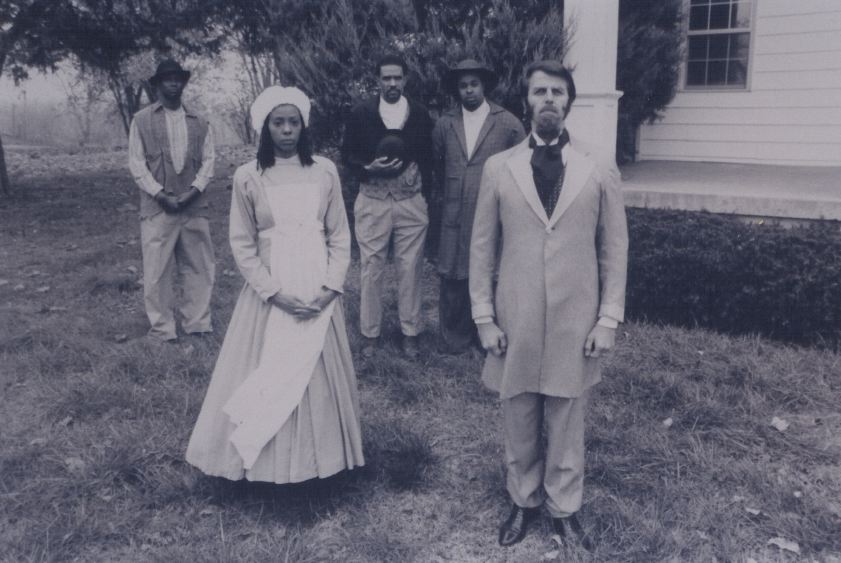
To kick off its conceit, C.S.A requires that you make two leaps of logic from the history of the Civil War: First, that, after the Emancipation Proclamation is issued, C.S.A. Secretary of State Judah P. Benjamin managed to convince England and France to join the war on the side of the Confederacy. (This was less likely, I think, than the film makes it out to be. Popular support in England — who had abolished slavery in 1833 — was pretty clearly on the side of the Union, particularly after Lincoln’s Proclamation, and “King Cotton diplomacy” just wasn’t going to work when England and France could import cotton instead from India, Egypt, and other waystations in their respective empires. And, even if the European powers had recognized the CSA, which they might’ve done had the South won more battles, they weren’t about to send troops across the Atlantic to fight on the side of slavery without severe popular repercussions.) Second, and more unlikely, is that, after capturing Washington DC, the South managed to subdue and annex the entire North, leveling Boston and Philadelphia (a la Sherman’s March) in the process. Even despite the Union’s hold on the Mississippi in the Western theater, the South might well have won the war, if Northern public opinion had collapsed in 1863 and 1864 (As it was, timely Union victories — and particularly the fall of Atlanta — buoyed Lincoln’s reelection.) But, had that happened, IMHO, there would likely be two nations uneasily living side by side for decades to come, as you find in Harry Turtledove’s How Few Remain series.
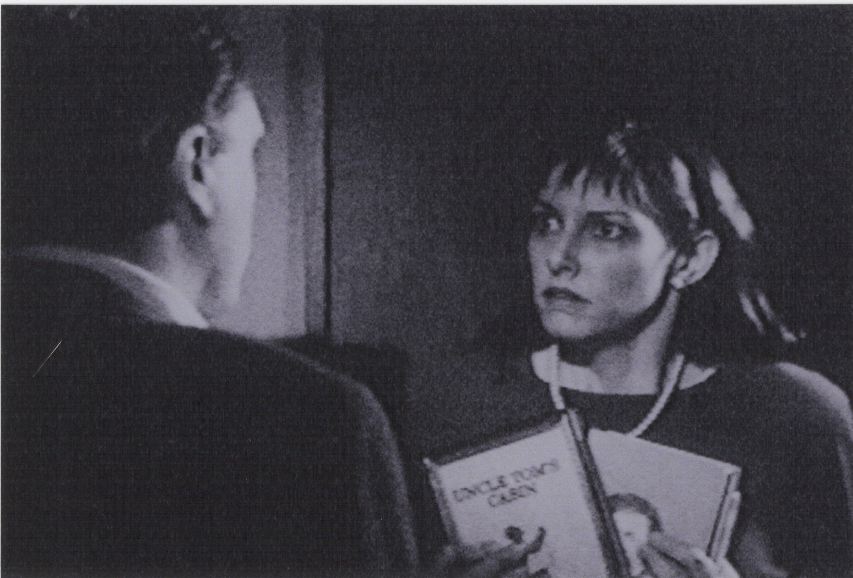
Ok, all that history geekery notwithstanding (which is somewhat unfair to the movie — it’s an alternate history satire, after all, which also explains the more recognizable battle flag replacing the official Stars and Bars on the moon and elsewhere), once you make the conceptual leap that the Confederacy managed to win the war and annex the Union, the rest of C.S.A is remarkably well-thought-out, and at times even scarily plausible. Like Jeff Davis, Lincoln is captured trying to escape in costume (on the Underground Railroad) and sent to Fort Monroe — Here, it’s dramatized in the 1915 D.W. Griffith film, The Hunt for Dishonest Abe. While the South contemplates various “Reconstruction” plans to reintroduce slavery to the North (and Nathan Bedford Forrest reenacts Fort Pillow over and over again), William Lloyd Garrison leads an abolitionist/transcendentalist contingent to Canada. Rather than the Chinese Exclusion Act, the C.S.A. passes a “Yellow Peril Mandate” providing for the enslaving of Chinese laborers. And, as in our world, the nation comes together again to fight a (here much broader) Spanish-American War.
As we get to the 20th century, C.S.A. continues to adroitly riff on American history. Audiences swarm to the Civil War musical, A Northern Wind. (“You tried to take my blacks, But I still want you back.“) In WWII, the C.S.A. plays nice with Germany while despising Japan. (Thanks to the service of Judah Benjamin, Jews can still live in the Confederacy, provided they stay on their “reservation” in Long Island.) Eventually, an armed, highly defended border — the “Cotton Curtain” — descends between Canada and the C.S.A., and ’50’s Confederates scour the nation for the “Abs” (abolitionists) in their midst. Later still, slave riots break out in Newark, Watts, and elsewhere in the turbulent ’60s, as many white Confederates reconsider slavery (due to global sanctions, give or take South Africa) and women begin to demand the vote.
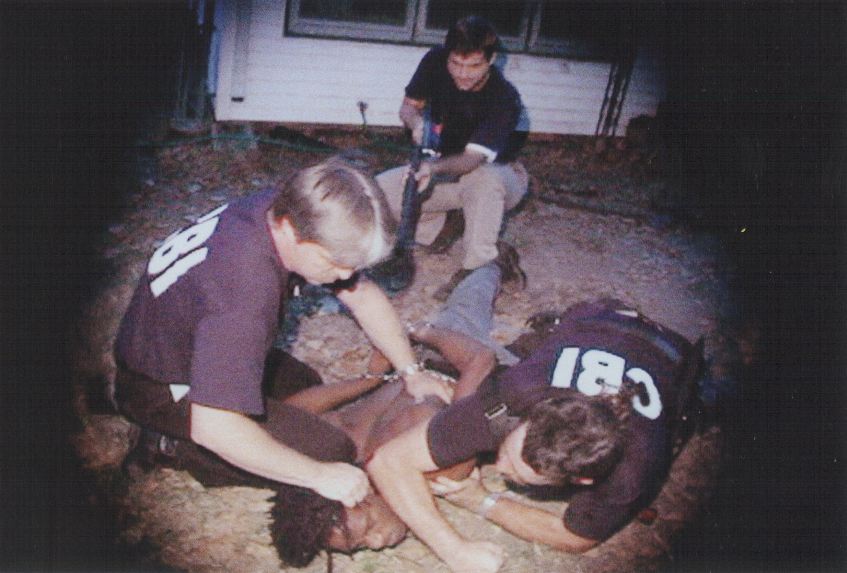
Equally as nimble as the mirror-image counterhistory of the CSA are the many commercial breaks throughout the fake documentary, with ads that are both jaw-droppingly brazen and laugh-out-loud funny. (You can get a sense of this from the trailer — Think Spike Lee’s Bamboozled, itself an excellent satire, to the nth degree.) They range from fake ads for unfortunately real products (Darky Toothpaste, Coon Chicken Inn) to all-too-possible modern innovations — The Slave Shopping Network, a LoJack “Shackle”, a Claritin-ish drug to treat drapetomania (the runaway disease “discovered” by Dr. Samuel Cartwright in 1851), a COPS-style show called RUNAWAYS, etc. etc. As you can see, this is withering stuff, and some might find it in horrible taste. But, there’s method to CSA’s madness. As I noted before, we tend to do a pitiful job of facing up to slavery, America’s Original Sin, and for ninety hilarious, cringeworthy minutes, CSA forces us to look the peculiar institution square in the eye. If we’re serious about our proclaimed role as a Beacon of Freedom to the world, that’s something we need to start doing a lot more often. (But, don’t worry — C.S.A. sweetens this tonic with quite a few laughs.) At any rate, if it’s anywhere near you, definitely go check it out.
Plot Foiled.
A quick book bash: I wasn’t going to write about Philip Roth’s The Plot against America, which I read a few weeks ago, until seeing C.S.A tonight crystallized my problems with it. I should say up front that I run hot and cold on Roth — I quite liked Portnoy and American Pastoral, but kinda loathed Goodbye, Columbus. And, while The Plot Against America is getting good reviews all around, I had a strongly adverse reaction to it. For those of you who haven’t heard anything about it, Plot describes an alternate USA in which famed aviator and rabid isolationist Charles Lindbergh defeats FDR in 1940, makes peace with Hitler, and begins a pogrom of sorts against Jewish-Americans, forcibly enrolling Jewish children (including the narrator’s brother) in Americanization programs and, eventually, attempting to relocate Jewish families to the Midwest. As per Roth’s usual m.o., the tale is told from the perspective of a Newark family trying to find their way — not very successfully — amid the deteriorating events.

As alternate histories go, it’s a great idea for a book, and I was really looking forward to seeing what Roth did with it. But, unlike CSA, which clearly showed an attentiveness to both what happened and what might have happened, Roth here has written an alternate history without seeming to give a whit about the history. In short, I found the book stunningly, almost narcissisticly, myopic. One gets the sense from reading Plot that the rift beween Jews and Gentiles in America was not only the most significant but the only ethnic or cultural schism in FDR’s America. This is not to say anti-semitism wasn’t rampant and widespread at the time — Of course it was, as attested by Father Coughlin, Breckinridge Long, and Lindbergh himself, who — in a speech that tarnished his reputation much more than Roth lets on — blamed support for the war on the “large ownership and influence [of Jews] in our motion pictures, our press, our radio, and our Government.” But, in The Plot Against America, no one else seems to even exist besides Jews and (White) Gentiles — To take the two most notable examples, there’s no mention of the fact that Africans-Americans were being lynched in staggering numbers in this period (the only lynching mentioned is that of Leo Frank), or that we actually did intern Japanese-Americans during the war. (As a point of contrast, C.S.A.‘s central thesis is about slavery, but it moves beyond white-black relations to explore, or at least reference, the place of Asians, Latinos, and gay Americans in the new Confederate system.)
This isn’t about tokenism — it’s about doing justice to the people and the history of the period you’re writing about. And, frankly, the history in The Plot Against America strains credulity time and time again. I’ll skip over the final twist so as not to give it away, and because it’s so ridiculously implausible that Roth couldn’t have intended for us to take it seriously. But, even despite that, Lindbergh’s popularity — and the public’s taste for isolationism — by 1940 seem significantly overstated throughout. (To take one example, there is no way that the Solid Democratic South would up and vote GOP that year — With the Civil War only recently out of living memory, the Dems could’ve run a wet paper bag in the South, so long as it wasn’t of the party of Lincoln and didn’t threaten to upset the Jim Crow racial order. That didn’t even begin to change until Strom in ’48.) And, while Walter Winchell plays a large role here in calling out the Nazi-American pact and resulting Jewish pogrom, he seems to be the only public figure in America doing so. Where’s everyone else? It doesn’t make sense.
Finally (and I’ll admit, this really ticked me off), Plot basically commits a character assassination of progressive/isolationist Burton Wheeler of Montana, who here appears as Lindbergh’s Vice-President (or, more to the point, his Cheney — I’m assuming that’s what Roth was getting at.) At a certain point in Plot, we’re supposed to believe that Wheeler — a guy who refused to prosecute alleged dissenters as Montana Attorney General during the hysteria of WWI, helped lead the investigation into the government corruption of Teapot Dome, and turned on FDR because he thought court-packing was an unconstitutional powergrab — is going to, out-of-the-blue, declare martial law and start rounding people up? That makes zero sense, and is, in effect, a slander on a real historical figure. Roth is obviously one of America’s most gifted writers — but, lordy, I thought The Plot Against America needed more research, more attention to historical nuance, and more sense that injustice and suffering in this country has often run along more than one axis of discrimination.
Senate Sideshow.
“‘I look around,’ Mr. Lott said, ‘and think, “Am I the only one who thinks this is stupid?”‘” Hearings into Katrina, foreign affairs, and other matters of state are postponed as the Senate commits to a day of stunt votes by both parties, mainly because Catkiller Frist had more pressing business — a fundraiser, of course — the prior evening. “Senator Ted Stevens, Republican of Alaska, said, ‘It’s sort of arrogant of us, isn’t it, scheduling them and then not keeping our appointments?’“