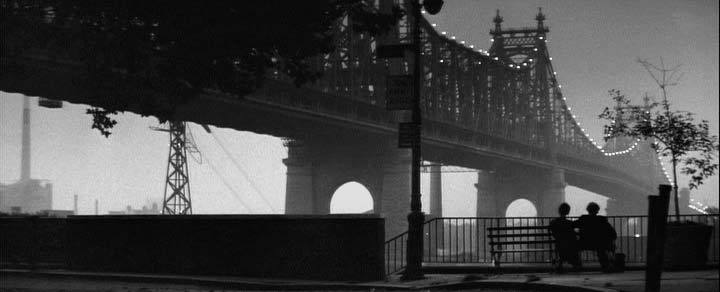
Woody in Winter.


‘You reach a certain age and you come to the conclusion that greatness is not in you,’ Allen says. ‘You aspired to greatness when you were younger, but either through lack of industry or lack of discipline or simply lack of genius you didn’t achieve greatness. The years go by and you realise: “I’m this mid-level guy. I did the best I could.”‘

Speaking to The Australian, Woody Allen stares unblinking into the abyss. (A lot of grim self-reflection by Woodys of late.) He also picks what he thinks are his six best movies: Bullets Over Broadway, Husbands and Wives, Match Point, Purple Rose of Cairo, Vicky Cristina Barcelona , and Zelig. (I presume he left out Annie Hall just to be contrarian.)

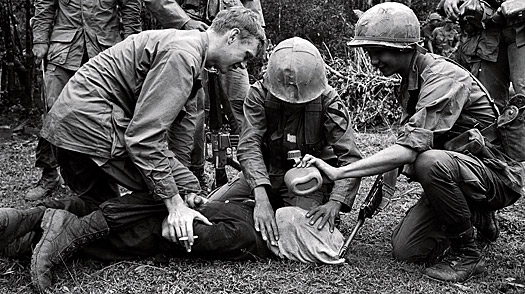
Marjah Under Starlight.


By way of Genehack, the Big Picture’s most recent photo dispatch from Afghanistan includes images that are breath-taking (above), sweeping (shades of A Broken Frame), cinematic, poignant, and just plain sad. (I should really link to TBP more often — this shot from Glastonbury is amazing also.)

The Press in the Tank.

From the early 1930s until the modern story broke in 2004, the newspapers that covered waterboarding almost uniformly called the practice torture or implied it was torture: The New York Times characterized it thus in 81.5% (44 of 54) of articles on the subject and The Los Angeles Times did so in 96.3% of articles (26 of 27). By contrast, from 2002-2008…The New York Times called waterboarding torture or implied it was torture in just 2 of 143 articles (1.4%). The Los Angeles Times did so in 4.8% of articles (3 of 63).

By way of Greenwald and Sullivan, a Harvard study documents exactly how absurdly our national media carried water for the Dubya-era torture regime. “In addition, the newspapers are much more likely to call waterboarding torture if a country other than the United States is the perpetrator.

This story, along with Politico’s gaffetastic reaction to Rolling Stone‘s Michael Hastings doing real journalism on the McChrystal story — (“Hastings would be considered a bigger risk to be given unfettered access, compared with a beat reporter, who would not risk burning bridges by publishing many of McChrystal’s remarks” — See also Lara Logan) and Joke Line deeming Glenn Greenwald a traitor because he dared to call unrepentant Iraq war evidence-falsifier Jeff Goldberg a horrible journalist (“Greenwald…so far as I can tell, only regards the United States as a force for evil in the world.“) pretty much tells you everything you need to know about our broken and corrupt Village media. And this is all just in the past week. Rinse and repeat, over and over and over again. (Pic via here.)

The Girl Next Door.

With only Richard Jenkins and a Rubik’s Cube to entertain her, Hit Girl Chloe Moretz slogs through her (500th) Year of Winter in the international trailer for Matt Reeves’ Let Me In, the potentially needless American remake of Let the Right One In. Well, “from the director of Cloverfield” still doesn’t inspire any confidence, and it seems like Kodi Smit-McPhee is going to simper and whine here even more than he did in The Road. But it’s not a bad trailer, and always good to see Elias Koteas getting work.

Gone Daddy Gone.

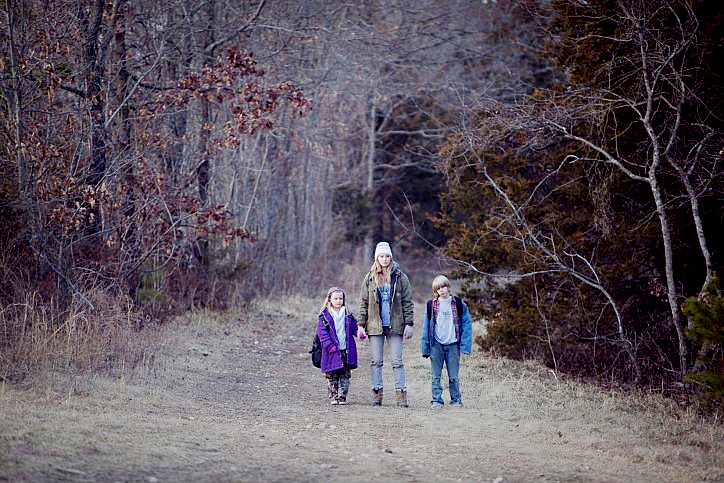
Well, admittedly, I’m probably much more of a City Mouse these days than I was back during my Carolina youth, so take that for what it’s worth. And I will fess up to having grim flashbacks to the stultifying experience of Sweetgrass in the “realistically”-portrayed opening moments of this film, so that didn’t help either. Still, I have to say, I just did not cotton to Debra Granik’s gritty Ozark noir Winter’s Bone like it seems a majority of critics did. (Some have even called it the “best American film of the year.” I reckon I’d seen a better American film not 24 hours beforehand.)

This “dark as a dungeon” Missouri folk tale is well-made, to be sure, and it includes both impressive, nuanced performances — most notably from the Zellweger-esque lead, Jennifer Lawrence — and some very likable actors (John Hawkes and Garret Dillahunt of Deadwood; Sheryl Lee, nee Laura Palmer, of Twin Peaks) shading in the margins. But, for a couple of reasons, which I’ll get into a moment, I didn’t find the main through-line of the story particularly engaging. And, in its depiction of mountain folk living on the economic razor’s edge, I can’t help feeling that the movie veered dangerously close to stereotype, if not outright Precious or Slumdog Millionaire-style poverty pr0n at times.

First, the story. After a few minutes of soaking in the three R’s of life-as-it-really-happens in an economically marginal Missouri town — ROTC training, ramshackle cabins, and (jus’) regular folk — the young woman we’ve been following around, Ree Dolly (Lawrence), is approached by the local sheriff (Dillahunt) with some very problematic news. Apparently, her daddy — who, like all-too-many men in this poverty-stricken region, is a meth cook of some renown — has skipped bail. (Paging Heisenberg!) And if Pa Dolly doesn’t show up for his scheduled hearing a fortnight or so hence, the bond he posted will be taken by the county — in the form of Ree’s house. There isn’t enough money to go around on a good day, and since Ree is already neck-deep in raising her two little siblings and caring for her ailing mother, who’s not quite right in the head, getting turned out of the only home the Dollys have would basically be tantamount to a death sentence.

And so, with only a quick mind and sheer doggedness at her disposal, Ree starts trying to ascertain the whereabouts of the prodigal father, before this deadly eviction hammer falls. Trouble is, the extended community — who are more often than not related by blood ’round these parts — take none too kindly to Ree’s asking tough questions about a central participant in the local, lucrative criminal enterprise. Even Ree’s uncle Teardrop (Hawkes), her father’s brother, tends towards the unhelpful or abusive whenever she comes by for another round for questioning. But what can she do? Ree’s back is to the wall, and the only thing she can do to save her family from certain starvation is to push forward and find her dad, with all the ugly consequences that’ll entail…

Part of the reason Winter’s Bone didn’t work for me, I think, is I felt like I’d just seen a more engaging version of this movie — a regional neo-noir with a bleached-out aesthetic, involving working-class folks in a tight-knit community dabbling in crime to get by — in Nash Edgerton’s The Square. But even that film aside, and with all due respects to the wanderings of M. Lebowski, I get a bit irritated with noir-offerings that put a puzzle before you (in this case, where is Ree’s Pop?), but then don’t really give you the tools to play along.

Put another way: For all Ree’s gumption, only in the occasional scene here — like, when she’s shown a burned-out meth lab where her dad supposedly died — does she get to put two-and-two together in a way that moves the story forward. Instead, she’s more often relegated to being a passive figure in her own tale, at which point some other character will swing by her endangered home and dole out whatever info is needed to get the plot moving again. Perhaps this is by design — one of the best scenes in the movie is when Ree tries to sign up for the Army for an infusion of much-needed cash, and is very kindly told that her options right now are even more limited than they already seemed. Still, this passive tendency makes Winter’s Bone feel like a movie where this happens, and then that happens, and this happens, rather than an engaging mystery. There’s a sense of urgency, sure — the ticking clock of impending eviction — but there’s still no narrative drive to this story.

At which point a fan of this film might say: You’re missing the point. Winter’s Bone is less about typical noir plotting than it is about character, social realism, and establishing a strong sense of place. Well, convenient straw-man fan, I’m glad you got brought this up, because this actually gets to my bigger problem with the movie. From its Welcome-to-the-Real-America opening moments, Granik’s film goes out of its way to establish its versimilitude — but that’s exactly where the movie increasingly felt off to me. And while I think it’s uncharitable to say of Winter’s Bone that it’s the tale of Cletus (or Brandine) the Slack-Jawed Yokel told as tragedy — at times it really does feel like we’re hunting possum in that same hillbilly-stereotype trailer park.

Now, I won’t profess to be any kind of expert on what a life of grinding poverty in the Ozarks looks and feels like — I’ve never been to that part of the country, although I have spent time in some very broke regions of the Carolinas, West Virginia, and the Deep South. So, maybe I’m wrong, and Winter’s Bone is actually witheringly acute in its depiction of the ways of dirt-poor rural folk here. But when there are more scenes of hootenannies and squirrel-hunting in your movie than there are of people doing “normal” things like, say, watching TV or driving to Wal-Mart, I really start to wonder. And that goes double when your characters tend to speak in a near-Milchian poetic argot about their kin and the ways of menfolk and the like.

To be clear: I wasn’t offended by this Othering of them there Mountain folk, but I didn’t really buy into it either. And so the more the film strived toward versimilitude — look at how poor (and yet noble!) poor can be! — the more Winter’s Bone just felt like a hyper-stylized, and even downright artificial, Ozark requiem by way of Cormac McCarthy to me, and the more I disengaged from it. Call me uncouth (I blame mah upbringin’), but, without feeling much of either the story or the milieu, I basically spent the majority of Winter’s Bone — even its ostensibly shocking culmination — just dutifully waiting for it to end.

Code Orange.

‘They’re snuffing out the America that I grew up in,’ Boehner said. ‘Right now, we’ve got more Americans engaged in their government than at any time in our history. There’s a political rebellion brewing, and I don’t think we’ve seen anything like it since 1776.” In case you missed GOP leader John Boehner’s inadvisable, Barton-like unveiling of his true thoughts this morning, the Minority Leader gave an interview to the Scaife-owned Pittsburgh Tribune, and it’s actually an open question what the dumbest thing he said was. Was it:

1) Arguing that the avarice and fraud-fueled Wall Street meltdown that destroyed 8 million jobs was merely an “ant” Dems were trying to kill with a nuclear weapon? (Say what you will about this financial reform legislation, I wouldn’t call it nuclear-powered.)

2) Suggesting we should fund the highly-suspectat-this-point war in Afghanistan by forcing Americans to work five more years? or…

3) The pathetic dabbling in Tea Party self-aggrandizement posted above? From what I remember of the history books, 1861 was a pretty banner year for political rebellion. Also, here’s a tip, Mr. Boehner: Read Rick Perlstein’s Nixonland. The Tea Party is not only not a new phenomenon, it’s not even a particularly special one. The only difference now is the media covers these John Birch Society wannabes like they’re actually a real political force in America. For shame.

And I’ve even skipped over stuff like the usual “repeal health care reform” inanities. Once again, the Majority Leader proves that one of the best assets Democrats have going into the fall midterms are the Republicans themselves. They’re just not ready for prime-time anymore, if in fact they ever were.

We are Marshall.

Now if I were a gambling woman, I’d wager that most Americans today are not seething with unspoken rage at Thurgood Marshall. And I might wonder at the wisdom of blaming him for what ails this country in the summer of 2010.Slate‘s Dahlia Lithwick reports in from Day 1 of the Kagan confirmation hearings, where the Senate GOP are now earnestly trying to rewrite the history books on Justice Marshall. (Apparently, Orrin Hatch is even hemming and hawing about whether he’d even confirm Marshall now. You stay classy, GOP.)

Hallows Eve.

Harry, Ron, Hermione, and the rest of Team Hogwarts (now with Bill Nighy in tow) are back for one last two last hurrahs in the trailer for both parts of David Yates’ Harry Potter and the Deathly Hallows. Hmm…I mean, I’ll go see ’em, but this trailer just makes both movies seem like a lot of running around with pained expressions. (And, not to get curmudgeonly up in here, but even speaking as someone who fired up The Leaky Cauldron back in the day, “The Motion Picture Event of a Generation” is overselling this production something fierce.)

Last Twilight of the Toys.

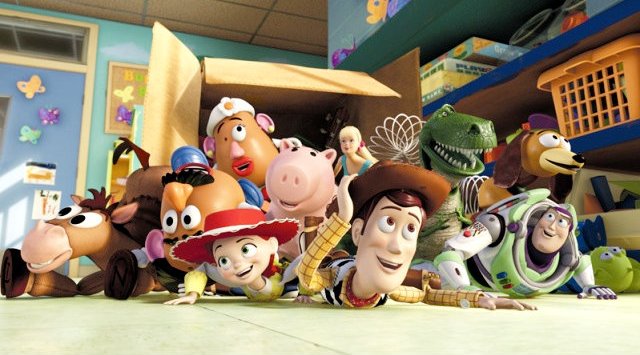
There’s not even room enough to be anywhere. It’s not dark yet, but it’s getting there.” To get right to the point, Lee Unkrich’s heartfelt and exquisitely melancholy Toy Story 3 is fully up to the standard of excellence we’ve come to expect from both the franchise and Pixar, and it’s easily one of the best films of the year so far, right up there with Red Riding and The Secret in their Eyes. But, honestly, what is it with John Lasseter’s team at Pixar that they seem to be so obsessed with questions of transience and mortality?

With WALL-E, we got, in its better hour, a robot love story set among the dusty, trash-ridden ruins of a forgotten Earth. With Up, we got, in its best ten minutes, the story of a romance from childhood to the final parting of the ways. And, now we have Toy Story 3, where even those unaging plastic heroes from Andy’s toy chest — Woody, Buzz Lightyear, and the rest — are contemplating that last round-up in the sky. And from utopian visions — that don’t quite pan out — of a toy heaven (a community center where the toys get played with every day) to the fiery furnaces of toy Hell (you’ll know it when you see it), Toy Story 3 has more tearful farewells and ruminations on death than any pop movie this side of Return of the King.

In fact, the film — which, don’t get me wrong, is pretty close to a masterpiece — starts grim (that is, after two cartoon reveries, one an amazing short entitled Day & Night; the other a romp through the toylands of the Old West) and gets grimmer. For, ten years have passed since the first film, l’il Andy is all grown up now, and this soon-to-be college-man has put away childish things…which leaves our heroes forgotten in the toy chest, feeling abandoned and forlorn. So, after memories of bygone days and an enumeration of those who have already succumbed to the Great Plastic Dark (Wheezy, Mr. Shark, Little Bo Peep), Woody (Tom Hanks) tries to rally the flagging spirits of his fellows by singing the praises of attic-life. And, if a golden senescence in the musty confines of the attic doesn’t sound all that great, well, it’s vastly more preferable to being tossed out in the trash-heap, isn’t it?

But, eventually, other options emerge. Andy seems to mark Woody — and Woody alone — to make the trip to college with him, where he’ll no doubt spend four years resting ironically between the beer cans and lava lamp, aghast at the new ways in which Andy spends his time. Meanwhile, Buzz (Tim Allen), Jessie (Joan Cusack), and everyone else, after some mishaps about Andy’s intentions, eventually get consigned to the Sunnyside Community Center, an Edenic establishment overflowing with young children and old toys — including most notably a Ken (Michael Keaton) to Andy’s sister’s Barbie (Jodi Benson) — and administrated over by a kindly pink teddy named Lotso (Ned Beatty), short for Lots-O’-Huggin’ Bear.

Did I say kindly? Um, well, he seemed kindly. But, beneath that fuzzy pink exterior lies a broken heart, filled with cold, calculating malice. (Chuckles the Clown, a despondent fellow that Woody encounters on his travels, fills us in on the whole story.) It appears Lotso and his eventual muscle, Big Baby, were once inadvertently left — and very quickly replaced — by the parents of his young owner Daisy. And this unfortunate event, alas, cleaved this bear’s soul in two and made him, from now until time immemorial, a satellite of hate. Better to reign in Sunnyside than to serve another cruel mistress like Daisy! If Lotso cannot be loved by humans, then he will be feared by toys — and woe be unto those who dare threaten this Huggin’ Bear’s domain, for they shall know the wrath of…the toddlers.

So, yeah, like I said: Even amid all the pastel colors, this film is surprisingly dark. Already, Toy Story 3 is as wistful about childhood’s end and the inexorable passage of time as Where the Wild Things Are (although it’s not nearly the abortive emo-fest that Spike Jonze’s film sadly turned out to be.) Even in basically throwaway elements, like the family dog having obviously reached his eleventh hour, the film keeps reminding you over and over again that everything is finite, and nobody — not even toys — gets out alive. And then you throw in the Shawshank Redemption and Lotso-the-Cheneyite aspects of Sunnyside and we’re delving into even creepier territory.

As I said of Neil Gaiman and Henry Selick’s Coraline, in general I think kids can handle — and probably really dig — dark, scary fare. But here we have a Toy Story featuring not one, but TWO, interrogation-and-torture scenes. Isn’t this all a bit much for little kids? (Of course, now that I think about it, Empire has two also, and I loved the hell out of that movie at a young age.) Who knows? Maybe all the moral and temporal grimness shoots right over kids’ heads. As I said in my WTWTA review, “I just don’t get the sense that nine-year-old children really spend a lot of time pondering things like the Finite, their feelings, or their soon-to-be-lost innocence. They live in the moment. They just are.

And, it’s true, this production is much more fun than WTWTA as it zips along, so maybe kids will ignore most of the sad stuff and really dig it. But, speaking as a thirty-five-year-old adult, and even one who’s fully ok with keeping the toys of youth around, the despondency throughout the story becomes cumulative. I really liked Toy Story 3 — In a way, I kind of loved it. But I was not expecting such a wistful and lachrymose tone going in, or to be so choked up by the end. I thought I was in for another eye-popping lark with Woody, Buzz, and the ole gang. Instead, I got an eloquent, expertly-made, and very, very melancholy testament to the rather depressing notion that old toys and old memories never die. They just…fade…away…