Mandela and the Madhouses.

As with the other day, I can’t seem to make Quicktime happy at my workstation here. Nonetheless, it appears Matt Damon has gone from exposing his conjoined twin’s involvement in the WMD fiasco to ending apartheid in the new trailer for Clint Eastwood’s Invictus, with Morgan Freeman as Nelson Mandela. Busy fella.

Also in today’s trailer bin, two second looks at worlds gone mad: Mia Wasikowska finds Through the Looking Glass is still crazy after all these years in trailer #2 for Tim Burton’s Alice in Wonderland, also with Johnny Depp, Helena Bonham Carter, Anne Hathaway, Stephen Fry, Michael Sheen, Crispin Glover, Timothy Spall, and Christopher Lee. To be honest, it looks a little too Burton-y to me, if such a thing is possible for a property like Alice.

And Leonardo di Caprio is still losing his cool on The Island in trailer #2 for Martin Scorsese’s recently kicked-to-2010 Shutter Island, also featuring Ben Kingsley, Mark Ruffalo, Michelle Williams, Patricia Clarkson, Elias Koteas, Jackie Earle Haley, and the eminent Max Von Sydow. Eh, this looks better than most January fare.

Hard Times in the Emerald City.

Somebody was going to get to the bottom of this whole WMD thing eventually — it might as well be Jason Bour…Oh, wait, he’s not Bourne this time? Well, close enough for government work. Matt Damon and Paul Greengrass reunite in the new trailer for Green Zone, verrrrry loosely based on Rajiv Chandasekaran’s Imperial Life in the Emerald City and co-starring Amy Ryan, Brendan Gleeson, and Greg Kinnear. Great cast, and Greengrass hasn’t missed yet — I’m in.

Let the Wild Rumpus…Mope.

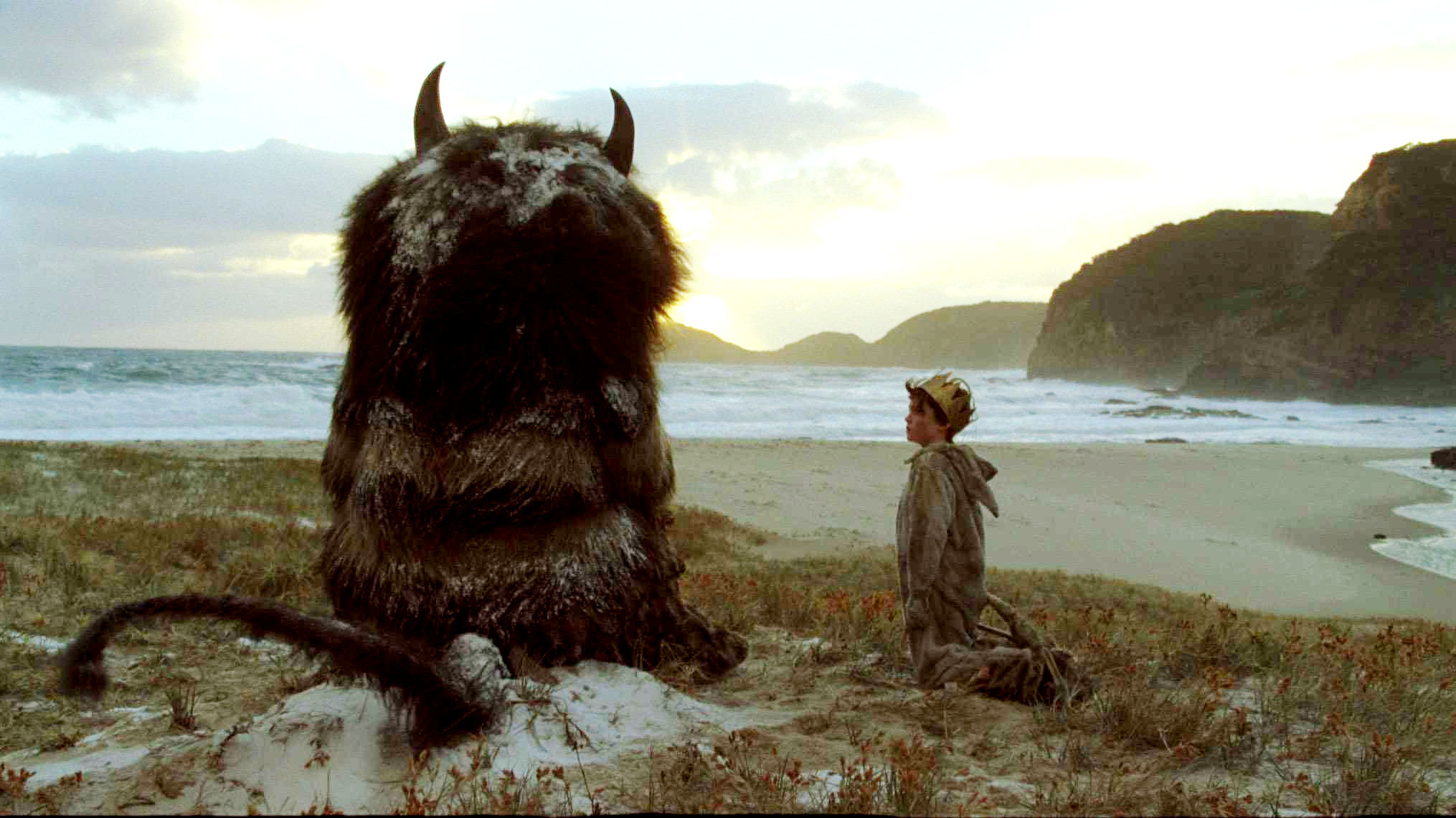
Well, I had high hopes for this one, and getting the whole front row at the Uptown to myself last Friday evening seemed auspicious at the time. But sadly, Spike Jonze’s adaptation of Maurice Sendak’s Where the Wild Things Are is a well-made but disappointing piece of work, and the really great trailer of two months ago is as good as it gets.

I know this film is eliciting some very positive responses, and I definitely admired the craftsmanship on display. WTWTA is not a bad movie, nor is it an embarrassment or anything like that. But, as the movie moped along, I kept having the same reaction to it: I just don’t remember my childhood, or Sendak’s book for that matter, being so emo. Sure, I guess I remember being angry or depressed or sad every so often — nothing a good 30 minutes with the Star Wars figures couldn’t remedy — but that didn’t mean there was always a Cure song ready to break out right around the corner. (That was adolescence.) And I just don’t get the sense that nine-year-old children really spend a lot of time pondering things like the Finite, their feelings, or their soon-to-be-lost innocence. They live in the moment. They just are.

In fact, to my mind all the introspective, autumnal, fall-from-Eden-type musing on hand in WTWTA is less a tendency of irate 9-year-olds than it is one of writerly adults…particularly, grandiloquent and exceedingly self-absorbed writerly adults like Dave Eggers, who penned the screenplay here (and accompanied it with a 300-page fur-covered “novelization.” That’s almost a page for every word of Sendak’s original book.) Your mileage may vary, of course — Clearly, the movie is affecting a lot of folks pretty strongly. But Where the Wild Things Are did not much speak to my inner child. In fact, my inner child was pretty well bored by it.

I would guess most people, in America at least, know the story of Sendak’s Where the Wild Things Are — either they read it to a child or remember reading it as a child. (I’m in the latter group, so the quotes below may be inexact.) Nonetheless, in the original story, Max is a bit too bratty to his Mom one night (“Feed Me, Woman!“), is sent to his room as a consequence, and enjoys a reverie in which he is King of the Wild Things. (“Let the Wild Rumpus Begin!“) Eventually, as his anger dissipates, Max grows homesick and returns “home” to a nice meal. The End.

In the movie, however, the story has been expanded in various ways. Max (Max Records) now has a older sister (Pepita Emmerichs) who seems to feature prominently in his imaginings (Lauren Ambrose.) Ok, fine. Mom (Catherine Keener) has an exasperating job and a new boyfriend (Mark Ruffalo). Eh, Ruffalo is pretty overexposed, but he’s here for all of 10 seconds, so no harm, no foul. And the now-highly mopey “Wild” Things (James Gandolfini, Chris Cooper, Catherine O’Hara, Forest Whitaker, Paul Dano) sound like Snuffleupagus, think like Eeyore, and are all in dire need of prescription-strength antidepressants and/or therapy. Uh, hold on…what?

Oh, ok, they’re all psychological manifestations of Max’s various black moods — snippy downer (O’Hara), feeling ignored (Dano), etc. — give or take the quick-to-anger Carol (Gandolfini), who may or may not be a proxy for Max’s father, the best friend Max never had, or even Max himself. And now these Mopey Things want a king, except the monarchy of Max the First keeps letting everybody down. Perfect government, it seems — even on issues as innocuous as dirt-clod fights and fort-building — is as ephemeral as everlasting innocence, the feeling of being loved, the last shaft of sunlight wending through the forest at twilight, our own human frailty…wait a second, stop the reel. Wasn’t this movie supposed to be about a little kid hanging with monsters?

Props to Jonze and Eggers for trying to do something different, I guess. When you put WTWTA up against recent hackmeisterly cash grabs like The Cat in the Hat, well, there’s no comparison really. And the creature FX here are simply stunning, so there’s that too. Still, I found myself increasingly put off by all the overwrought glumness on display in WTWTA. Max and the Wild Things should be primal little hellions, unstoppable forces of Nature. They should not be miserably sad head cases, or at least they weren’t in my imaginings. And I don’t think the problem is I’m too adult for this movie — This version of WTWTA ends with a misplaced Grey Havens-y, “I’ll miss you most of all, Scarecrow!” farewell on the beach, where Max and the Wild Things howl in lament at the passing of childhood. All I could think was “What’s the problem here? I was howling along with Berk just this morning.”

Which reminds me — I’ve always found Philip Pullman to be a considerable wanker, but it was thinking about a central conceit of his His Dark Materials trilogy that crystallized one source of my discontent with WTWTA. I guess, like Pullman and unlike Jonze and Eggers, I don’t necessarily see growing out of childhood as such an inexorable loss of innocence or horrible fall from Eden. Rather, I think kids — myself back in the day included — are mostly primal, needy, and half-formed (like Lyra), and becoming an adult is instead a boon, a caterpillar becoming a butterfly, an expansion of the possible. It is a door opening, not a door closing. Well, you definitely don’t get that sense from Where the Wild Things Are. In fact, if my own younger days were as flat-out miserable as those of poor Max here, childhood’s end couldn’t have come fast enough.
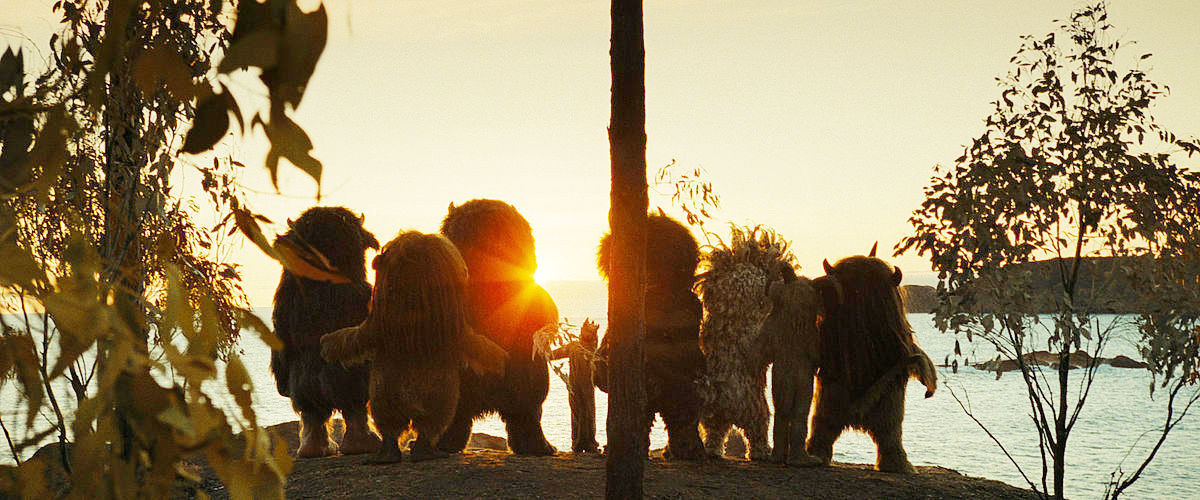

When a Problem Comes Along.

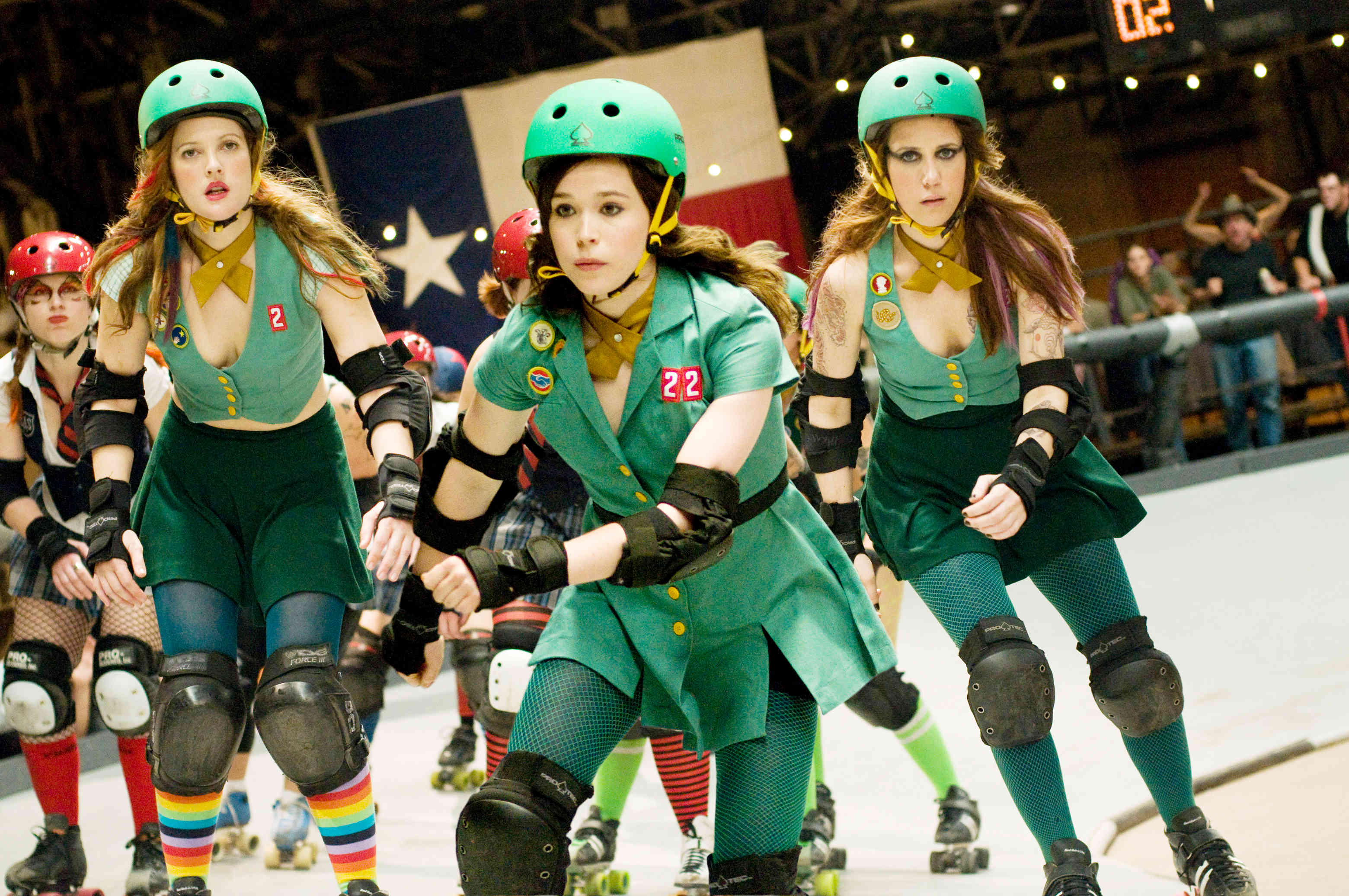
Forget the bruises, broken bones, and need for better-than-average health insurance (if such a thing even exists right now) that accompany the sport of roller derby. If you were a parent, would you really want your child indulging in any subculture that had at its center someone as douchey as Jimmy Fallon? Such is the crux of contention between lonely teen Ellen Page and mama-bear Marcia Gay Harden in Drew Barrymore’s breezy, forgettable Whip It. Now, I know that — as with Jennifer’s Body — I’m really not the target audience for sort of pic: I’m 15-20 years too old and likely the wrong sex. Still, if I had to recommend a recent extreme-sports, coming-of-age, grrl power flick, I’d probably direct people toward Blue Crush. Good-natured but also somewhat cloying, Whip It rolls ’round the rink well enough, I guess. But it doesn’t set off much in the way of sparks.

As the film begins, the surly teen in question, a young Texan by the name of Bliss (Page), has just let down Ma once again, by dying her hair blue before the latest stereotypically stifling beauty pageant. (Page didn’t bug me so much in Juno — I blamed the excessive quirk then on screenwriter Diablo Cody. But, for some reason or another, I found her “who-me?” simper and hipster-schtick irritating pretty quickly in this film.) Anyway, Ma (Harden), a postal worker with her own beauty-queen dreams deferred, takes the blue-hair fiasco as well as she can, but it doesn’t change the fundamental problem for Bliss. She — and her best friend Pash (Alia Shawkat, a.k.a. Maeby Fünke) — are just dying in this one-horse town.

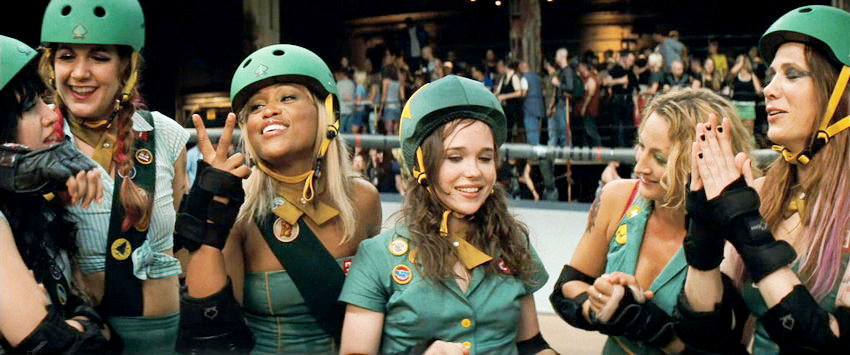
But, on a trip to nearby Austin one day, Bliss finds a D.I.Y.-looking flyer advertising the local roller-derby league, featuring the current reigning rinkstress, Iron Maven, in all her glory. (That would be Juliette Lewis, doing her standard queen-of-the-skanks routine. Weirdly enough, Woody Harrelson brought back Mickey Knox just the week before, and now Lewis is channeling Mallorie again.) Anyway, after a visit to the Big Dance, Bliss is completely smitten with this strange new world of bad-ass chicks and furious body blows. Even better, there’s a spot open on the “Hurl Scouts” — who consist of Maggie Mayhem (Kristen Wiig), Rosa Sparks (Eve), Bloody Holly (Zoё Bell) and Smashly Simpson (Barrymore) — and Bliss just happens to be lightnin’-fast in her old-school Barbie skates. But, even as Bliss grows to relish her new role as “Babe Ruthless,” there’re still the dreams of dear old Ma to contend with…

Although not as surprisingly promising as Ben Affleck’s 2007 directorial debut, Gone Baby Gone, Drew Barrymore acquits herself pretty well here behind the camera, all in all. Things move at a pretty brisk clip, and I could generally follow the roller derby scenes pretty well. (It may be the writer or the source material’s fault, but there are definite shades of the Drew Barrymore-produced Donnie Darko here too — in the “Sparkle Motion”-like little sister (Eulala Grace Scheel), the goofball dad (Daniel Stern), and the dysfunctional-yet-oddly-functional parents.)

That being said, there are a few problems here. I went on in my World’s Greatest Dad review recently about the “Big Lie,” usually seen in rom-coms, whereby the audience spends most of the film just waiting for some obvious problem to [a] be revealed and [b] then resolve itself. Well, this movie is based on two of ’em — Bliss is underage for the league, and the aforementioned mother-daughter dispute — and waiting for these cycles to play out frankly isn’t all that interesting. Throw in the usual set of standard-issue sports-movie tropes — the rookie-makes-good sequence, the “getting stronger!” montage, the Big Game — and Whip It is basically cliché grafted to cliché.

All that being said, I still could have cottoned to Whip It more, I think — it has its heart in the right place — if it weren’t one of those movies that plays an arch indie song every time you’re supposed to have any sort of emotional reaction to it. (And don’t get me started on the subplot involving Bliss’ potential emo-rocker boyfriend (Landon Pigg) — That guy just drove me up the wall from Jump Street.) Let me put it this way: Throughout the movie, Bliss tends to wear a Stryper T-shirt, as in the ultra-cheesy Christian metal band from the 80’s. (It becomes a plot point, eventually.) Now, some might see this as a very post-ironic, clever, hipster thing to do. Others might say it seems like trying too hard.

The World According to Mij.

“‘This film integrates my life’s achievements,’ he told me. ‘It’s the most complicated stuff anyone’s ever done.” Another time, he said, “If you set your goals ridiculously high and it’s a failure, you will fail above everyone else’s success.’” On the eve of Avatar, the New Yorker‘s Dana Goodyear delivers a long and interesting profile of take-no-guff, autocratic auteur James Cameron. (“A small, loyal band of cast and crew works with him repeatedly; they call the dark side of his personality Mij–Jim backward.“)

The whole thing is definitely worth a read, but this caught me eye further down the piece: “‘We should ultimately have colonies on Mars, for purposes of expanding the footprint of the human race,’ Cameron says. He shares with the Mars Society the opinion that NASA — on whose advisory council he sat for three years — has become too risk-averse. ‘We’ve become cowards, basically,’ he says. ‘As a society, we’re just fat and happy and comfortable and we’ve lost the edge.’” Listen to the King of the World — he’s dead on.

Wolf at the Door.

Quicktime isn’t playing nicely with my work PC at the moment, so I can’t vouch for its quality just yet. Nonetheless, the second trailer for Joe Johnston’s The Wolfman is now online. Early reports indicate that, true to form, Anthony Hopkins chews scenery herein like it’s his business (and, brother, business is booming.)

Good for the Jews.


He may seem cruel and indifferent. He may even be vain and jealous (Exodus 20:5.) Still, thank HaShem for the Coens! Like manna from Heaven, the brothers are the cinematic gift that keeps on giving. At this late date, you probably know if you vibe to the Coen’s mordantly kooky aesthetic or not. And if you do, A Serious Man, their sardonic reimagining of the Book of Job set in late-sixties Jewish suburbia, is another great movie in a career full of them.

Assuredly better than the fun but uneven Burn After Reading, this is basically the film The Man Who Wasn’t There aspired to be, and I’d say it sits comfortably next to the likes of Fargo, No Country for Old Men, Raising Arizona, and Barton Fink. (That being said, I still reserve a place of honor for Miller’s Crossing and The Big Lebowski.) A word of warning, tho’ — Despite the funny on hand here, and there is quite a bit of funny, in a way this world may be the Coens’ darkest yet. True, God may have forsaken the bleak Texas landscape of No Country back in 2007, but at least He wasn’t laughing at us then.

Why so serious? Well, it’s 5727, and Professor Larry Gopnik (Michael Stuhlbarg) is having a very bad time of it. After a brief fable involving the visitation of a possible dybbuk a century or so earlier, and a few moments of Larry’s son Danny (Aaron Wolff) communing with the Rabbi Slick, we get to see poor Larry navigate a frozen run of luck like you read about. He has quite literally become his brother’s keeper — Arthur (Richard Kind) lives in the bathroom, draining his sebaceous cyst at all hours of the day. Larry’s wife (Sari Lennick) wants a get (a what?) so she can remarry a family friend, the exasperating and sonorous Sy Ableman (Fred Melamed.) One of his physics students (David Kang) is trying to bribe him for a better grade (and, to his credit, both he and his father do seem to understand Schrodinger’s cat pretty well.) His tenure committee chair is acting squirrelly, and receiving hate-filled letters about Gopnik from an unknown source. His son has bully problems, his daughter wants a nose job, his very goy neighbor is encroaching on the property line…

When the truth is found to be lies, and all the joy within you dies, where do you turn? Well, Larry is physicist enough to realize that one of these many accumulating straws is eventually going to break his back. And so, in the manner of generations before him, he decides to look for rabbinical wisdom into his plight. Alas, easier said than done. The first rabbi he visits (Simon Helberg) can offer only the altered perspective afforded by the synagogue parking lot and the threat of an angry HaShem. The second (George Wyner), only a bewildering mashal about “The Goy’s Teeth.” And the third — well, he’s as inscrutable and as hard-to-reach as HaShem Himself…although perhaps a bar mitzvah kid might have an in.

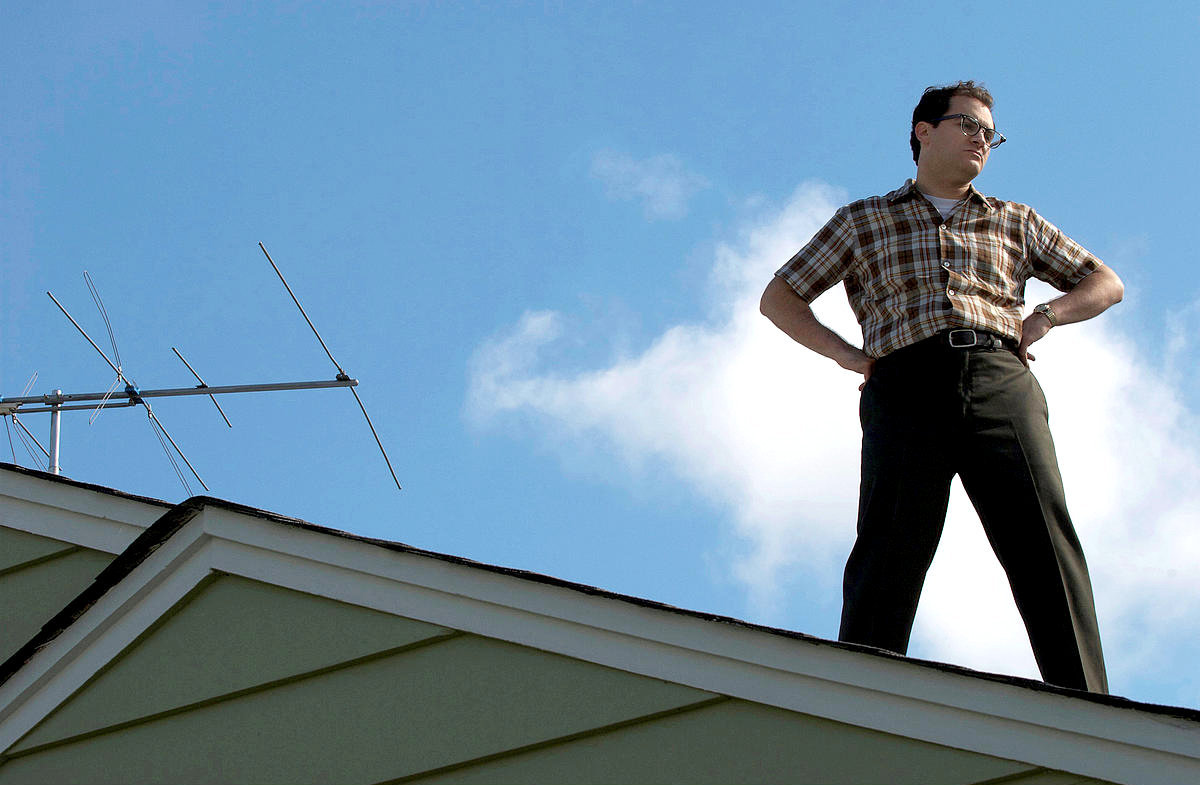
There’s a lot going on in A Serious Man — much of which, being of the goy persuasion, undoubtedly flew over my head — and this definitely seems like a movie that will reward repeat viewings and/or a Jewish upbringing. (Knowledge of the Old Testament will help too — I knew enough to recognize Jacob’s Ladder to the roof, but was the all-hearing, F-Troop-bestowing antenna up there the angel Larry must wrestle or a potential Burning Bush? Seems like Larry kinda saw another angel up there.) But, in making heads or tails of it all, I did fall back on a few touchstones. (They could be the wrong touchstones of course, so your mileage may vary.)

One was also the basic conceit of Darren Aronofsky’s Pi, that the Torah is basically a number set, so conversations here about high-level physics (Schrodinger, Heisenberg) are one-of-a-piece with the existential or Talmudic questions presented. (The Coens give us a hint in this direction with the “Mentaculus,” a complex numerology system that Larry’s brother Arthur uses to cheat at cards.) So, when Larry lectures his student about knowing math rather than understanding math, for example, I think there’s a good bit more in play for later on.

The other work that came to mind, and this was a more impressionistic connection, was Phillip Roth’s American Pastoral, another Jewish-American tale of things-falling-apart, and America reaping the whirlwind of the late sixties. It’s hard to say, and fun to think about, what exactly is going on here in the closing moments. (Is this punishment for straying from the path, or just another outbreak of Chigurh-like randomness? I think the former, but I could be wrong.) But perhaps the Airplane, who (almost) start and (almost) end the film, is on the right track here, particularly given that they’re basically paraphrasing the wisdom of Shammai: “That which is hateful to you, do not unto another: This is the whole Torah. The rest is commentary.

Where the Plastic Things Are.

After a decade in the toy chest, Woody, Buzz, and the gang finally get out of mothballs in the trailer for Pixar and Lee Unkrich’s Toy Story 3. It’s been 15 years since the first and ten since the second, so unclear to me why Pixar would endanger its winning streak by going back to this well now. Still, they haven’t let us down yet.

Saving Warlock Ryan (before he wipes the raid.)

“‘The aim is to adapt the game, rather than a previously conceived story written within that world. “We want to be really faithful to the game,’ Raimi said. ‘We would have our writer, Robert Rodat, really craft an original story within that world that feels like a ‘World of WarCraft’ adventure. Only obviously it’s very different ’cause it’s expanded and translated into the world of a motion picture.‘”

Sam Raimi discusses his upcoming World of Warcraft film with MTV, and discloses he’s hired Saving Pvt. Ryan screenwriter Robert Rodat to pen the film. Well, if it’s going to be a wipe, it’ll be an A-list wipe. (Speaking of WoW, I myself quit the game pretty much cold turkey upon moving back to DC this summer, but I could see myself getting snared back in by the next expansion pack, Cataclysm, whenever it drops next year.)

Land of the Lost.

Ever wonder what Shaun of the Dead would’ve been like if it had been an American studio film? Well, I suspect it’d have been bigger and broader in every facet of the game. It’d have more action, more violence, more bodily humor, more star wattage. And it’d probably be less droll, less unconventional, and less memorable. In short, it would probably have been much like Ruben Fleischer’s well-meaning but frothy Zombieland. Don’t get me wrong — Zombieland is a decently fun Friday night, and most of the audience clearly enjoyed it more than I did. But it felt very by-the-numbers to me, and I suspect I’ll remember very little about it after a few weeks, even if the dread zombie apocalypse doesn’t happen between now and then.

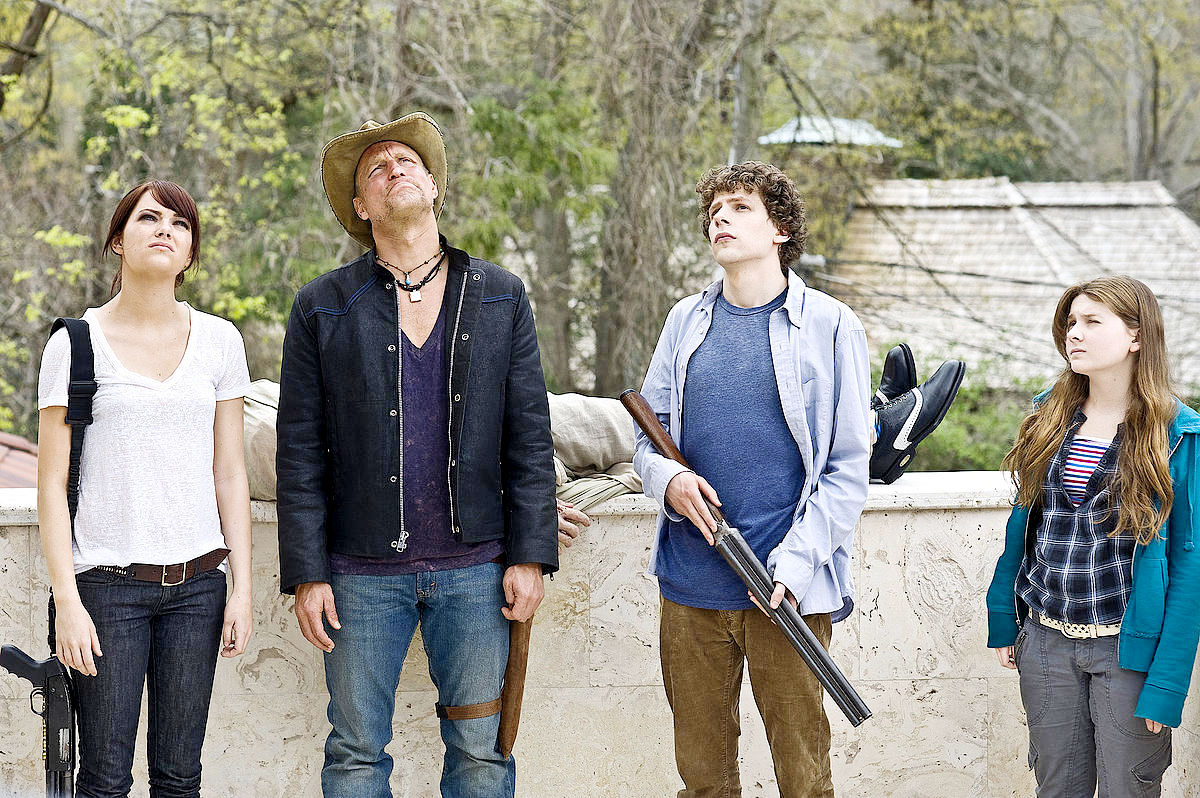
So, what’s the rumpus? Well, after a quick breakdown of the rules of surviving said zompocalypse (For example, “Rule 1: Cardio…Fatties die first“), Zombieland basically follows the travails of five of the last humans on Earth. There’s:

  • Columbus (Jesse Eisenberg), a nebbishy UT student who survived the initial outbreak mostly by dint of being an OCD Warcraft shut-in. (Eisenberg has put in some good performances in movies like Roger Dodger and The Squid and the Whale, but he’s slumming it here. In fact, I like them both, but Zombieland makes a strong case for staging a “two-man-enter-one-man-leave” arena deathmatch between Eisenberg and Michael Cera. They’re becoming redundant.)\
  • Tallahassee (Woody Harrelson), a Twinkie-loving good-ole-boy who’s atoning for a family tragedy by cutting a swath through the undead and being damn good at it. (Harrelson seems to be channeling his Mickey Knox from Natural Born Killers again — not sure what it says that the same guy’s gone from being creepy lunatic anti-hero in NBK to unironic, even compassionate hero here. Tone is everything, I guess.)
  • Wichita (Emma Stone), an alluring grifter (she’s basically Mila Kunis’ character from Extract) who’ll double-cross everyone around and do whatever she has to to protect her little sister. (I started thinking of her as Left 4 Dead‘s Zoey after about five minutes of screentime.)
  • Little Rock (Abigail Breslin), said little sister, wise beyond her years yet still really looking forward to a trip to Pacific Playland (a.k.a. Wally World.) (FWIW Breslin, most memorable as Little Miss Sunshine, seems to have made it across the child-star gap that swallowed Jake Lloyd, Haley Jo Osment, and Jonathan Lipnicki whole, and appears to be settling well into a young-Jodie Foster vibe.) And…
  • “Hollywood” (Semi-Secret Cameo), a movie star who the first four encounter along their road trip. As most other reviews have noted, this extended second-act sequence is probably the highlight of the film, and the biggest laugh I enjoyed was when this character is asked at one point about his/her regrets. Still, I also found this section not as funny as it’s being made out to be, for the same reason — my bro and I have a long-standing argument about this — that I don’t much like Family Guy and think Robot Chicken is lame: Just making some random pop-culture reference willy nilly — oh, yeah! I recognize that! — isn’t, to my mind, all that funny. (Imho, the South Park guys pinned this problem to the wall with their classic manatee episode.) Similarly, just recreating moments from this particular star’s back catalog, as happens a few times here, just feels sorta ho-hum to me.I’ll concede that I’m probably being harder on Zombieland than it deserves. It’s a harmless thrill-ride-type entertainment, and I’ll bet it was quite a bit better than a lot of the past summer’s tentpole releases, most of which I skipped. (I’m looking at you, X-Men Joeformers: Salvation.) Still, maybe I’m just an insufferable zombie-snob — this isn’t The Walking Dead or World War Z by any means — but I left Zombieland feeling underwhelmed. To me, it just felt by-the-numbers, with a tired “family is what you make it” plot and a certain laziness — how is the power on everywhere, by the way? — about it. And if anything, the zombies, never once very frightening, seem like a plot convenience more than anything else.

    Also, it’s hard to escape the nagging sensation that this movie is basically just Shaun of the Dead for mooks. This feeling isn’t helped by the earlier-mentioned Family Guy-isms, or the Beavis-and-Butthead-y “I like breakin’ things!” messaging of the middle-going. (Sometimes it’s not even Fleischer’s fault — On its own, the slo-mo credit sequence is good, imaginative fun, but it also can’t help but recall the very similar Watchmen opening, which then involuntarily brings to mind the current mook-King of Hollywood, Zack Snyder.)

    Lemme put it this way: Throughout the movie, the previously-established Zombie Rules — “Beware of Bathrooms,” “Double-Tap,” “Don’t be a Hero” — will flash up on the screen whenever they become pertinent. This often gives Zombieland the feel of the introductory levels — “Press X to jump” — of a not-very-interactive xBox game. And, while I can’t say I had a bad time at Zombieland, it’s hard to shake the sense that that 81 minutes would’ve been much better spent at home, playing Left 4 Dead. Now there’s a zombie-killing quartet I can get behind