
Armies of the Night.

As an afternoon chaser to a morning spent at the NY Comic-Con (I posted some pics over at Flickr), my brother, sister-in-law, and I took in the Russian cinema sensation of 2004, Timur Bekmambetov’s Night Watch. On one hand, it includes some really strange and arresting visual moments, and from very early on seems like a film in which pretty much anything can happen. But, frankly, I wasn’t feeling it. Even despite all the exposition in the early going, the movie makes very little sense, even by the laxer standards one accords fantasy films. And Night Watch wears out its welcome well before the end — To be honest, I kinda wish I’d just watched the two-and-a-half-minute version at the official site.

After a brief prologue describing the establishment of a centuries-old Truce between the Others, spectral forces of Light and Dark, Night Watch moves to the Moscow of twelve years ago, where a Ringo-haired Joe Flaherty look-alike named Anton (Konstantin Khabensky) seeks out a Love Potion #9 from an unsettling Russian crone. Soon, after consuming a concoction of blood, vodka, and lemonade, Anton flirts with the idea of causing a paranormal stillbirth in his now ex-girlfriend, which draws the attention of the Night Watch, a diplomatic police force of Others assigned (with their counterparts, the Day Watch) to ensure compliance with the Truce. Flash forward to the present, when Anton — as it turns out, himself an Other — has joined the Night Watch and now spends his days quaffing blood and chasing down vampires who kill without a license. (Did I mention this film was Russian? Even supernatural forces, it seems, rely on bureaucrats.)

Now that’s only the first twenty-five minutes or so — Night Watch takes several more baroque jags that involve, among other things, a prophecy of a Great Other precipitating a Last Battle between Good and Evil (Yes, this Film Demands a lot of Gratuitous Capitalization), a lovely Virgin and her ancient, unfortunate curse, an all-consuming vortex of bad mojo that rips rivets from planes and plunges them into your coffee, and a young child who draws the attention of a newly-minted vampire (at right). And, true, many of these new elements are introduced with clever visual flourishes — I particularly liked the aging secret, the spider-doll, and the world of the Gloom. But what is the Gloom, exactly, and how the heck does it work? What was the point of the Owl-woman? Why doesn’t the starving vampire chick feed on someone — anyone — else? Why did Der Evil Commissar give Anton the charmed necklace? And so on, so on. There’s something to be said for inscrutability at times, but Night Watch spends too much time making capital-R Rules only to break or ignore them in the later going.

Finally — and this is a more unforgivable sin — for a movie that occasionally moves at a bloody, visceral blur, Night Watch really drags at times. Given the thoroughly bizarre set-up and its fanboy grounding, I really wanted to like this film, but in all honesty I found my attention wavering within forty-five minutes (right about the time the Rammsteinish death metal accompanies the speeding Other-truck with the nifty gear-shift) and was kinda bored after an hour or so. There are some moody, memorable moments throughout, but they added up to a better trailer than they did a film. Apparently, the sequel Day Watch — is in the can, but I doubt I’ll revisit this particular world, or at least not without more vodka on hand.
Back in Black.

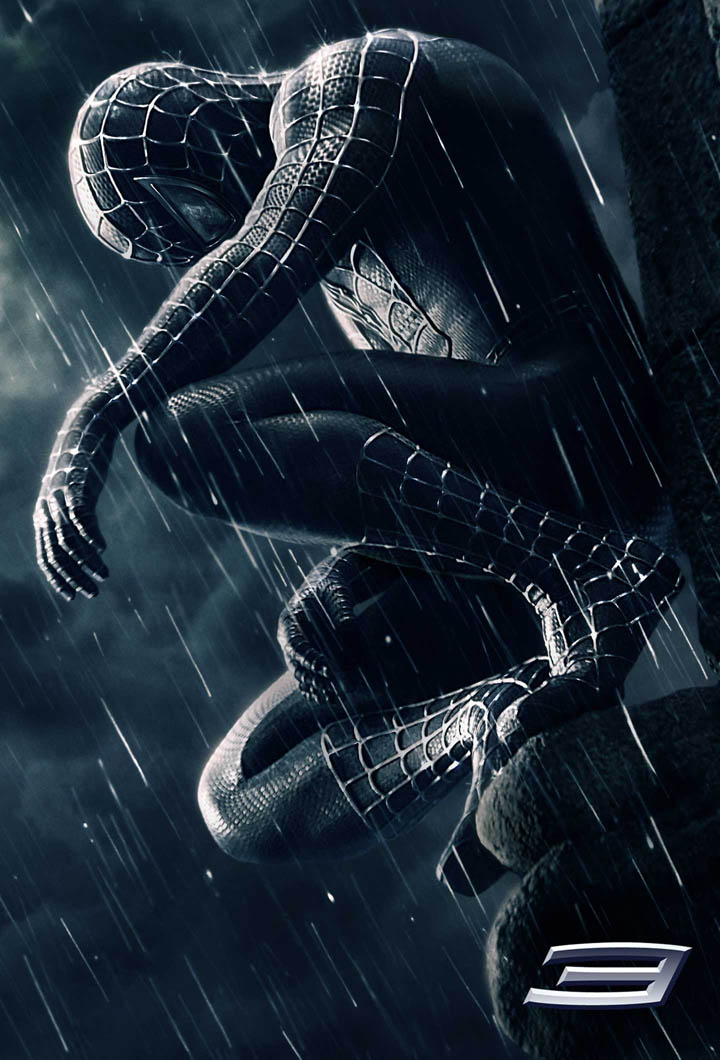
Superhero Hype! procures an impressive new pic from Spiderman III, and it’s official: Peter Parker is donning the black garb…which means the long-swirling rumors that Topher Grace is playing Venom seem to be on the money. Hmmm. Even with the Sandman involved, I’d have preferred to see more of Spidey’s classic rogues’ gallery before Raimi & co. got to the peeved symbiote in question. Update: As a keen-eyed AICN fanboy noted, is Parker asleep in this pic? That’d dovetail nicely with the comics, when, pre-Venom, the costume started getting a mind of its own.

DCCCLXXX.

Sorry, Battle Angel Alita and Aquaman: James Cameron announces the secretive Project 880 will be his next film. “‘We’ve moved “Project 880” into first position,’ Cameron said. ‘It’s as classified as the Manhattan Project.’ Many believe it is actually a version of Avatar, the director’s oft-rumored love story set against interplanetary war.” Both it and Alita (to follow) will be filmed in high-definition 3-D.

Dixieland.

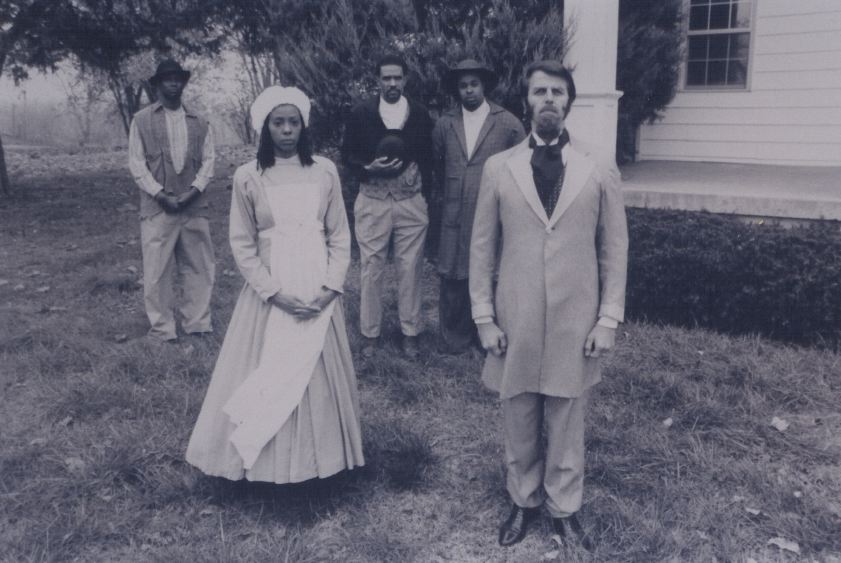
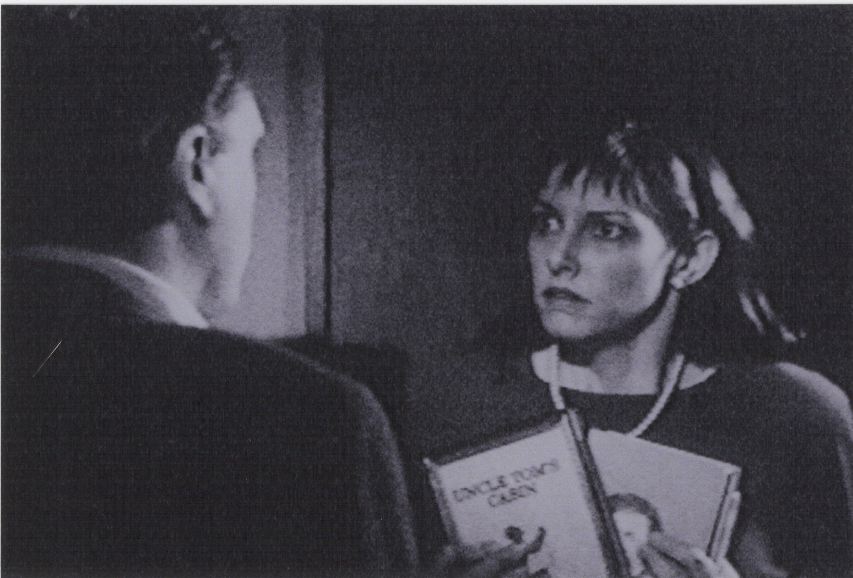
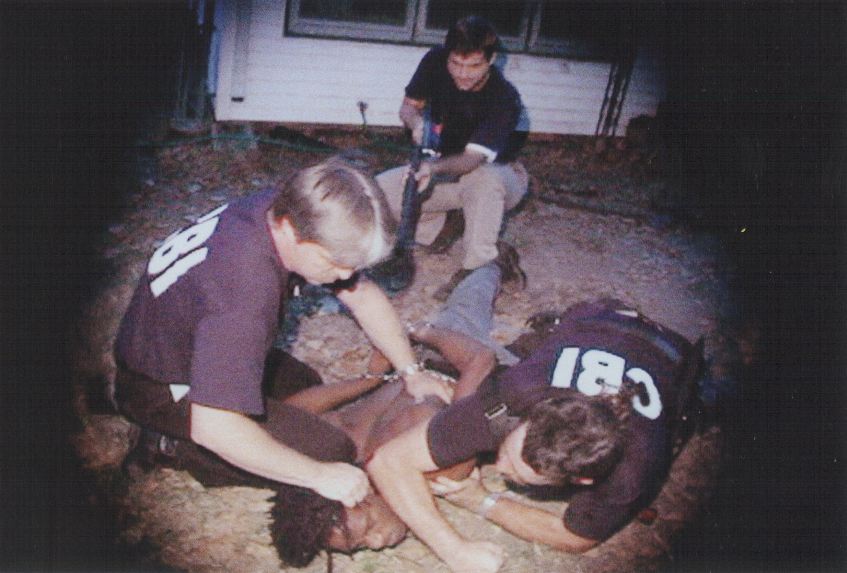
“If you are going to tell people the truth, you’d better make them laugh. Otherwise they’ll kill you.” This savvy George Bernard Shaw quote introduces Kevin Willmott’s razor-sharp documentary-satire C.S.A.: The Confederate States of America, which opened at the IFC Center tonight (followed by a Q&A), and, by that measure, Willmott’s film is a rousing success. At times both blisteringly funny and quietly devastating, C.S.A is a take-no-prisoners alternate history of our Confederacy — Yep, the South won — done in the style of Ken Burns’ The Civil War (or Andy Bobrow’s Old Negro Space Program), right down to bizarro versions of Shelby Foote and Barbara Fields. Punctuated throughout by offbeat television commercials that are eerily similar to today’s TV, C.S.A. is one of the best (and most ruthless and unflinching) satires I’ve seen in some time. And it illuminates a central fact often obscured in so many Brother-against-Brother tributes to America’s bloodiest conflict (as well as drek like Gods and Generals): The Civil War was begun and fought over slavery. In the words of C.S.A. Vice-President Alexander Stephens — in his inaugural address, no less — the Confederacy was founded “upon the great truth that the negro is not equal to the white man; that slavery –subordination to the superior race — is his natural and normal condition.

To kick off its conceit, C.S.A requires that you make two leaps of logic from the history of the Civil War: First, that, after the Emancipation Proclamation is issued, C.S.A. Secretary of State Judah P. Benjamin managed to convince England and France to join the war on the side of the Confederacy. (This was less likely, I think, than the film makes it out to be. Popular support in England — who had abolished slavery in 1833 — was pretty clearly on the side of the Union, particularly after Lincoln’s Proclamation, and “King Cotton diplomacy” just wasn’t going to work when England and France could import cotton instead from India, Egypt, and other waystations in their respective empires. And, even if the European powers had recognized the CSA, which they might’ve done had the South won more battles, they weren’t about to send troops across the Atlantic to fight on the side of slavery without severe popular repercussions.) Second, and more unlikely, is that, after capturing Washington DC, the South managed to subdue and annex the entire North, leveling Boston and Philadelphia (a la Sherman’s March) in the process. Even despite the Union’s hold on the Mississippi in the Western theater, the South might well have won the war, if Northern public opinion had collapsed in 1863 and 1864 (As it was, timely Union victories — and particularly the fall of Atlanta — buoyed Lincoln’s reelection.) But, had that happened, IMHO, there would likely be two nations uneasily living side by side for decades to come, as you find in Harry Turtledove’s How Few Remain series.

Ok, all that history geekery notwithstanding (which is somewhat unfair to the movie — it’s an alternate history satire, after all, which also explains the more recognizable battle flag replacing the official Stars and Bars on the moon and elsewhere), once you make the conceptual leap that the Confederacy managed to win the war and annex the Union, the rest of C.S.A is remarkably well-thought-out, and at times even scarily plausible. Like Jeff Davis, Lincoln is captured trying to escape in costume (on the Underground Railroad) and sent to Fort Monroe — Here, it’s dramatized in the 1915 D.W. Griffith film, The Hunt for Dishonest Abe. While the South contemplates various “Reconstruction” plans to reintroduce slavery to the North (and Nathan Bedford Forrest reenacts Fort Pillow over and over again), William Lloyd Garrison leads an abolitionist/transcendentalist contingent to Canada. Rather than the Chinese Exclusion Act, the C.S.A. passes a “Yellow Peril Mandate” providing for the enslaving of Chinese laborers. And, as in our world, the nation comes together again to fight a (here much broader) Spanish-American War.

As we get to the 20th century, C.S.A. continues to adroitly riff on American history. Audiences swarm to the Civil War musical, A Northern Wind. (“You tried to take my blacks, But I still want you back.“) In WWII, the C.S.A. plays nice with Germany while despising Japan. (Thanks to the service of Judah Benjamin, Jews can still live in the Confederacy, provided they stay on their “reservation” in Long Island.) Eventually, an armed, highly defended border — the “Cotton Curtain” — descends between Canada and the C.S.A., and ’50’s Confederates scour the nation for the “Abs” (abolitionists) in their midst. Later still, slave riots break out in Newark, Watts, and elsewhere in the turbulent ’60s, as many white Confederates reconsider slavery (due to global sanctions, give or take South Africa) and women begin to demand the vote.

Equally as nimble as the mirror-image counterhistory of the CSA are the many commercial breaks throughout the fake documentary, with ads that are both jaw-droppingly brazen and laugh-out-loud funny. (You can get a sense of this from the trailer — Think Spike Lee’s Bamboozled, itself an excellent satire, to the nth degree.) They range from fake ads for unfortunately real products (Darky Toothpaste, Coon Chicken Inn) to all-too-possible modern innovations — The Slave Shopping Network, a LoJack “Shackle”, a Claritin-ish drug to treat drapetomania (the runaway disease “discovered” by Dr. Samuel Cartwright in 1851), a COPS-style show called RUNAWAYS, etc. etc. As you can see, this is withering stuff, and some might find it in horrible taste. But, there’s method to CSA’s madness. As I noted before, we tend to do a pitiful job of facing up to slavery, America’s Original Sin, and for ninety hilarious, cringeworthy minutes, CSA forces us to look the peculiar institution square in the eye. If we’re serious about our proclaimed role as a Beacon of Freedom to the world, that’s something we need to start doing a lot more often. (But, don’t worry — C.S.A. sweetens this tonic with quite a few laughs.) At any rate, if it’s anywhere near you, definitely go check it out.

Rebel Pretensions.

After the GOP co-opt the Star Wars universe for their own nefarious purposes, George Lucas makes an appearance with House Democrats (including his own congresswoman, Nancy Pelosi.) The Republican video (shown at CPAC) “depicted GOPers as the virtuous rebels, being pursued by ‘Darth Nancy’ and her imperial henchmen, Minority Whip Steny Hoyer (D-Md.) and Democratic campaign chief Rahm Emanuel (D-Ill.).” Um, yeah, you guys own every branch of government, your boy in office is ignoring the law and desperately trying to wrest power from the Senate, and you’re the Alliance. C’mon now, at least the Yankees own up to it.

When Mal met Starbuck.

Firefly‘s Nathan Fillion and Battlestar Galactica‘s Katee Sackhoff will appear together in White Noise 2: The Light. Smart play by Rogue Pictures — maybe the Browncoats and Galacticaheads (Capricans?) will fill the seats for what’s essentially a straight-to-video property. (Did anyone even see White Noise? I know Michael Keaton was in it, that’s about it.)