Neutral No Longer.

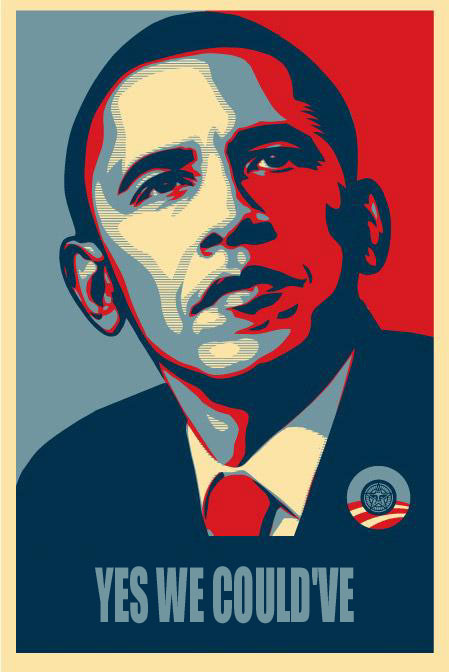
The message: the FCC Chairman caved to the most powerful interests and is adopting a rule that may end the Internet’s historic openness to all software and content as a level playing field. This will undermine the Internet’s role in as an engine of economic innovation and democratic participation. The rule was written by and for the giants like AT&T, Verizon, and Comcast, who are cheering the rule. And the FCC Chairman is trying to fool the public into believing they should thank him.

After earlier explaining why the FCC’s compromise(d) stance was “garbage”, Marvin Ammori laments Julius Genachowski’s sad sell-out on net neutrality. While the president is claiming victory here — it does, after all, follow the “solomonic or moronic” splitting-the-baby approach he likes to bring to every issue — everything you need to know about it is summed up in one sentence in Wired: “There was one group, however, which seemed content with the new rules: the nation’s cable and telecommunications companies, including AT&T, Comcast and Verizon.

Talking Monarch Blues.

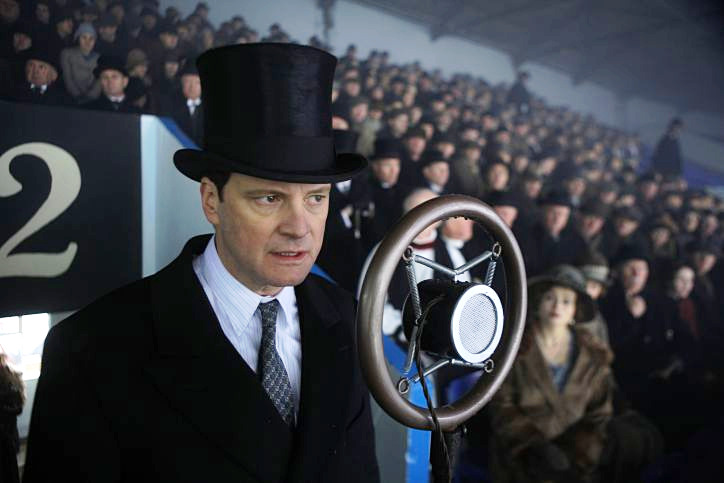
Part monarchical bromance, part speech impediment Rocky, Tom Hooper’s impressive if Oscar Bait-y The King’s Speech — about King George VI of England’s attempts to overcome his debilitating stammer — is, in its own way, as edutaining and well-made a recent royal micro-history as the film concerning his daughter, Stephen Frear’s The Queen. The acting is on point, the writing is keenly-observed, the direction is crisp and well-paced, and if Colin Firth gets a Best Actor Oscar for this to make up for his A Single Man loss (much like Jim Broadbent won for Iris after being overlooked for Moulin Rouge), well, no harm, no foul.

The point being, if in doubt, go see this film. You probably know if this sort of thing — a BBC-ish historical production with a feel-good, sports-movie narrative arc — is your cup of tea, and if it is, have at it, good fellow. Still, chalk it up to haters gonna hate, but I left the theater feeling a little underwhelmed by The King’s Speech. Yes, it is well-made. But it also didn’t do anything that surprised me — wait, so Geoffrey Rush’s speech therapist is both wacky AND wise? Irreverent AND endearing? What a delightful combination! — and I ultimately found the stakes to be rather small.

The film opens in October of 1925, as the shy, discomfited Duke of York, Prince Albert (Firth), waits within the bowels of Wembley Stadium with his doting wife Elizabeth (Helena Bonham Carter). Third in line to the throne behind his father the King (Michael Gambon) and his rapscallion brother David (Guy Pearce), the Duke is about to deliver an address — to be broadcast worldwide — at the closing ceremony of the British Empire Exhibition. This, alas, he bombs painfully: Albert’s pitiful, strangulated attempts to overcome his stammer make the speech a chore for speaker and millions of listeners alike.

Cut to a decade later, and the poor prince is still prisoner to his unruly glottis. And so, with the Duke at the end of his rope, Elizabeth (who we know better as the beloved “Queen Mum.”) seeks out some aid from a commoner who’s ostensibly trained in the arts of speech therapy, one Lionel Logue (Rush). An Australian transplant to the isles, Lionel is a congenial family man far removed from the etiquette and ostentation of the Crown: The closest he’s ever gotten to royalty is his well-reviewed portrayal of Richard III — another “rudely-stamped” Duke of York, as it happens — back in Perth. But is it possible this scampish, egalitarian therapist has the wisdom and the potential to break through to the future king where others have failed? Gee, you think?

I don’t want to make light of Prince Albert’s stammer, because it seems like a cruel fate indeed for a man born into a family business of speechifying to be afflicted with such a curse. (And Firth does a great job of conveying the sheer horror of it all. At any moment, you can see his fear that he might once again be betrayed by his tongue.) Still, perhaps it speaks to a failure of empathy on my part — I usually do well on the Voight-Kampff, I swear — but the question of whether or not an extraordinarily wealthy and catered-for man can manage to overcome his embarrassing speech impediment was not one I found all that engaging in the end. (This is sorta the same problem I have with Sofia Coppola films, and I fear Somewhere will be no exception.)

It seems the writers recognize the problem here, so to square that circle they invoke the encroaching thunder of World War II. Albert (later George, of course) is more and more explicitly contrasted with that eloquent demon on the Continent, Adolf Hitler, who is mustering a frightful army by virtue of his silver tongue. How will England’s monarch be able to stand against the wrath of Nazi Germany, if he too is not possessed of royal gravitas and a kingly p-p-p-p-poker face? Well, ok, that does raise the stakes some, and, yes, from his decision to stay in London during the Blitz to his 1939 Christmas speech (not featured in the film), the dignity and fortitude of King George VI was indeed a rallying point for his people during the Second Great War.

Still, from watching this movie you’d never get the sense that John Bull already has a great orator in his pocket, in Winston Churchill. (Here, Timothy Spall, who sadly comes off like a guy in a Halloween costume.) At the end of the day, it’s Churchill’s speeches — “their finest hour, “blood, toil, tears, ands sweat,” “we shall fight on the beaches” — that stand the test of time, which, for all its good intentions and attention to craft, makes the central tale in The King’s Speech feel like even more of an historical footnote. (And, as Dangerous Meta points out, Churchil himself was a stammerer. That’s mentioned briefly in the movie, but perhaps not given as much due as it could’ve been.)

In the end, though, the question of stakes is less important than the nagging suspicion throughout The King’s Speech that it was basically just a sports movie for the Merchant-Ivory crowd. There may be a Big Speech at the end instead of a Big Game, but we’re still playing in the same old ballpark. We even have a training montage at one point.

Speech is very well put together to be sure, and if this genre speaks to you then do go see it. Still, I left the theater feeling like I’d seen this exact same sort of tale — adversity overcome with determination and the aid of a kooky-but-wise mentor — way too many times before. Adding British accents, and a stammering one at that, doesn’t really change the tried-and-true Rocky/Remember the Titans/Great Debaters equation at work here in the end.
Song of the South.

Here was the Delta Republicans’ historic task: negotiating terms of surrender to the Constitution, then reframing that Lost Cause as honorable, the better to preserve their insular plutocracy — perhaps their gravest sin in the first place — in order to integrate themselves more snugly into national and international circuits of corrupt wealth. Haley Barbour, who received his first Republican patronage job in 1970, is a true son of this confederacy.

In the wake of Haley Barbour’s highly dubious misremembering of civil-rights era Mississippi, historian Rick Perlstein skewers the GOP poobah and presidential hopeful to the wall. “At every important turn in the story, Barbour emphasizes how little he remembers of this most intense period imaginable in his beloved home town — it really was no big deal, he insists…He’s a middle-aged Southern conservative. That is what his job is: to opportunistically ‘forget.‘”

Venetian Grind.

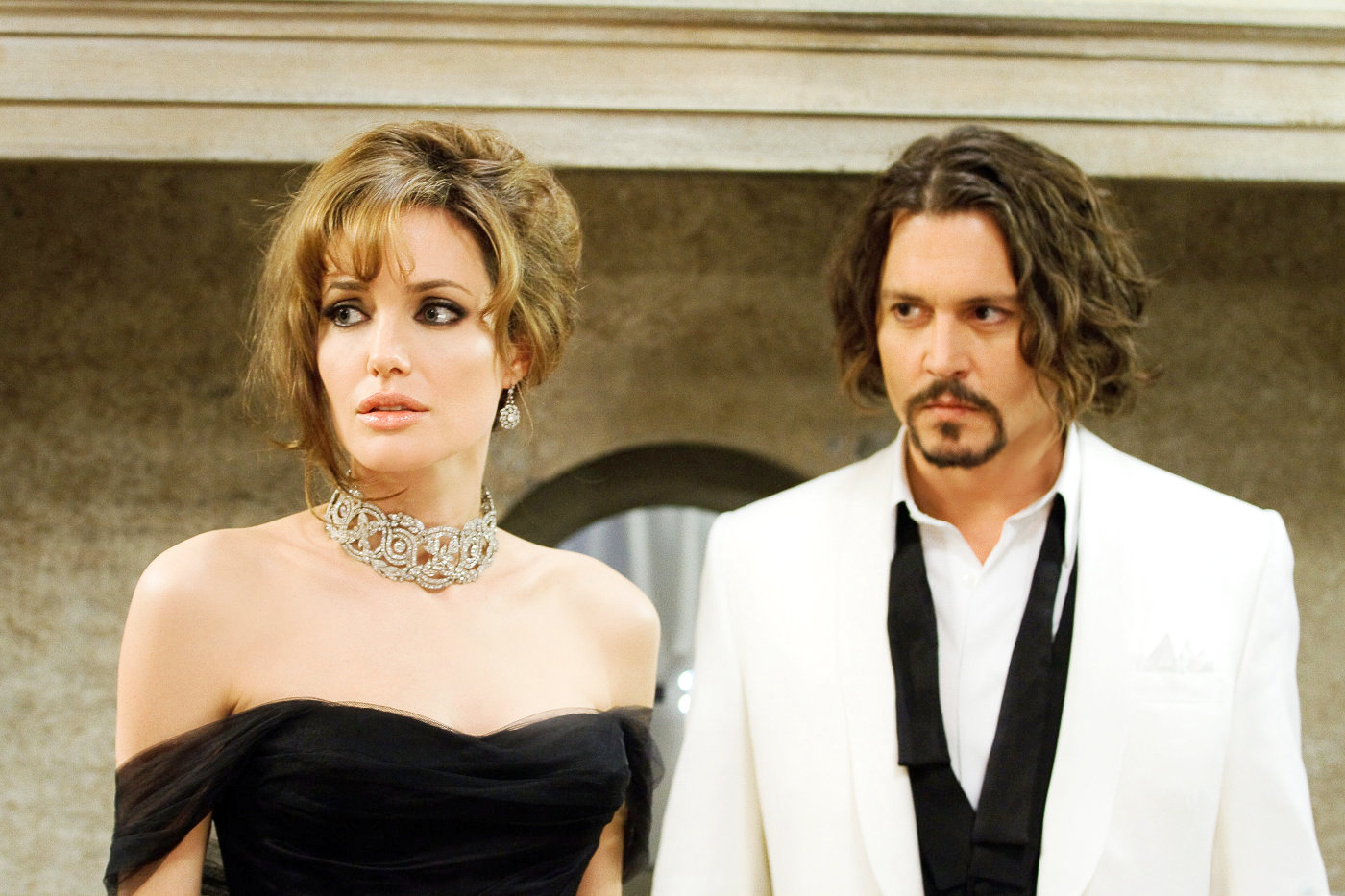
Let’s get right down to brass tacks: Florian Henckel von Donnersmarck’s The Tourist, his major studio follow-up to The Lives of Others (#11 on the decade list) is brazenly, woefully, blog-stoppingly awful. I’m serious — this movie is terribad. It’s been awhile since I’ve felt the urge to get up and leave in the middle of a film so strongly (and that’s something I never do, because if I break that seal, it’ll be katy bar the door from then on.) But it’s probably just as well I stayed, since pretty soon thereafter I got the 21 Grams giggles to carry me through this canal of Venetian drek.

So, oof, where to begin? It sounds like von Donnersmarck was mostly a hired gun for an already-troubled production here, so let’s give him a pass to start. (Sam Worthington, Charlize Theron, and Tom Cruise — who mined similar material this year in the considerably better Knight & Day — were all attached as stars at various points, and director Alfonso Cuaron was rumored to be replacing von Donnersmarck when he tried to walk away early on.) So how about the two leads? Angelina Jolie is one of the world’s great beauties, and Johnny Depp is no slouch in the heartthrob department either. But, here, she looks cadaverous, he looks paunchy, and together they have zero chemistry whatsoever.

I’ve long thought that Depp is one of our best working actors, but it has to be said — After two dismal Pirates sequels, he’s now been front and center in two of 2010’s worst bombs, this and Tim Burton’s Alice in Wonderland. And after seeing Depp play so many weird parts over the years, one has to wonder if he’s now like butter scraped over too much bread: Maybe he just can’t do normal anymore. (But now that I think about it, has Depp ever played a convincing “normal” romantic lead? Benny & Joon, maybe? Gilbert Grape?)

Anyway, Depp’s character — Wisconsin widower and schoolteacher Frank Tupelo — is meant to be just an average guy in over his head, unwittingly caught up in a spy drama as The Wrong Man. (Jolie’s character picks him at random on a train to be a mark for the Interpol-types following her.) But Depp seemingly can’t help but play Frank as all twitchy and affected. He speaks with Hunter Thompson cadences half the time and eyes his surroundings — and his co-star, for that matter — like it or she are going to sprout wings any moment. He can’t even sip his nightcap without Jack-Sparrowing his way through it. “Hey, look, a beverage! In my hand! I shall drink it! Ooh, it kicks!

And then there’s Jolie, who also seems bored throughout (and who has her own 2010 sins to atone for in Salt.) For one, Jolie and Depp definitely don’t seem to like each other very much: There’s no romantic spark between them at all. (So much for “tourist attraction.”) But the main problem here is they’ve given her character — Elise Clifton-Ward, beautiful femme fatale with a hidden agenda — a British accent. Now, Jolie can either act or do the accent, but, for whatever reason, she pretty clearly can’t do both at the same time. (And, as you’ll see if you somehow end up watching this disaster, she definitely can’t act, do the accent, and drive a boat.)

And so most of the movie Jolie just seems very far away, a cold neutron star. Her sheer presence can overpower a film sometimes — say, her turn as Matt Damon’s crazy wife in The Good Shepherd. But, here, any spark of personality, wit, or warmth is quickly snuffed out by her stultifyingly bad impression of an English person. It’s like the prom queen somehow got roped into performing in the high-school production of Oliver Twist, and she’s just going through the motions so it won’t negatively affect her cred.

So Jolie and Depp are definitely a drag on the material. But, to be honest, it’s hard to imagine a different set of A-list stars with real romantic chemistry — say, I dunno, George Clooney and Catherine Zeta-Jones — pulling off this film either. Some fetching images of Venetian splendor notwithstanding, there’s just no there there. The Tourist moves at a snail’s pace for most of its run, and not in a contemplative Eurofilm way like The American. And more often than not, the movie makes no sense.

To take a few examples: Frank finds himself running from Russian mobsters but doesn’t think to change his appearance in any way. (Here’s a tip — lose the Jack Sparrow ‘do.)The Big Bad dispatches his minions in such an over-the-top Bondian manner that nobody would ever actually work for the guy (although that might explain why said Russian goons can’t hit the broad side of a barn.) And there’s a ridiculous third-act twist which many will see coming within the first five minutes of the movie. But just because you see it coming doesn’t make it plausible.

Granted, these are the type of foibles and Scooby Doo logic you might forgive in a more enjoyable film. But with nothing to latch onto here for entertainment value, they stick out like a sore thumb. So, is there anything good about The Tourist? Well, the movie does feature a cast of obviously European actors, which gives it more of a sense of place than your average studio film. And it starts out with a surveillance scene, which made me think fondly of The Lives of Others for a few beats at the start. Um…Timothy Dalton’s in it, so that’s cool, I guess. (He fares slightly better than poor Paul Bettany, who’s stuck with the clueless inspector role.)

But that’s about it, really. Make no mistake: This is a bad, bad film. Mr. von Donnersmarck, Mr. Depp, Ms. Jolie: Let us never speak of this trip again.

Hammer and Prongs.


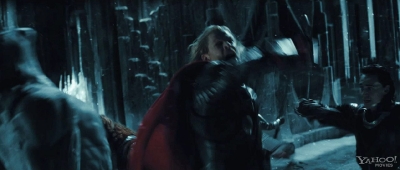
Metallica roadie or Norse God of Thunder? Chris “Papa Kirk” Hemsworth finds himself stuck inside of Midgard with the Asgard blues again in the teaser for Kenneth Branagh’s Thor, also with Anthony Hopkins, Natalie Portman, Tom Hiddleston, Ray Stevenson, Clark Gregg, Kat Dennings, Colm Feore, Rene Russo, Jaimie Alexander, Stellan Skarsgard, and Idris Elba. Hmmm. Like the forthcoming Green Lantern over on the DC side, this looks rather cheesy…but maybe Loki will be fun.

Meanwhile, a more promising upcoming comic creation announces its main villain — one who’s also potentially featured in Christopher Nolan’s The Dark Knight Rises — in this impressive trailer for Batman: Arkham City, due out next fall. Looks great, and Arkham Asylum is both very fun and a totally immersive Batman experience. But, while I get that they’re riffing on Call of Duty: Black Ops here (and take that, Sam Fisher), I’m already way over the recent trend towards interrogation scenes in my gaming.

Those Real Life Achieves.

By one estimate, Dr. McGonigal notes, creating Wikipedia took eight years and 100 million hours of work, but that’s only half the number of hours spent in a single week by people playing World of Warcraft. ‘Whoever figures out how to effectively engage them first for real work is going to reap enormous benefits,’ Dr. McGonigal predicts.

But, then it’d be work, would it? At any rate, scientists and game designers try to figure out ways to tap into the world-changing potential of gamers. “‘Gamers are engaged, focused, and happy’…’One of the most profound transformations we can learn from games is how to turn the sense that someone has “failed” into the sense that they ‘haven’t succeeded yet.’“

Life Through Other Means.

In the trailer bin of late:

  • Whatever they may show in the trailer for Jodie Foster’s family dramedy The Beaver, I’m guessing Mel Gibson’s imaginary puppet friend says unspeakably filthy things in his downtime. Anyways, The Beaver also has Foster, Anton Yelchin, Jennifer Lawrence, and Cherry Jones. Tell me if it isn’t terrible.

  • Rome‘s Ray Stevenson gets his chance to shine as a son of Eire among the seventies Mob in the trailer for Jonathan Hensleigh’s Kill the Irishman, based on the true story of Danny Greene and co-starring Val Kilmer, Christopher Walken, Vinnie Jones, Linda Cardellini, Vincent D’Onofrio, and a whole lot of usual suspects in the mobster kingdom (Steven Schirippa, Robert Davi, Mike Starr, Paul Sorvino.) Eh, definitely maybe.
  • HUGH JACKMAN. BOXING ROBOTS. SHAWN LEVY’S REAL STEEL. 10.7.11 (Oof. Only if there’s a lot of drinking involved beforehand.)
  • There’s a distinct visual look, and a grand scope, and even of a sense of narrative (sort of). What’s hinted at here is a big-canvas movie in the best sense, one with both cosmic significance and intimate drama.” Sadly, the trailer that prompted this post doesn’t seem to be online yet. Nonetheless, in front of Black Swan last week was our first look at Terence Malick’s eagerly-awaited The Tree of Life. And it looks appropriately mystical and Malickian: May 27th, 2011. Update: It’s finally up.

Radagast the Seventh.

Five armies, seventh Doctor? The cast for Peter Jackson’s The Hobbit fills out further with Sylvester McCoy (Radagast the Brown), Ken Stott (Balin), Mikael Persbrandt (Beorn), Ryan Gage (Drogo Baggins), Jed Brophy (Nori), William Kircher (Bifur), and, back for more, Cate Blanchett as Galadriel. [Earlier casting here.] Very glad to see this moving along.

Anatomy of a Tantrum.


This is the public option debate all over again. So I pass a signature piece of legislation where we finally get health care for all Americans, something that Democrats had been fighting for, for a hundred years – but because there was a provision in there that they didn’t get…somehow that was a sign of weakness and compromise.

“Now, if that’s the standard by which we are measuring success or core principles, then let’s face it, we will never get anything done. People will have the satisfaction of having a purist position, and no victories for the American people. And we will be able to feel good about ourselves, and sanctimonious about how pure our intensions are and how tough we are…That can’t be the measure of how we think about our public service. That can’t be the measure of what it means to be a Democrat.

As I’m sure most of y’all know by now, the president decided to indulge in some cathartic lefty-bashing at his tax cut deal press conference earlier in the week. [Transcript.] At this point, the fact that Obama feels this way about progressives is not at all a surprise, and I feel like I’ve already responded to his appalling penchant for this sorta thing at length. So, here’re just a few numbered points about this latest sad window into Obama’s “pragmatic” mindset:

1) Alex Pareene at Salon cut right to the heart of the fallacy on display here: “[Obama] continues to imagine that his liberal critics are upset with the idea that compromises need to be made in order to accomplish progressive policy goals. Some of them are that stupid. But lots of them are actually critics of the White House’s legislative strategy, and their apparent willingness to preemptively compromise before the negotiations have already begun.Yep.

2) See also Paul Krugman: “Leave aside the merits for a moment: what possible purpose does this kind of lashing out serve? Will activists be shamed into recovering their previous enthusiasm? Will Republicans stop their vicious attacks because Obama is lashing out to his left? It was pure self-indulgence; even if he feels aggrieved, he has to judge his words by their usefulness, not by his desire to vent…[W]hat we really don’t need right now is a president who blames everyone but himself, and seems more concerned with self-justification than with sustaining the alliances he needs.

3) As I noted on Twitter, the president’s argument here is inherently contradictory. He began his presser by saying he had to make a bad deal because the Right, however wrongheaded, held stubbornly to their convictions. Then he verbally abuses the Left for…holding stubbornly to their convictions. Uh, it seemed to work pretty well for the GOP.

4) Speaking of Twitter, the Twitterverse response to the presidential presser is well worth perusing for gallows humor and hard truths. Take for example, “Obama: This is like the public option fight all over again where I caved and opposed the thing that reduced the deficit.

5) As many have pointed out now, the president is also wrong on his New Deal history. In the presser, he claimed Social Security was only for widows and orphans. Wrong. He’s thinking of the civil war pension system, circa 1862. I know that law degrees are considered the be-all, end-all of our civilization these days, but an ostensibly progressive president not understanding the origins of Social Security is sort of a big effing deal. (And he didn’t just misspeak — He’s said it before.)

6) As historian Thomas Ferguson noted several weeks ago, this is not the first time the president has badly screwed up the history of the New Deal in a way that was ultimately self-serving. (As an aside: Given they they chose to structure a major policy speech around a fake Lincoln quote, his communications staff isn’t much better.)

7) As Dan Froomkin pointed out, Obama’s argument about the public option is also contradictory. He argues that Social Security and Medicare started out small, than belittles the public option because it “would have affected maybe a couple of million people,” i.e. it would’ve started out small.

8) Obama also no longer seems to understand how the public option was supposed to work. Here’s Froomkin: “What the president conspicuously disregarded was that the central point of the public option was that its existence would exert enormous competitive pressure on the private insurance system. The goal was not to serve a particularly large number of people directly — that would only happen if the private offerings were terribly inadequate. The goal was to keep the private sector honest. So no matter how many people it enrolled, ‘the provision,’ as Obama put it “would have affected” tens of millions.” In other words, the public option was designed to be a yardstick. So, even in terms of recent history, there are some serious revisions going on.

9) Politico’s catty analysis of the president’s relationship with Chuck Schumer offered more insights on Obama’s thinking today: “Obama himself warned Schumer that the millionaire strategy could sink the stock market. When a vote on the millionaire plan came up short last Saturday, the administration gloated.” The vagaries of the stock market? Is that really what we’re basing our tax policies on these days? (Also, I don’t think Chuck Schumer, of all people, needs to be informed of when and how Wall Street will balk. I think he has his finger pretty solidly on that pulse.)

10) A day after the president’s remarks, Larry Summers solemnly informed us that not passing the millionaire tax cut would lead to a double-dip recession. This is basically the economic equivalent of the terror, terror, terror, 9/11, 9/11, 9/11 argument. And, as David Dayen and Jon Walker both pointed out: If the economy is resting on that sort of knife’s edge, why’s the White House just reduce purchasing power by announcing a federal worker’s pay freeze? Something does not compute.

11) Obama at the presser again: “Look at what I promised during the campaign. There’s not a single thing that I’ve said that I would do that I have not either done or tried to do. And if I haven’t gotten it done yet, I’m still trying to do it.” Um…do we really want to go there? Because I’m sure this would be news to Maher Arar. In any case, as a friend pointed out, this isn’t kindergarten — You don’t get a gold star just for “trying.”

Anyways, so, yeah, Obama doesn’t like “the professional left” very much. And, at this point, it’s safe to say the feeling is mutual. As for myself…well, these days I just feel like a sucker.

Danse Macabre.


Well, I was rooting for Darren Aronofosky’s Black Swan. I generally think well of Aronofsky even if The Wrestler notwithstanding, he has a penchant for operatic self-indulgence. (In the Best of the Decade list I put together a year ago, The Fountain, The Wrestler, and Requiem for a Dream clocked in at #77, #35, and #30 respectively.)

And, at least in general terms, the subject matter of Black Swan hits close to home, given that my sis is a professional ballerina who’s well-versed in the Odette/Odile role(s). (Although, as far as I tell, she hasn’t gone off-the-wall, certifiably bugnuts crazy…yet. Gill’s thoughts on Black Swan are here.) All that being said, Aronofsky’s attempted Cronenberg variation on Tchaikovsky here doesn’t really work. The movie is arousing a good bit of passion and controversy at the moment — some critics love it, some hate it, there may even be an age divide — but, for the most part I just found it overwrought and silly.

Black Swan begins auspiciously with the prologue of the ballet from which it’s riffing: Young dancer Nina Sayers (Natalie Portman) dreams she’s on stage performing the opening “transformation sequence” of Swan Lake, when Odette first encounters the villainous sorcerer Von Rothbart. (Here and throughout, Portman doesn’t really have the ballet chops to pull off the dancing, but, to my layperson’s eye, the workarounds seemed decently convincing. And she’s actually quite good otherwise.) But outside of the Dreaming, Nina is still just a lower-level dancer (presumably a soloist) in her Lincoln Center-based company, living with her (s)mother (Barbara Hershey) in a too-small New York apartment.

But opportunity knocks for Nina when the company director (Vincent Cassel, seemingly playing himself) tires of his veteran principal (Winona Ryder) and decides to recast Swan Lake from the ground up. (And for some reason, he only seems to be picking one cast.) Nina seems like a perfect fit to dance the willowy, innocent Odette, the White Swan. But can she handle the Black Swan half of the equation: the alluring temptress Odile? In fact, there’s a carefree, sensuous new corps member — with swan wing tattoos, no less (Mila Kunis) — that seems born to play that role. So if Nina wants to live her dream and dance the lead in this new Swan Lake, she has to cut loose from her perfectionist moorings and embrace her dark side. Which, unfortunately for her, brings on the Madness…the Madness, splitting in half

Thus ensues a series of increasingly nightmarish vignettes, in which Nina — already fragile and anorexic on her best days — succumbs to teh crazy: Mirrors start acting funny, a stress rash grows worse and worse, and soon she’s ripping long strips of flesh off her fingers at the cuticle. (I wasn’t kidding when I said this was a Cronenberg variation, although the “all-in-a-day’s-work” body horrors of The Wrestler also come to mind.) Unfortunately, while Black Swan pretends to be a psychological horror movie, most of the scares here are really just of the jump-scare or gross-out variety. And, other then an ecstasy-fueled nightclub scene that recalls the druggy cinematic syntax of Requiem (and that eventually devolves into a ludicrous “sapphic succubus” tryst that seems like something out of Showgirls), Black Swan spends too much of its run dancing dangerously on the precipice of boring.

The thing is: If we know the lead character is going bonkers, and that’s made pretty clear from jump street, these endless nightmare sequences have very little dramatic weight to them. Something bad happened, somebody got killed? Eh, she’s probably just imagining it. What might’ve made Black Swan more interesting is to emphasize not how she’s going mad, but why. But, in that department, Aronofsky mostly just burdens Nina with trite Freudian baggage — an overbearing mother and a sexy crush on “father” (a.k.a. Cassel) — that was hoary and cliched even in Tchiakovsky’s day.

And so it’s hard to sympathize with Nina because neither her character nor her plight is at all convincing. So she has to somehow play both an innocent AND a seductress? ZOMG how will she ever manage? Well, I dunno, how about…acting? Sure, there are cases where Method types will lose themselves too much in a part. (Heath Ledger’s travails with the Joker come to mind.) But, perhaps due to familiarity with ballet folk, playing the white and black swans just doesn’t seem like an insanity-inducing event to me. (Although, now that I think about it, I guess a psychotic break after portraying evil twins might explain the late career path of the Shat.)

In the Financial Times, dance critic Apollinaire Scherr makes a key and telling point: In emphasizing the psychological rigors of the Black Swan role, Aronofsky sorta missed the point of the ballet. “Sure, there is a good maiden and a sly vixen in Swan Lake, but, like the ballet’s dopey prince, Aronofsky gets them mixed up. The virtuous woman has a self to lose; the schemer merely fakes it. Odile the Black Swan is easy to understand…what you see is what you get…Odette – part swan, whole queen, once simply a woman – is complex: wild but also majestic, animal yet gentle.”

In other words, the White Swan is the character with actual depth, while the Black Swan is basically all sizzle and flash, the prince falling for a pretty face. In that, the movie Black Swan is much like its namesake. I suppose it works decently well as a cheesy midnight movie for goth girls and the like. But in terms of anything approaching tragic or psychological depth, Black Swan misses the mark wildly. Its pleasures and pains barely scratch the surface.