Drake’s Misfortune.


Gabriel Schoenfeld, a conservative political scientist at the Hudson Institute, who, in his book ‘Necessary Secrets’ (2010), argues for more stringent protection of classified information, says, ‘Ironically, Obama has presided over the most draconian crackdown on leaks in our history — even more so than Nixon.‘”

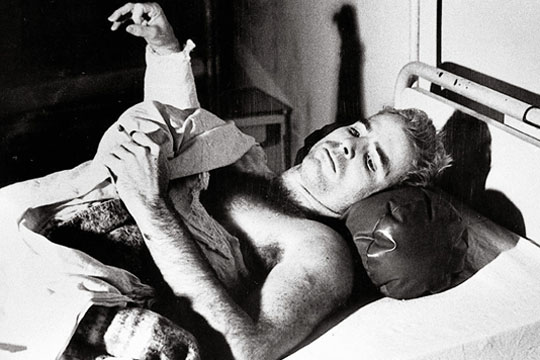
In the New Yorker, Jane Mayer delves deeply into the Obama administration’s continued war on whistleblowers, via the prosecution of NSA whistleblower Thomas Drake. (See also Glenn Greenwald on this, as well as here and here.) “‘I actually had hopes for Obama…[b]ut power is incredibly destructive,’ Drake said. ‘It’s a weird, pathological thing. I also think the intelligence community coopted Obama, because he’s rather naive about national security. He’s accepted the fear and secrecy. We’re in a scary space in this country.’

Not Our New Bicycle After All.

“‘This was maybe America’s last chance to fight back against the greed of the Wall Street oligarchs and corporate plutocrats, to generate some serious discussion about public interest and common good that sustains any democratic experiment,’ West laments…’I thought Barack Obama could have provided some way out. But he lacks backbone.

In a discussion with TruthOut‘s Chris Hedges, Cornel West — who admittedly is nursing some rather petty personal grievances here as well — lays hard into the DLC-centrism of President Obama. “I have to take some responsibility,’ he admits of his support for Obama as we sit in his book-lined office. ‘I could have been reading into it more than was there.‘” You and me both, brother. You and me both.

Hammer Don’t Hurt ‘Em.


Well, I’m sure it helped that, between the series of underwhelming trailers and the general hokiness of the source material, I went in with expectations calibrated at about shin-level. Still, I was surprised to discover this past Friday that Kenneth Branagh’s corny but amiable adaptation of Marvel’s Thor — which I caught IN THREE DIMENSIONS (the third of which adds next to nothing, by the way; save your money) — is totally and utterly not-bad.

That may seem like I’m damning this first of four comic book tentpoles this summer — along with X-Men: First Class, Green Lantern, and Captain America: The First Avenger — with faint praise. But, hey, sometimes ok is a good thing. There’s not much reaching for depth here: Branagh’s Thor is smart and self-referential enough to know that, once you get past all the family strife, Norse brooding, hubris of Gods, and whatnot, this is just a breezy, early-May popcorn film, and it keeps a light touch accordingly. The Dark Knight, this isn’t.

As such, and perhaps not surprisingly, Thor — the story of a fallen deity’s misadventures in the American Southwest, and the brother who betrayed him back home — feels more in keeping with the Make-Mine-Marvel larkiness of Iron Man. (And although IM was a much better film, Thor is more successful and self-contained a story than the rush job that was Iron Man 2.)

Like Iron Man, Thor is a comic that — Walt Simonson’s epic run in the 80’s notwithstanding — I’ve remained mostly agnostic about over the years. With all due respect to the Nordic pantheon from whence he came, Thor has just never been all-that-interesting a comic book character to me. He’s…a guy…with a hammer. Nor, for that matter, are his powers very well-defined. So, ok, he’s strong and can kinda sorta control the weather. But there’re a lot of generic strongmen running around the Marvel universe — Hulk, Hercules, Colossus, Juggernaut. What makes Thor different?

With that in mind, Branagh and his team of screenwriters make the smart move of dropping the “trapped as mere mortal Dr. Donald Blake” part of Thor’s origin and taking what’s distinctive about the character — mainly, his Asgardian roots and his noble, if a bit dense, nature — to fashion a fish-out-of-water story instead. Most of the humor that keeps the movie humming along — say, Thor going to the pet store to find a Lockjaw-type large steed on which to ride through the desert — ensues from this wise decision to skip canon and tell a rollicking Thor story (Thory?) instead.

The film also benefits from a bevy of actors, including but by no means limited to Chris “Papa Kirk” Hemsworth as the titular thunder god, who can managed the dual feat of conveying comic book gravitas when it is required and delivering moments of pure cheese with a wink and a nod. Anthony Hopkins, of course, is an old hand at this sort of thing by now, but his Odin is matched well by Tom Hiddleston’s impressive turn as Loki, the God of Mischief. (Let’s face it, Loki was always a more interesting character than Thor anyway, almost by design, and perhaps the most visceral geek thrill I got out of Thor was seeing Hiddleston — in the iconic horned helmet — lounging on Asgard’s throne like something out of Milton.) And a number of other actors here match the same wry and knowing tone perfectly, from Idris Elba’s Heimdall to Clark Gregg’s ubiquitous Agent of S.H.I.E.L.D to Stellan Skargard, here in the often-thankless role of skeptical science guy/mentor to the love interest.

Speaking of the love interest, Natalie Portman continues her post-Black Swan year-of-many-films here as super-physicist Jane Foster, and she’s decent enough at it. At the very least she doesn’t exhibit the deer-in-a-headlights stare that accompanied her last venture into FX-heavy fandom, the prequels. If there’s a weak link here, it’s probably — and sadly — Rome‘s Ray Stevenson (who already did time in the Marvelverse as the Punisher, in the one with McNutty) as Volstagg of the Warriors Three, a.k.a. Falstaff in the comics, Gimli in this film. I like Stevenson, but he’s mostly just miscast here. A more rotund individual (Oliver Platt? Mark Addy?) probably could’ve sold the character better.

Still, the very fact that the Warriors Three are traipsing around the margins of a big summer movie just goes to show what an embarrassment of riches comic book fans are enjoying at the multiplex these days. Even if I’m not much of a fan of Thor per se, I have to admit I definitely enjoy watching the world-building Marvel is engaged in as a studio right now. (Here, various Marvel denizens are name-dropped, and another Avenger shows up briefly mid-movie — You’ll know him when you see him.)

Like the comics they’re based on, these pre-Avengers films have permeable borders. It’s like nothing we’ve seen before at the cinema, and the ambition is thrilling. Of course, there will be a backlash eventually — one of these comic book films is going to bomb, and bomb big. But, surprisingly to me at least, Thor doesn’t signify the end is near. To the contrary, it shows that if you get a good director, good writers, and good actors who take their source seriously — but not too seriously — the comic book experience is actually pretty translatable to the big screen. The ball’s in your court now, Hal Jordan.


Don’t Trust the Neighbors.

Two new remakes in the trailer-bin: Anton Yelchin doesn’t cotton much to Mom Toni Collette’s potential new boyfriend next door, Colin Farrell, in Craig Gillespie’s 2011 edition of Tom Holland’s Fright Night, also with Christopher Mintz-Plasse as Evil Ed and — though he’s not seen much in this clip — David Tennant as Peter Vincent, Vampire Killer. As I said here, Fright Night was one of my Halloween standbys growing up, so I hope this one works out.

And, also out today, James Marsden and Kate Bosworth run into some trouble with Alexander Skarsgard and the local yokels in Rod Lurie’s remake of Sam Peckinpah’s Straw Dogs. Even with the switch from Hammer Horror England to the Deliverance South, I’m not sure Straw Dogs needed to be remade — and it seems doubtful that Screen Gems is the studio to improve on the disturbing original. We’ll see.

Straight Talk about Torture.


I don’t mourn the loss of any terrorist’s life. What I do mourn is what we lose when by official policy or official neglect we confuse or encourage those who fight this war for us to forget that best sense of ourselves. Through the violence, chaos and heartache of war, through deprivation and cruelty and loss, we are always Americans, and different, stronger and better than those who would destroy us.

Showing a flash of his 2000 self in today’s WaPo op-ed page, John McCain argues anew that torture is un-American — and that Bush water-carriers like Michael Mukasey are lying about its efficacy in the Bin Laden hunt. He then followed up with a Senate speech to the same effect:

“In fact, not only did the use of ‘enhanced interrogation techniques’ on Khalid Sheikh Mohammed not provide us with key leads on bin Laden’s courier, Abu Ahmed; it actually produced false and misleading information…In short, it was not torture or cruel, inhuman, and degrading treatment of detainees that got us the major leads that ultimately enabled our intelligence community to find Osama bin Laden.

A Comcastic Cash-in.


“‘No wonder the public is so nauseated by business as usual in Washington — where the complete capture of government by industry barely raises any eyebrows,’ said Free Press’ Craig Aaron. ‘The continuously revolving door at the FCC continues to erode any prospects for good public policy. We hope — but won’t hold our breath — that her replacement will be someone who is not just greasing the way for their next industry job.’

Democracy in action: Soon after working to get the Comcast-NBC merger approved at the FCC, Republican commissioner Meredith Attwell Baker steps down to become a senior VP of the merged company. “At the time, Baker objected to FCC attempts to impose conditions on the deal and argued that the ‘complex and significant transaction’ could ‘bring exciting benefits to consumers that outweigh potential harms.‘”

One small silver lining amid the sordidness here: The merger was approved in mid-January, and it’s now early May. So this sweetheart deal actually marks the fastest that Comcast has ever managed to service one of its customers.

Another D’oh From Simpson.


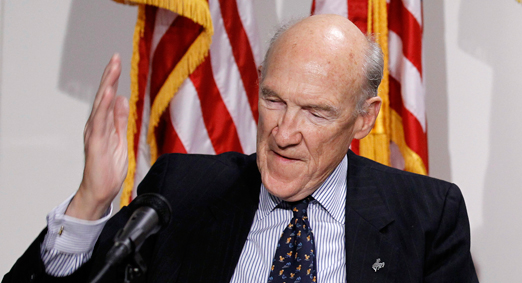
Told that the data came directly from the Social Security Administration, Simpson continued to insist it was inaccurate, while misstating the nature of a statistical average: “If you’re telling me that a guy who got to be 65 in 1940 — that all of them lived to be 77 — that is just not correct. Just because a guy gets to be 65, he’s gonna live to be 77? Hell, that’s my genre. That’s not true,’ said Simpson, who will turn 80 in September. Understanding life expectancy rates at age 65 in 1940 is central to understanding Social Security itself.

In keeping with his informative interview with Alex Lawson last fall, former Wyoming Senator and co-head of the president’s deficit commission Alan Simpson — while railing against AARP — proves once again knows as little about Social Security as he does about hip-hop. So, yeah, by all means let’s put him in charge of social insurance “reform.”

Simpson’s forceful gesture came after an extended diatribe against Social Security, which he said is a ‘Ponzi’ scheme, ‘not a retirement program.’ Simpson argued that Social Security was originally intended more as a welfare program.Um, no. But, in Simpson’s defense, the president who appointed him also harbors some misunderstandings about Social Security. And at least the Senator is right on public financing of elections. So, there’s that.

Too Big to Jail.


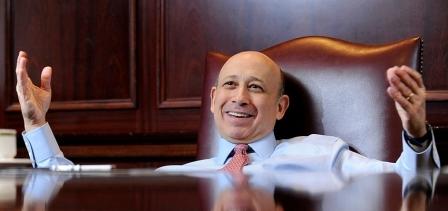
Lloyd Blankfein went to Washington and testified under oath that Goldman Sachs didn’t make a massive short bet and didn’t bet against its clients. The Levin report proves that Goldman spent the whole summer of 2007 riding a ‘big short’ and took a multibillion-dollar bet against its clients, a bet that incidentally made them enormous profits. Are we all missing something? Is there some different and higher standard of triple- and quadruple-lying that applies to bank CEOs but not to baseball players?

In Rolling Stone, a simile-happy Matt Taibbi reiterates the open-and-shut fraud and perjury case against Goldman Sachs that was laid out last month in the Levin report — a case that, thus far, nobody in a prosecutorial position seems to be taking up. Too busy going after Wikileaks, I guess.

To recap: Goldman, to get $1.2 billion in crap off its books, dumps a huge lot of deadly mortgages on its clients, lies about where that crap came from and claims it believes in the product even as it’s betting $2 billion against it. When its victims try to run out of the burning house, Goldman stands in the doorway, blasts them all with gasoline before they can escape, and then has the balls to send a bill overcharging its victims for the pleasure of getting fried.

The Man in the Long Black Coat.


I love to hear a song that changes everything. That’s the reason I’m in a band: David Bowie’s “Heroes,” Arcade Fire’s ‘Rebellion (Lies),’ Joy Division’s ‘Love Will Tear Us Apart,’ Marvin Gaye’s ‘Sexual Healing,’ Nirvana’s “Smells Like Teen Spirit,’ Public Enemy’s ‘Fight the Power.’ But at the top of this dysfunctional family tree sits the king of spitting fire himself, the juggler of beauty and truth, our own Willy Shakespeare in a polka-dot shirt. It’s why every songwriter after him carries his baggage and why this lowly Irish bard would proudly carry his luggage. Any day.

As part of Bob Dylan’s 70th birthday celebration in the pages of Rolling Stone — the actual date is May 24th — Bono, as one of many artists picking their favorite Dylan songs, sings the praises of the magazine’s namesake. Also of note: Sinead O’Connor on “Idiot Wind”: “The way he delivers the words is fantastic. This voice just snarling, not bothering to hide anything. The rest of us are all busy trying to be nice people, when actually we’re f**king bastards underneath it all – whereas he was quite comfortable letting the bastard hang out. He was way ahead of his time on that. The only people getting close to him now are rappers.

And Rolling Stone isn’t alone with the encomiums: See also AARP Magazine’s 70th birthday tribute, which includes comment from Maya Angelou, Bill Bradley, Michael Bloomberg, Paul Shaffer, Bruce Dern, and a host of others. For example, here’s Nick Cave:

I was sitting, on my own, in a bar, in New York — it was the first time I’d ever been to that city — and I went over to the jukebox to have a look at what was on offer. I saw a song, ‘Gotta Serve Somebody’ by Bob Dylan, and thought that that was a great title for a song, so I put it on, and that, as they say, was that. I was knocked down. What I heard seemed so simple, yet so full of ideas — chilling, funny, absurd, perverse, audacious, but heartfelt and mind-bendingly beautiful. I felt like grabbing the guy next to me and saying, ‘Did you hear that song?’ I felt like running out on the street and waving my arms around and yelling, ‘Hey! Has anyone ever heard of Bob Dylan?’ It was like I’d missed the moon landing or something.

So, I started a slow trawl backwards, down the years, through the records, and it was like stepping into Aladdin’s Cave — there it was, oceans of the stuff — all the terrible love and beauty you could ever want to hear.

From Coal, The Gift of Breathing.


Children with asthma suffer from more than constricted airways. Indeed, the real problem with asthma isn’t a mere inability to breathe: it’s the taunting, berating, mockery, and abuse that so often accompanies this infirmity. Asthmatic kids are mocked, roughed up, chosen last for team sports, deprived of medication, and otherwise forced to bear more than their fair share of childhood’s intrinsic difficulties.

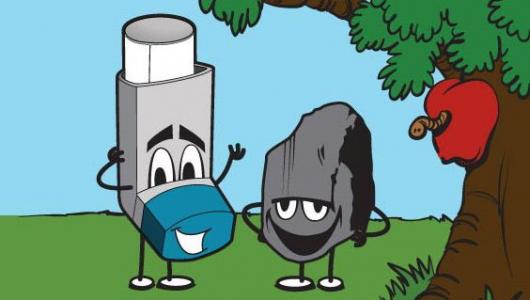
Coal Cares. Come for the free inhaler — dibs on the Batman one — stay for the truth about alternative energy. “Sustainable, long-term government programs mean safety for all investors. Investing in coal will always be a smart move, especially with well-supported, long-term government subsidies driving down costs, and a near-complete absence of subsidies for so-called “alternative” energies.