Borne Back Ceaselessly into the NES.


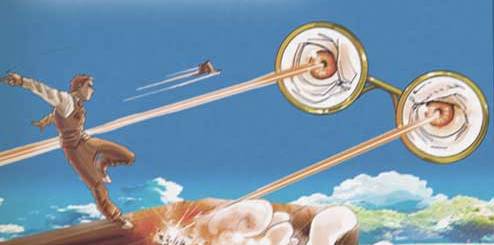
Gatsby believed in the green light, the orgastic future that year by year recedes before us. It eluded us then, but that’s no matter — tomorrow we will run faster, stretch out our arms farther, jump ever higher, collect all the coins… Hey, wait a tic…The Great Gatsby Nintendo game. Once again, he’s playing with power.

O Guo It’s Full of Stars.


A dazzling green aurora frames the arc of the Milky Way over Jokulsarlon, the largest glacier lake in Iceland, in a picture taken in March. The image was a first-prize winner in the Second International Earth and Sky Photo Contest’s ‘Beauty of the Night Sky’ category.Speaking of green lights, National Geographic chooses the top space photos of 2011.

Back in the River City.


Lincoln’s visit to Richmond produced the most unforgettable scenes of this unforgettable war. With an escort of only ten sailors, the president walked the streets while Porter [Admiral David D. Porter, actually one of my ancestors] peered nervously at every window for would-be assassins.” 146 years after a visit from the sixteenth president, and several weeks after Daniel Day Lewis was spotted as casual Lincoln in a Richmond restaurant, the actor is photographed in full Lincoln garb by the Richmond Times-Dispatch. Uncanny.

After Hours.


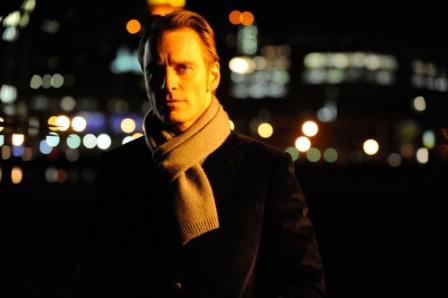
It all seems so stupid, it makes him want to give up — but why should he give up when it all seems so stupid?” With the holiday season upon us, a lot of films to catch up on. First up in the queue is Steve McQueen’s stylish but mostly hollow addiction drama Shame. Like McQueen’s earlier Hunger (and not unlike Christian Bale’s turn in Brad Anderson’s The Machinist), Shame is a middling film anchored by a strenuous and committed performance by Michael Fassbender. He’s great here, and Shame occasionally has moments of quiet power. But the film as a whole, sadly, is overwrought and mostly silly.

Here, Fassbender is Brandon Sullivan, an Irish-American Silicon Alley midmanagement type living in Chelsea who fills his empty days watching pr0n at work and his lonely New York nights having meaningless sex with hookers and anonymous strangers. Ok, let me stop there for a second: Awwwww, poor damaged rich guy! Nymphomania is such an underappreciated and overlooked #firstworldproblem! Yes y’all, like The King’s Speech, my empathy meter clicked out early here. It doesn’t help that Sullivan is given no real redeeming qualities to speak of — He’s, quite literally, just a prick. (Plus, as someone who actually lived the “depressed in Gotham” existence, I found it less a Boschian purgatory of carnal pleasure and more like I am Legend, but of course there are millions of stories in the Naked City. YMMV.)

Anyway, Brandon’s life is upended when his needy, inconstant, and equally lacerated sister Sissy (Carey Mulligan, also giving more of herself than the project deserves) shows up at his door. Both Brandon and Sissy were clearly damaged at an early age – A childhood of abuse is intimated through nasty scars and sketchy stories. But while Brandon has an insatiable craving for angry, consequence-free sex (in fact, he can’t perform when on an actual, honest-to-goodness date with a co-worker), Sissy is desperate for emotional attachment. In other words, basically these two are like oil and water, and they’re both cooped up in the same smallish NYC apartment with their respective demons. This will not end well.

So the board is set, but, in all honesty, the pieces don’t do much moving. As in Hunger (and much like Tom Ford’s A Single Man), Steve McQueen seems more interested in creating artistic moments than achieving any kind of narrative momentum. Plot isn’t everything, of course. Character studies are fine. even ones involving mostly static characters. But we don’t learn anything about these two characters except they’re troubled and needy. We need more to hold interest here.

The best of McQueen’s artistic vignettes by far are the bookends of the film, when Brandon hunts for a hookup on the subway and gets caught in a game of eyeball with a possible partner (Lucy Walter). Without dialogue, Fassbender and Walter display a microcosm of conflicting emotions — surprise, lust, shame, guilt — through gazes and body language across a crowded train. But, otherwise, we also have to sit through a lot of filler here, like Fassbender going for a half-mile run to MSG and Mulligan crooning all of “New York, New York” in damaged-siren mode (which conjured grim memories of Georgia.) We have long, uninterrupted scenes of Fassbender and Mulligan fighting like cats and dogs. (Quite frankly, they feel like gimmicks, as did Fassbender and Liam Cunningham’s long and more impressive one-take chat in Hunger.) And we have a good bit of sex, all filmed — with one exception in a hotel room — in the seventh-circle-of-hell fashion of another addiction film, Requiem for a Dream.

In short, I just didn’t buy it. The characters did not ring true to me. I couldn’t see Fassbender (hard, angular) and Mulligan (soft, curvy) as siblings. I found it hard to believe Sullivan could be at once suave enough to pick up anyone he wanted at a club (particularly as compared to his inept boss, James Badge Dale), and yet so unbelievably terrible at small talk on a first date. And McQueen’s third-act decision to have Fassbender’s character, in the midst of an epic bender, wander into a ridiculously sinister gay dungeon in the Meat-Packing District for consummation, carried more than a whiff of homophobia about it. Shame has some powerful performances, and I wouldn’t be surprised to see Fassbender and Mulligan get acting nods here. But the film is all surfaces and very little depth. I left, like its wretched protagonist, unsatisfied.

Frog out of Time.


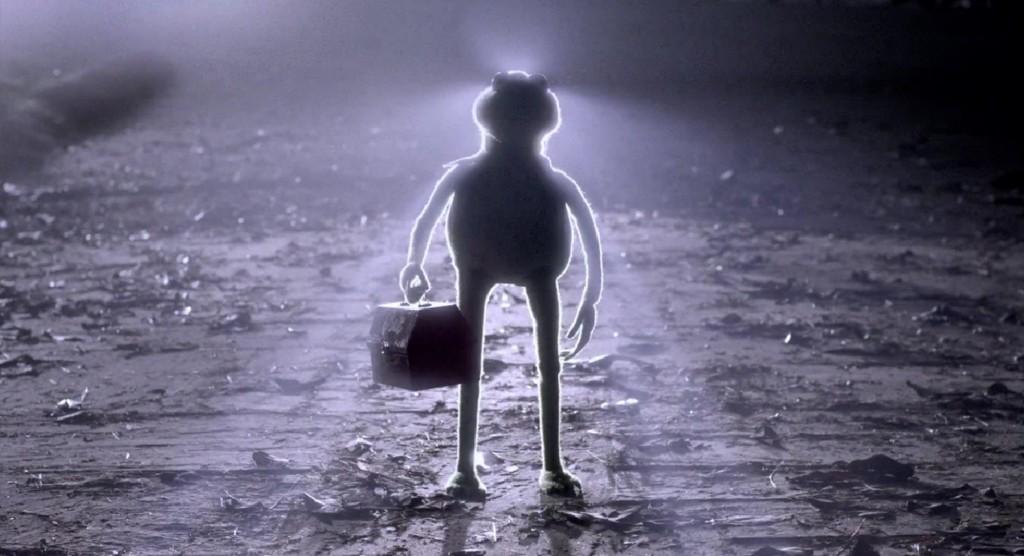
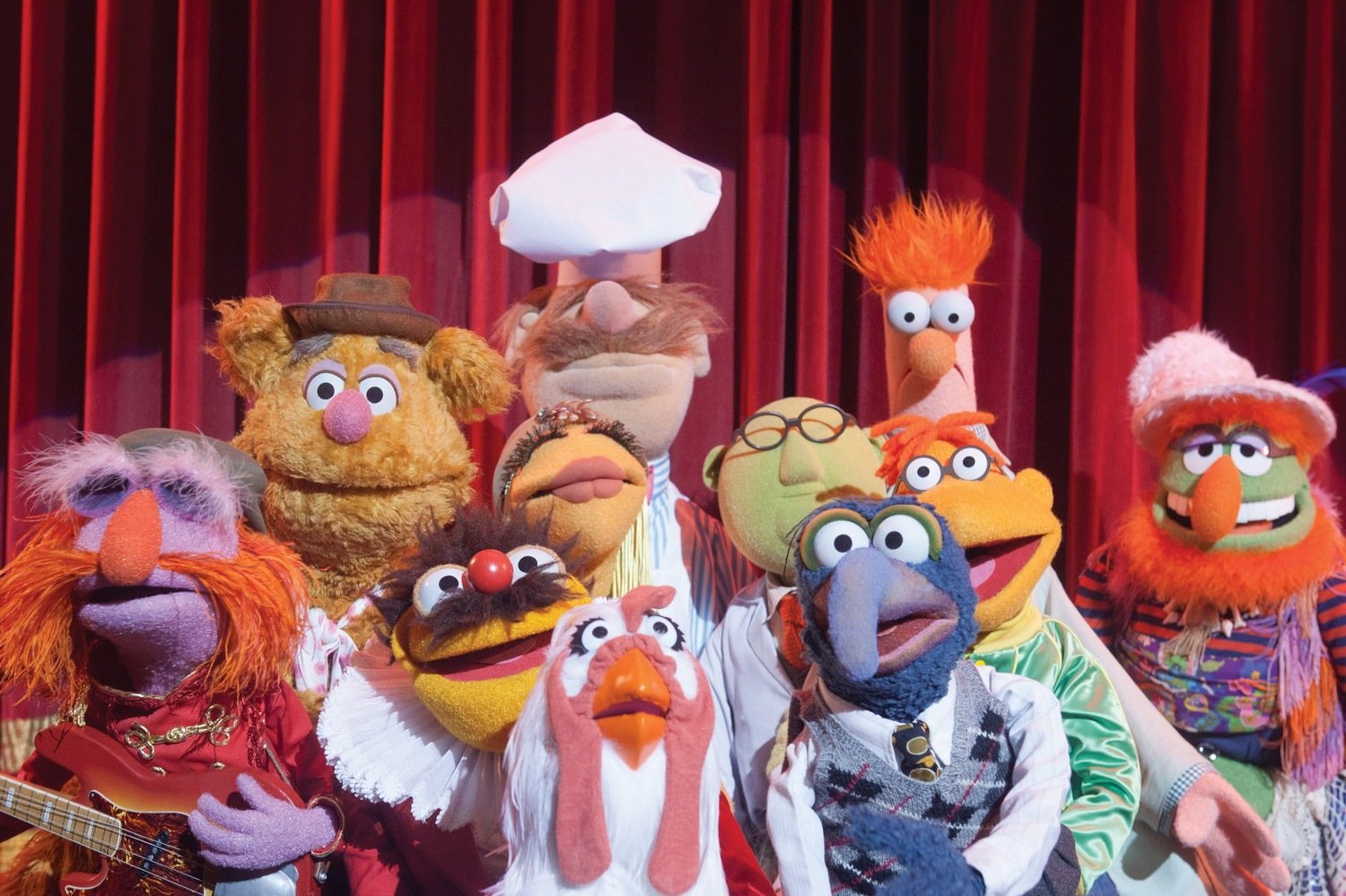
I have some issues with Jason Segal, Nick Stoller, and James Bobin’s fun, nostalgia-heavy reboot of The Muppets, which I’ll get to in a bit. But, before I put my critical hat on and not to bury the lede: For the most part, The Muppets works. It’s a sweet, good-natured, and really enjoyable Thanksgiving enterprise that hearkens back to the glories of the TV show and first three muppet films (The Muppet Movie, The Great Muppet Caper, The Muppets Take Manhattan), as well as the days when Jim Henson (we still miss you) still walked among us. And it is, in short, a really good time.

Word has come down that Frank Oz and some of the other original muppeteers were unhappy with the film, but it’s hard to imagine a more honest and heartfelt tribute coming from Hollywood these days. Say what you will about the Segal-Stoller-Bobin version of The Muppet Show, it doesn’t feel at all like a Disney cash grab. (It’s also considerably more enjoyable than the Muppet book-movies of the nineties, like A Muppet Christmas Carol and Muppet Treasure Island.) And while frankly it’s still a bit jarring to note the changes in Kermit’s inflections and facial expressions since Henson’s passing, if you just think of him as a James Bond figure, now recast as Steve Whitmire, there’s a lot to like in this production.

The movie begins with the Apatowish-feeling introduction of a new muppet, Walter (Peter Linz), and his brother Gary (Jason Segal), two all-American kids growing up in the heartland — Smalltown, to be exact. (I presume Walter was adopted.) For obvious reasons, Walter becomes obsessed with the Muppets at a very early age, and so, when planning a trip to the Big City of Los Angeles with his longtime girlfriend Mary (Amy Adams), Gary — to Mary’s mild consternation — offers to bring his brother along so he can visit the Muppet Studios. So far, so good. But on that fateful visit, Walter discovers that a nefarious oil man, Tex Richman (a hilarious, hip-hoppin’ Chris Cooper), is planning to buy the now-bedraggled studio in two weeks and destroy it, in order to get his hands on all the precious black gold pooled underneath. (In fact, he’s cut a deal with those classic one-percenters, Statler and Waldorf. Maniacal laugh, maniacal laugh.)

Naturally, Walter, Gary, and Mary track down the one-and-only Kermit the Frog — now living alone in a massive mansion bought by the since-estranged Miss Piggy — and inform him of Richman’s evil plan. To save the studio, Walter explains (having seen the contract), the Muppets will need to raise ten million dollars in the next fortnight. How can they do that? I know, let’s put on a show! And so Kermit and the team travel the world (by map) to get the band back together. As it happens, Fozzie has been working the Reno circuit with a tribute act called the Moopets (Dave Grohl, in an Animal costume, on drums.) Gonzo is a plumbing magnate, Bunsen Honeydew’s at CERN, Sam the Eagle at FOX News. But what of the porcine goddess? Can Kermit et al procure the talents of Miss Piggy once again after all these years? And, being optimistic has-beens in a harder, crueler entertainment world (the #1 show these days is Punch Teacher, hosted by Ken Jeong) where are the Muppets going to find some much-needed star wattage for their telethon? Maybe Animal made some friends in rehab…

That’s the basic gist, and for the most part The Muppets moves along with pop, fizzle, and verve — There are one-liners and sight gags piled into every corner of this film, and they usually stay true to the original wry-but-well-meaning Muppet brand of humor. Oh, yes, and there’s musical numbers too, as befitting a new Muppet movie. (They’re contributed by the Ernie of the Conchords, Bret McKenzie, and, even without FotC director Bobin providing the visuals, they’re all very Conchordian. (Consider lines like “a very manly muppet.”) Speaking of the songs, I do have a small quibble in that the humans — Jason Segal and Amy Adams — do almost all of the singing in this film. Shouldn’t the Muppets be taking point on the musical numbers most of the time?

Of course, it’d be hard for any new song to approach the timelessness of “The Rainbow Connection,” — In fact, Kermit and the gang actually sing “The Rainbow Connection” here late in the third act — which brings me to my main issue with The Muppets: It’s a total hipster nostalgia-fest, and it effectively turns the Muppet gang into Rocky Balboa or The Expendables — old, forgotten warhorses out for one more curtain call. Why not just let the Muppets continue on in another grand adventure? Do Mickey Mouse or Bugs Bunny ever worry about their contemporary cachet? Instead, Segal and Stoller have adopted an Almost Famous framing device — Walter’s desire to fit in/hang with his now out-of-date idols — that is almost suffocating at times in its Internet-era emo-hipsterishness. I mean, I grew up on and love the Muppets too, but does this film really have to be about some uber-fan’s feelings about them?

I’ll confess, it wasn’t just that I found the nostalgia cloying at times. More troublesome is the fact that the overwrought nostalgia here is tied to the wrong era. Time and again, this movie makes The Muppets seems like icons of the eighties, which I suppose is when young Segal, Stoller — and I — were into them. Here, Kermit et al sing along to (groan) Starship’s “We Built This City,” released 1985. They get a definitively eighties montage sequence, that is set up as such. Kermit has Cyndi Lauper in his rolodex (and, to be fair, President Carter.) They even have an ’80’s robot — which they continually call ’80’s Robot — driving them around from place to place, and offering people New Coke and Tab to boot.

But the problem is, The Muppets aren’t really products of the eighties at all. They’re seventies creations (and, really, Archie Bunker notwithstanding, isn’t Jim Henson one of the quintessentially seventies television icons?) Following on the beginning of Sesame Street in 1969, the Muppets appeared here and there throughout the early decade — including on Saturday Night Live — and got their own show in 1976, which ran until 1981. For that matter, The Muppet Movie came out in 1979. In 1984 — at best a year or two after what we now think of as “the eighties” coalesced — The Muppets Take Manhattan came out, effectively ending the Muppets’ participation in the decade (the exception being The Muppet Babies animated Saturday morning cartoon, whose theme song is still lodged in my head after all these years.)

The point being, The Muppets not only trafficks too much in nostalgia for my liking. It trafficks in a misplaced nostalgia that has more to do with the generation of the writers than with the actual Muppets themselves. Don’t get me wrong — Segal and Stoller do a lot right, this a very enjoyable evening at the movies, and you’ll be hard-pressed not to leave with a smile on your face. But the rewriting of history rankles — When you get right down to it, Generation Y shouldn’t misappropriate the legacy of Kermit and the gang any more than Tex Richman. Let the Muppets live their own time.

A Clockmaker’s Fable.


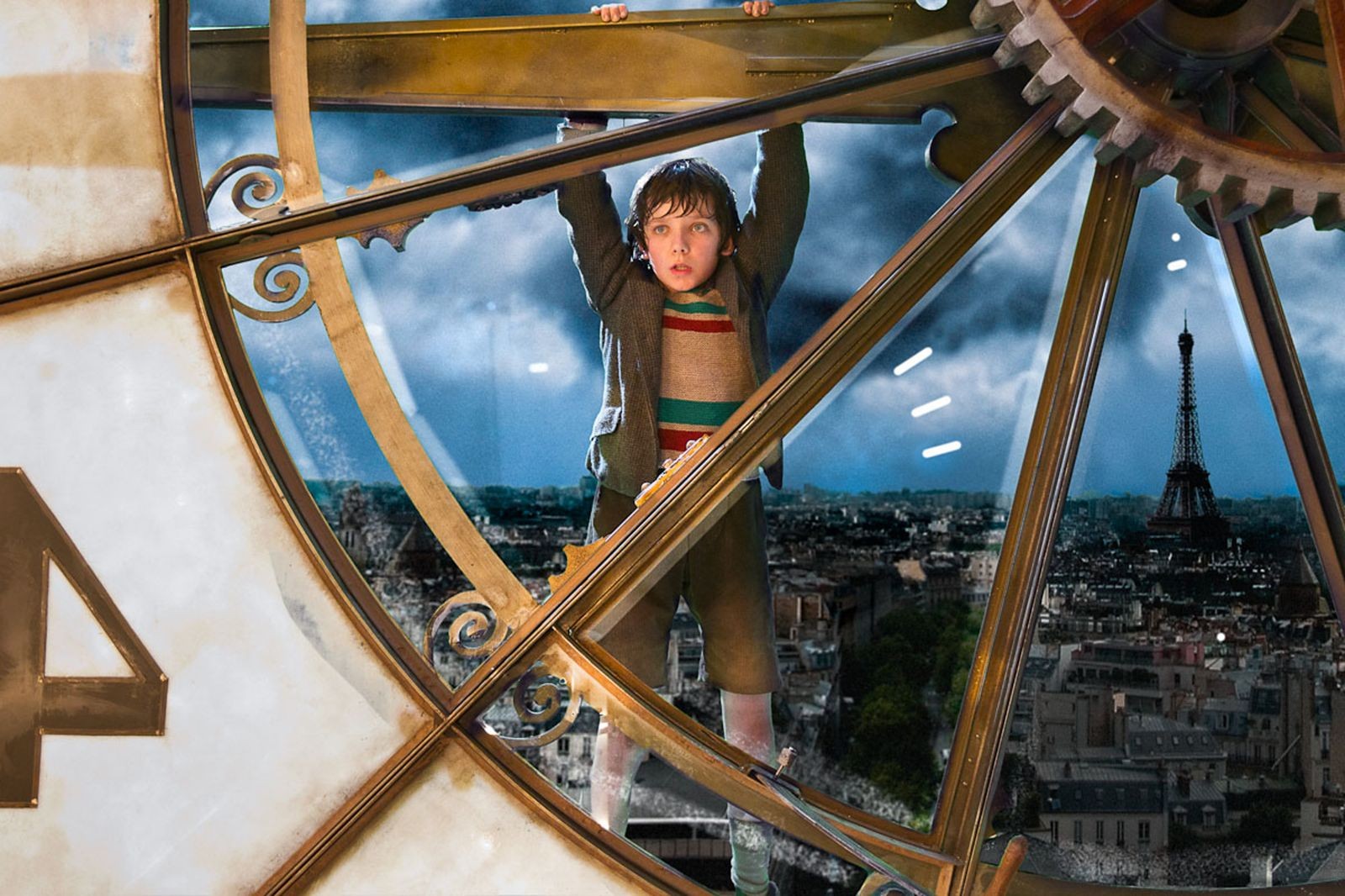
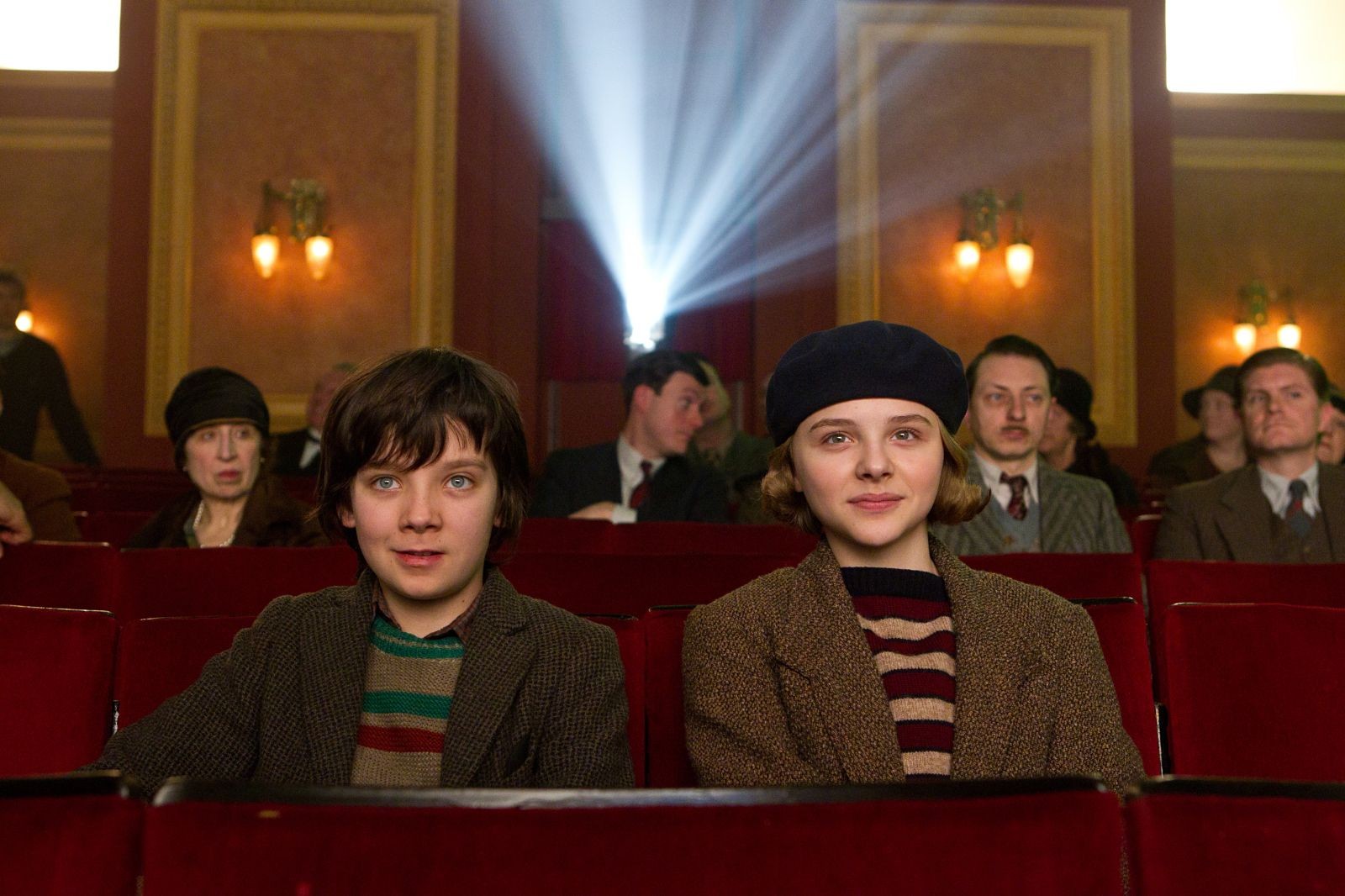
In the opening moments of Martin Scorsese’s ambitious, expertly-crafted, and, alas, strangely sluggish Hugo, we are transported to a snowy winter’s evening in 1931 Paris at the Gare Montparnasse, where an orphan boy (a Frodo-ish Asa Butterfield) named Hugo Cabret watches the train station crowds from behind a clock face. He eyes the station guard (Sasha Baron Cohen), the flower girl (Emily Mortimer), the socialite (Frances de La Tour), her potential paramour (Richard Griffiths), the ancient bookseller (Christopher Lee). And as flakes of snow whirl about in three dimensions and a haunting Howard Shore score perfectly evokes the melancholy elegance of Parisian yore, we see young Hugo eventually hone in on the toy stand of a despondent old man (Ben Kingsley.)

Who is this old man, and how his fate bound up with Hugo’s? That is the question that drives this historical fairy tale (formerly Brian Selznick’s The Invention of Hugo Cabret.) What follows is a child’s adventure story, a fantastic and whimsical tale of movie history bound up in the love of film itself, and an exercise in 3D innovation forged by a master craftsman with clockwork precision and…ok, let’s take a breath here. At the risk of opening myself to charges of pearls before swine, can I actually just confess to being a little bored by Hugo?

Mind you, I’m not happy about it: I love movies, i like historical fantasy. By the syllogistic principle, I should adore a historical fable about loving movies. In addition Hugo is an exceedingly well-made entertainment, and I presume it works reasonably well as a family film for Potter-inclined children of a certain age and temperament. (Although, frankly, I could imagine a lot of kids being bored too.) And every time some new character popped into the story, it was almost always an actor or actress — Chloe Moretz, Ray Winstone, Michael Stuhlbarg — that I’m fond of watching. But it’s a plain fact that, however entrancing Scorsese’s second- and third-act invocations of Georges Melies — the cinema’s first imagineer, as it were — I watched Hugo feeling mostly disengaged from it.

In the interests of full disclosure, while thinking over the reasons for how this clinical distance might’ve happened, it occurred to me after the fact that I have felt much the same about almost every other one of Martin Scorsese’s films. I’m not saying the man’s a hack or anything — He’s clearly an exceptional craftsman and a deservedly historic figure among American directors. But from his early classics (Mean Streets, Taxi Driver, Raging Bull, all of which I saw on VCR years after they came out) to Goodfellas (which, to be fair, I caught after The Sopranos) to his recent run of films (Gangs of New York, The Aviator, Shutter Island, The Departed), I’ve had almost the same reaction in the end to every one of his films: Well that was well-put-together, but not very emotionally engaging. (The one major exception here, and my favorite Scorsese movie, is The Last Temptation of Christ, although I also quite like Casino and The King of Comedy. Update: And Kundun, After Hours, and The Age of Innocence as well, now that I think more on it.)

The other issue at work here is the issue of the Third Dimension. Over the course of its run, Hugo — a movie which eventually discusses the earliest days of the cinema — not very subtly makes a case that we are witnessing a similar birth of a new art form right now, with 3D technology. (After showing us the Lumiere brothers’ 1895 film of an arriving train, which scared audiences untrained in film-watching into thinking they’d be run over, Scorsese recreates the scene at the Gare Montparnasse using 2011’s finest 3D tech.) Now, I know that saying things like “3D movies are just a fad” is exactly the type of statement that will leave one ripe for ridicule down the road. (re: “Talkies will never catch on,” or “Why would we ever need color?“) Buuuuut…I’m still not entirely sure the current 3D boom is anything more than a fad.

Here’s the thing: I’m glad visionary directors like Scorsese, James Cameron, and Peter Jackson are pushing the envelope and the technology on 3D. (For what it’s worth, Cameron says Hugo is the best 3D photography he’s ever seen. I’ll reserve full judgment until I’ve seen The Hobbit at 48 frames per second.) At the same time, it seems to me that, at least at present, 3D is mainly being used as a way to push audiences to continue seeing films on the big screen instead of watching them at home. In other words, it’s a filler technology being used to paper over the gaps at a transitional time for the medium, and its recent embrace has more to do with the business of movies than the art of them.

So, my skepticism about 3D at the moment isn’t really about being a Luddite. If anything, the technology isn’t advanced enough yet. When audiences can see the effect without wearing the damnable headache-inducing glasses, or we move past screen projection to full three-dimensional projection, not unlike the holograms in Star Wars, then I might start to agree we’re in Lumiere or Melies territory. But making movies look vaguely and unnecessarily like pop-up books, or having a ginormous Sasha Baron Cohen head jump out at you rather than the usual arrows and projectiles or whatnot, is not really a game-changing use of the medium, and it seems a bit hubristic to suggest so.

I still submit that the most groundbreaking use of 3D I’ve ever witnessed was in the concert film U2 3D, which layered completely separate images into one field of vision, and thus suggested an entirely new form of cinema syntax. Unfortunately, neither Cameron nor Scorsese have opted to explore that route as of yet. Instead, Scorsese has given us here a fine example of how standard story-telling can be slightly enhanced by 3D. I just wish it wasn’t so ponderous at times. Your mileage may vary, of course, but when I was having reactions during the movie like, “Oh Lord, we’re about to get another ten minutes of Sasha Baron Cohen playing the martinet,” that is just not a good sign.

Blue Hawaii.


Elvis never had it so rough in paradise as the poor protagonist of Alexander Payne’s smart, well-observed family dramedy, The Descendants — a welcome return from hiatus for the writer-director of Election, About Schmidt, and Sideways. Admittedly, The Descendants runs a bit long, and has more endings than Return of the King. Still, this elegiac 21-century Hawaiian tale of a distracted paterfamilias coming to grips with a decision to DNR his wife after a terrible accident has the attention to detail and human foibles we have come to expect from Payne, and the mournful-rainbow quality of an IZ cover. In short, this is quite a good film.

After a brief pre-credit moment of zen with the woman (Patricia Hastie) whose boating accident is the crux of the story, we meet Matt King (George Clooney, very good), a Honolulu attorney with a lot on his plate. His wife is still in a coma several weeks after the incident, and her condition isn’t improving. His younger daughter Scottie (Amara Miller) is more than he knows how to handle (he’s “the backup parent”), and his older daughter Alexandra (Shailene Woodley, a real find) is fast becoming a reprobate at a boarding school on the Big Island. The beautiful parcel of Kauai land his (haole) family has owned for generations is up for sale, and he alone has to choose a buyer — a decision all of his many cousins are watching with keen interest. And, it soon comes out, the woman he has spent his life with, and who he must now help his family and friends say farewell to, has been having an affair with a local real estate agent (Matthew Lillard), and was, in fact, planning to leave him. Life in a Hawaiian paradise? “Paradise,” King tells us in a voiceover early on, “can go f**k itself.”

Like Schmidt and Sideways, most of the rest of the film involves a road trip journey of self-discovery — this time to beautiful Kauai (where, if you’ve ever visited there, Princeville and downtown Hanalei both get their druthers.) Along for the ride is Alexandra’s amiable, dim-witted boyfriend (Nick Krause), and at various times we meet Matt’s take-no-guff father-in-law (Robert Forster), beachbum cousin (Beau Bridges), and the Other Man’s sweet, unknowing wife (Judy Greer). But, unlike say, About Schmidt, where Dermot Mulroney and his family of rednecks were mostly just joke fodder, The Descendants is less sneering and more open-hearted toward its cast of extended characters (even Inconsiderate Cell Phone Man, who shows up as the husband-half of the Kings’ couple-friends.)

Along with best adapted screenplay — this is based on a book by Kaui Hart Hemmings — I would also expect The Descendants to garner Oscar nods for the very naturalistic Woodley and another for Clooney, who maintains his record of quality here. (Does any leading man have a better one? Even his bad films — The Good German, say — are usually interesting failures.) We’ve already seen Clooney suffer existential crises the past two years in Up in the Air and The American, but this one also stands on its own. His King isn’t the hyper-competent individual of those other two films — He’s just a well-meaning guy, who’s been distracted from his life for too long, trying to make the best of a bad hand.

Gotham’s Long Winter.


Perhaps surprisingly for some people, our story picks up quite a bit later, eight years after The Dark Knight. So he’s an older Bruce Wayne; he’s not in a great state.” As Tom Hardy’s Bane graces the cover of Empire, Chris Nolan reveals an eight-year-time jump in The Dark Knight Rises. Guess it takes time to rebuild Wayne Manor and make a new batcave (and, for that matter, train a ward?) That also means, if Begins was Year One and TDK was The Killing Joke, this could well borrow from The Dark Knight Returns.

In very related news, a possible description of the first six minutes has leaked. Very spoilerish if true, and it might be: Given that this prologue is hitting theaters in a month (before MI: Ghost Protocol), it seems around the time that this might leak. And it accords with the teaser, explains that time jump, and includes Bane’s most famous moment…Gonna have to update those medical records. (Last link via LMG.)