Clint Pulls a Wheeler. | 1924.

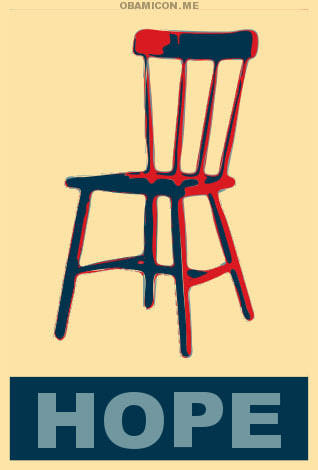
So…regarding Clint Eastwood’s much-maligned empty chair speech: I actually liked it. Not for its content per se – It was discursive and rambling and definitely embarrassing to sit through. But I admired it for being a brief burst of weirdo-improv in the midst of a four-day-long political commercial that’s usually been scripted right down to the second.

There was also the added bonus that Clint’s speech helps make the old dissertation that much more timely. Since, as it happens, the empty-chair routine was a favorite campaign trick of Burton Wheeler, Robert La Follette’s vice-presidential running mate in 1924. To pull the relevant paragraph:

Wheeler got particularly good mileage out of debating an empty chair or cross-examining a straw dummy about Teapot Dome and various other campaign issues. ‘You knew all about the oil scandals and the Ohio gang, didn’t you?’ Wheeler would ask. Then, after the ensuing silence, he would add, ‘Well, knowing all these things, you kept quiet, didn’t you? And now you have the reputation of being a strong, silent man, haven’t you?’ Here, Wheeler told voters, was America’s ‘Silent Cal.’

Clint’s gonzo chair bit also brought to mind one of my favorite chapters to write, on the disastrous 1924 Democratic Convention in Madison Square Garden — in which Al Smith and William McAdoo were dead-locked for over two weeks and 103 ballots, before the Democracy settled instead on West Virginia lawyer John W. Davis. To give you a flavor of the disaster:
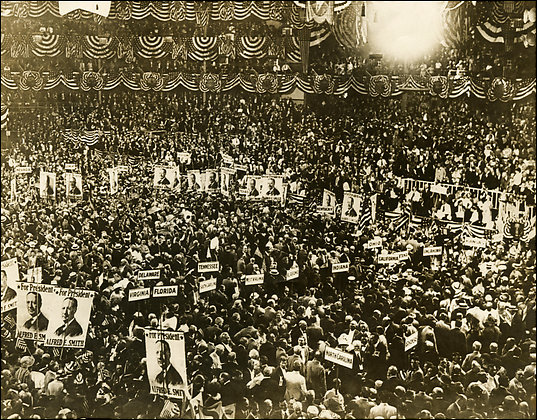
‘This thing has got to come to an end,’ begged Democratic humorist Will Rogers a week into the ensuing fiasco, ‘New York invited you as guests, not to live.’ In years to come, Rogers quipped, when little children asked their fathers if they were in the war, they would reply, ‘No, son, but I went through the New York Convention.’ Mencken harrumphed that the ‘convention is almost as vain and idiotic as a golf tournament or a disarmament conference.’ Journalist Arthur Krock deemed the unfolding Democratic nightmare ‘a snarling, cursing, tedious, tenuous, suicidal, homicidal roughhouse.’ Lippmann thought the Democrats had taught America ‘more at firsthand about the really dangerous problems of America’ and ‘learned more of the actual motives which move the great masses of men than anyone of this generation thought possible.’ ‘No man or woman who attended the Convention of 1924 in the old Madison Square Garden will ever forget it,’ Daniel Roper, one of McAdoo’s lieutenants, said later in life. ‘This country has never seen its like and is not likely to see its like again.’ Over three decades later, Al Smith’s daughter still remembered those sixteen days with a shudder. ‘Traits that I do not like to think of as American played too great a part that year,’ she winced.

And, for the first time in history, the convention had all been broadcast nationwide through the miracle of radio.”

In fact, one of the first-ever radio catch-phrases emerged from the 1924 convention, when the Governor of Alabama, William Brandon, kicked off each round of voting with the same sentence: “Alabamah casts twenty-foah votes for Oscah Dubya Undawood!” (For years later, a resolute man or woman would be considered ‘as steady as Alabama for Underwood.’) In any case, back then memorable, often un-scripted or badly-scripted Eastwood-esque speeches were the norm. To take just a few notable examples:

James Phelan, nominating McAdoo:When the roll of states got to California, boss James Phelan gave a florid fifty-minute nominating speech for McAdoo that was deemed by observers ‘the worst speech never heard.’ It, according to others, nearly ‘stampeded the convention of Smith’ and would have killed ‘Thomas Jefferson running on a ticket with Andrew Jackson.’ Long before Phelan got to his closing, the galleries were desperately screaming ‘Name your man! Name your man!’ When he finally Mc’did, McAdoo forces festooned with buttons and hatbands reading ‘Mc’ll do!’ broke out in an hour-long celebration, chanting ‘we don’t care what the Easterners do; the South and West are for McAdoo!’ In response, the galleries bellowed ‘Ku Ku, McAdoo!’ and ‘No oil on Al!’ The situation was only just beginning to get out of hand.”

FDR, nominating Al Smith: “When the roll of states reached Connecticut, the delegation yielded to their neighbor New York, meaning, everyone knew with bated breath, it was time for Al Smith’s official nomination. The deliverer of this good news to the galleries, on account of his relative stardom and offsetting attributes to the candidate, was Smith’s campaign manager, Franklin Roosevelt. (When Joseph Proskauer first pitched the idea to Smith, the candidate asked, ‘For God’s Sake, why?’ Proskauer replied, ‘Because you’re a Bowery mick and he’s a Protestant patrician and he’ll take some of the curse off of you.’)”

“Helped by his teenage son Jimmy, whose arm he gripped so hard it bruised, Roosevelt slowly made his way to the lectern on crutches. Once there – Joseph Guffey of Pennsylvania had already tested that ‘the pulpit’ could bear Roosevelt’s weight – he turned on the charm, winning the McAdoo crowd over right away by gently admonishing the galleries above. Then, delivering a speech written by Proskauer (although Roosevelt would rarely admit to it later), Roosevelt praised Al Smith as ‘the Happy Warrior of the political battlefield,’ a moniker, derived from Wordsworth, that would stick to Smith as surely as ‘The Sidewalks of New York’ had in 1920. The Smith crowd loved every minute of it, and the McAdoo crowd was quietly impressed – Franklin Roosevelt was back.”

Andrew Erwin, on the Klan:: “As soon as the anti-Klan plank was read, the floor and the galleries both went into full hysteria…by the time pro- and anti-Klan speakers began making their remarks late in the evening, the assembled Democrats were cheering and hissing with abandon. The wall of noise became particularly intense during the remarks of Andrew C. Erwin, the former mayor of Athens, Georgia. Expecting pro-Klan nostrums from the Georgian, the pro-Smith galleries booed Erwin mercilessly – until the room slowly started to realize that Erwin was actually denouncing the Klan, at which point a lusty cheer erupted from up above even as McAdoo Alley wailed with rage. When Erwin went back to his seat, only one member of the Georgian delegation stood to welcome him.”

William Jennings Bryan, on the Klan: “The last speech on the Klan issue was delivered by William Jennings Bryan, who pleaded with anti-Klan delegates that everyone could agree if only the three words ‘Ku Klux Klan’ were left out of the platform. It went over like a lead balloon. The galleries were so vociferous in their booing of the Great Commoner that Bryan had to stop three times. On the third such interruption, [Thomas] Walsh rose up and began gaveling and screaming in fury to quiet the balconies down. Rattled, Bryan slipped into the cadences of the church and implored the unruly congregation ‘in the name of the Son of God and Savior of the world. Christians, stop fighting and let us get together and save the world from the materialism that robs life of its spiritual values.’ The crowd was having none of it, and Bryan retreated to a chair on the platform, too tired to walk back to his seat with Florida. It wasn’t even his worst speech of the convention.”

(Note: For a very funny book-length treatment of the 1924 convention, check out Robert K. Murray’s The 103rd Ballot.)
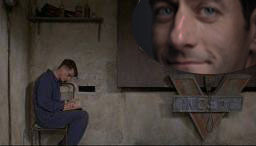
Ryan: Ignorance is Strength.

It was an entire evening based on a demonstrable lie. It was an entire evening based on demonstrable lies told in service to the overriding demonstrable lie. And there was only one real story for actual journalists to tell at the end of it.

The Republicans simply don’t care.

They don’t care that they lie. They don’t care that their lies are obvious. They don’t care that their lies wouldn’t fool an underpaid substitute Social Studies teacher in a public middle school…They don’t care that their history is a lie and that, by spreading it, they devalue the actual history of the country, which is something that belongs to us.”

That Esquire‘s estimable Charles Pierce writing on the first day of the RNC, and he hadn’t even heard Paul Ryan’s ridiculously falsehood-filled screed of night two. I’ve already said all I need to say about this clownshoes, but still: It’s amazing what a congenital liar this guy is. (As you know, people in real life don’t “accidentally” lowball their marathon time by an hour — especially not Type-A gunner physical trainer types.)

Of course, Republicans have lied before — Their 2004 convention, for example, was devoted to turning a bland Vietnam war hero into a brie-eating surrender monkey and the Democrats at large into an Al Qaeda sleeper cell. But I can’t remember hearing another speech by a major-party nominee so rife with statements that were easily and demonstrably untrue.

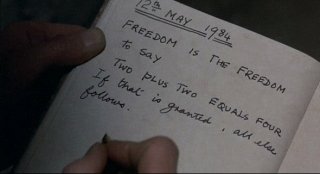
As Winston Smith wrote in his diary, “Freedom is freedom to say 2+2=4. If that is granted all else will follow.” And that is exactly the freedom Ryan launched a full-scale assault upon in his convention speech. In short, this was a new low for the GOP.

Cloud Sources.


In the Wachowskis’ work, the forces of evil are often overwhelmingly powerful, inflicting misery on humans, who maintain their faith until they’re saved by an unexpected miracle. The story of the making of “Cloud Atlas” fits this narrative trajectory pretty well.

The New Yorker delves into the Wachowskis’ adaptation of Cloud Atlas, soon to be at a theater near you with Tom Hanks, Halle Berry, Jim Broadbent, Hugo Weaving, Doona Bae, Susan Sarandon, Hugh Grant, Jim Sturgess, Keith David, David Gyasi, and Ben Whishaw. (The extended trailer is above.) “‘The problem with market-driven art-making is that movies are green-lit based on past movies,’ Lana told me. ‘So, as nature abhors a vacuum, the system abhors originality. Originality cannot be economically modelled.’ The template for ‘The Matrix,’ the Wachowskis recalled, had been ‘Johnny Mnemonic,’ a 1995 Keanu Reeves flop.

The First Zombie Apocalypse.

“But here’s the creepy thing: many of the 10,000-year-old skulls appear to have been separated from their spines long after their bodies had already begun to decompose. Why would this skull-smashing ritual be performed so long after individuals had died? Did they only pose a threat to the living long after their original burial and death?”

By way of Hold Fast, archaeologists discover evidence of a paleolithic skull-smashing culture in ancient Syria. Expect Cavemen v. Zombies imminently.

Back on his Rounds.


If you care, you’re already well aware of this. Nonetheless, The Doctor has returned as of September 1st. Above is the full Pond Life, the short Amy-and-Rory vignettes put up online before last week’s Asylum of the Daleks. Apparently, this season is going back in the direction of weekly standalone adventures, which I think is a welcome development — The past two season arcs (the time crack in the wall, the dead doctor in the desert) have been more than a little convoluted, imho.

The Hero We Deserve.

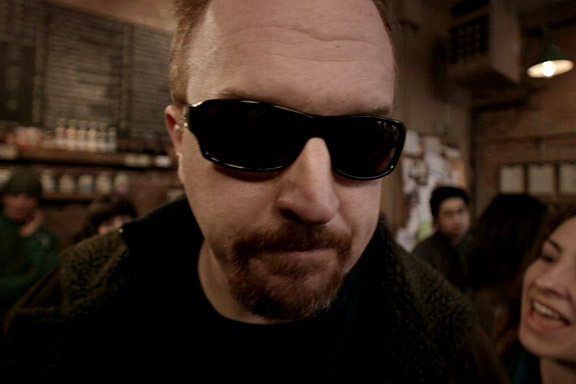
It’s safe to say that I haven’t been in a happy place much this year, so all the more reason why I’m glad I finally stumbled on Louie. Most of the world is familiar with Louis CK’s schtick by now, but basically he’s a sad-sack Woody Allen with a serious vulgarian streak, or Larry David if he was much filthier, more capable of empathy, and more resigned to his fate. As Alan Sepinwall put it, “it’s either the saddest funny show I’ve ever seen or the funniest sad show.” There’s definitely darkness in the Comedy Cellar — Highly recommended. (FWIW, I’m only caught up through the first two seasons.)

Wonder less full.

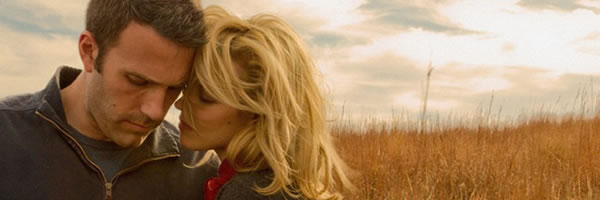
Sorry y’all: Rachel Weisz, Michael Sheen, Amanda Peet, and Barry Pepper are all left on the cutting room floor of Terence Malick’s To the Wonder, opening soon at the Venice Film Festival. In case you were wondering, that leaves Ben Affleck, Olga Kurylenko, Rachel McAdams and Javier Bardem in the story of a “man who reconnects with a woman from his hometown after his marriage to a European woman falls apart.” The economic crisis is also somehow involved, presumably in much the same the dinosaurs were in Tree of Life.

(FWIW, among the men left behind in The Thin Red Line were Viggo Mortensen, Mickey Rourke, Lukas Haas, Billy Bob Thornton, Bill Pullman, Jason Patric, Martin Sheen, Donal Logue, and Randall Duk Kim.)

Well, Mars is the Red Planet…

“Informant stated that the general aim of these science fiction writers is to frighten the people into a state of paralysis or psychological incompetence bordering on hysteria which would make it very possible to conduct a Third World War in which the American people would seriously believe [sic] could not be won since their morale had been seriously destroyed.”

They’re coming to get you, Bradbury…Apparently, the author of The Martian Chronicles was on the FBI’s Communist watchlist in the 50’s and 60’s for penning potentially subversive “science fiction” stories. “Using a Freedom of Information Act Request, the Huffington Post received a copy of Bradbury’s file, and it turns out the FBI checked Bradbury’s passport records and staked out his house.

Twenty Years of Garmonbozia.

Does it work if you haven’t seen the TV show? As Lynch might put it, gosh, no. (It’s a prequel, but it bends time and space to wrap up a few stray plot threads from the series — if you’re working your way through the show on DVD, treat the movie like a coda or you’ll be lost.) But that’s what’s fascinating about it — in some ways, Lynch’s most uncompromising and unrelenting movie is the one he made while beating the dead ghost-horse of a canceled soap opera.”

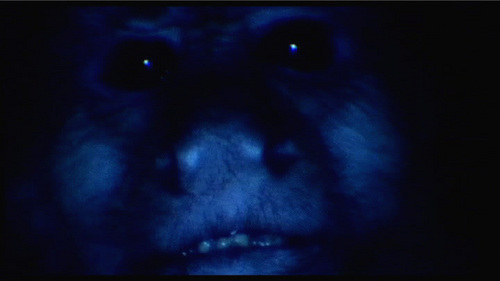
Twenty years after its opening, Grantland‘s Alex Pappademas takes another look at Twin Peaks: Fire Walk With Me. I never understood the hate this film received. (Then again, I also liked Peaks’ much-maligned second season.) Sure, it’s a bit all over the place, but there are impressionistic moments in Fire Walk With Me — the trapped Leland monkey, the picture-within-a-picture, the phantom Bowie — that still frighten me for reasons I find impossible to explain, much in the same way some of the third act bizarroland suicide stuff in Mulholland Drive — the blue box, the creepy homeless guy, the little tourists — seems to bypass my brain completely and just frazzles my spinal cord. And what’s not to like about Special Agent Chet Desmond?