Turn You Inside Out.

Hearkening to the halcyon days of Dog Day Afternoon and Serpico, Spike Lee’s Inside Man is a clever contraption indeed — a sleek, intelligent, well-acted NYC heist flick whose central scheme is more about subterfuge, cunning, and misdirection than technical gimmickry. (In too many films in the genre — The Score, or Ocean’s 11, for example — the robbers seem to be spending more on state-of-the-art equipment than they’d actually make in the grift.) To be sure, there are some implausibilities throughout, including pretty much all of Jodie Foster’s character and [Spoilers] the idea that Christopher Plummer would keep that Nazi paperwork lying around for sixty years, and the film’s last half-hour takes too long to put the story to bed. That being said, for the most part Inside Man is a slick caper film that offers both legitimately surprising twists and the satisfaction of seeing parts of a well-crafted scheme fall into place like tumblers in a lock. In the immortal words of Hannibal Smith, “I love it when a plan comes together.”

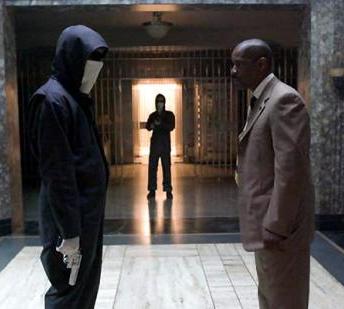
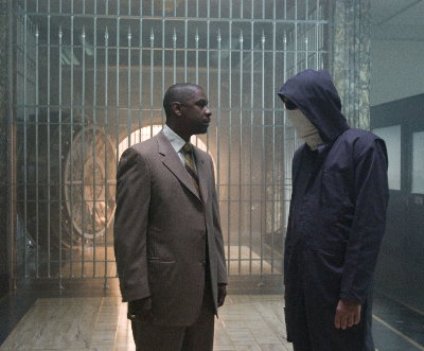
Is that a spoiler? Well, no, not really. The movie (and the trailer) begin with Dalton Russell (Clive Owen, charismatic as ever) telling us he has conceived and executed “the perfect bank robbery.” Very soon thereafter, we watch Russell and three accomplices, dressed as painters, walk into a ritzy downtown Manhattan bank, bar the doors, and take hostage of the 20-30 unfortunate New Yorkers therein. Soon, led by detectives Keith Frazier (Denzel Washington, in top form) and Bill Mitchell (the always-excellent Chiwetel Ejiofor) as well as a by-the books captain (Willem DaFoe), the NYPD surround the bank, and a protracted stand-off begins. Meanwhile, the bank’s president (Christopher Plummer) adds an X-factor to the equation by hiring a Fixer of sorts (Jodie Foster, as good as anyone could be in this goofy role) to resolve the situation to his own satisfaction. With the board thus set, the rest of the film involves the pieces moving — We watch the heist unfold over the course of a New York City day and night, punctuated by clips of Washington and Ejiofor interrogating the bank hostages after the fact.
Of course, this isn’t just a well-crafted crime film, but a Spike Lee joint, and it resonates in the details. (In its own way, I’d say this is as strong as Lee’s last movie, The 25th Hour.) As Salon‘s Stephanie Zacharek notes in her positive review, “Inside Man is a movie that practices what Crash preaches.” It may be considered bizarre and even Oscar-noteworthy for people of different races and backgrounds to interact in the hermetically-sealed car-culture of Los Angeles, but New Yorkers have been colliding up against each other for some time now. And — unlike in Crash — Lee gets the feel right. (This is his thematic territory, after all.) Particularly noteworthy in this regard are the scenes involving a Sikh bank teller (Waris Ahluwalia) whom the robbers send out with their demands. On sight of turban, the cops immediately treat him like a terrorist bomber, and Ahluwalia manages to sound both terrified and fed up at the same time with the post-9/11 indignity of it all. True, some of the plot mechanics in Inside Man could be considered contrived, but, Jodie Foster’s corporate ninja notwithstanding, at least here the people seem real. (2nd Crash link via Listen Missy.)
Radio Ga-Ga.

The new trailer for Robert Altman’s take on Garrison Keillor’s A Prairie Home Companion — starring Keillor, Woody Harrelson, Tommy Lee Jones, Kevin Kline, Lindsay Lohan, Virginia Madsen, John C. Reilly, Maya Rudolph, Meryl Streep, and Lily Tomlin — is now online.

McCain-Feingold on the Road.

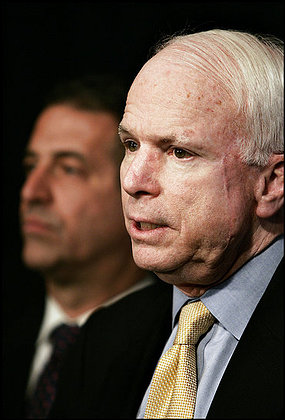
“‘There seems to be a disconnect between the rhetoric in Washington about what this is all about and what we hear here,’ Feingold said. McCain responded that he did ‘not want to get into a back-and-forth with one of my best friends.’” While visiting Baghdad, Senators McCain and Feingold argue “cordially and pointedly” over Iraq. “Feingold…said he was dismayed not to hear any of the military commanders he met with mention al-Qaeda as a source of the problems in Iraq. The Bush administration and U.S. officials here often point to the radical group as a major source of instability in the country.

The Family Business.

“Abramoff, for his part, once boasted that he had invested a million dollars in Buckham, according to a former Abramoff colleague…Abramoff expressed confidence that the funds would bring a good return for his clients, the colleague said. Good news/bad news for Boss DeLay: While DoL Robert Novak reports that Casino Jack is not implicating the Hammer as part of his plea bargain, the WP finds that former DeLay Chief of Staff Edwin Buckham skimmed over a million dollars from the US Family Network, a “pro-family” nonprofit funded by Abramoff clients. [Graphic] “In addition, Buckham and his wife, Wendy, acting through their consulting firm, made monthly payments averaging $3,200-$3,400 apiece to DeLay’s wife, Christine, for three of the years in which he collected money from the USFN and some other clients.” (Boss DeLay, it bears remembering also paid his wife and kids a half mill in PAC funds.) Well, I guess if by “pro-family” you’re talking about the Buckham and DeLay families, this is all money well spent.

Broken Reed.

“[Ralph Reed] has damaged Christian political work by confirming for some the stereotype that evangelicals are easily manipulated and that evangelical leaders use moral issues to line their own pockets.” In related news, former Christian Coalition head and current candidate for Georgia lieutenant governor Ralph Reed also finds it hard to shake the taint of Abramoff, and even finds himself persona non grata among evangelical conservatives such as Melvin Olasky of WORLD magazine.

A Well-Respected Man.

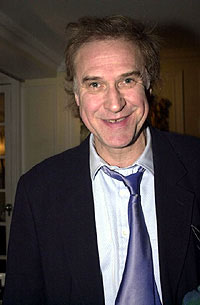
Big doings in our lively little village: Friday night, I caught one of rock’s greatest and most influential ironists, the inimitable Ray Davies of the Kinks, in town for a weekend stand at Irving Plaza. A spirited and well-preserved 61 (Having gone to so many Dylan shows, where Bob has settled into a late-period rasp behind the keyboards, I’m always surprised to remember that time has been kinder to many of Dylan’s contemporaries), Davies offered up two sets of rollicking good ditties ranging all the way back to 1964’s seminal breakthrough “You Really Got Me.” Here’s the setlist:

Set One: I’m Not Like Everyone Else | Where Have All The Good Times Gone | Till the End of the Day | After the Fall | 20th Century Man | Oklahoma U.S.A. | Village Green | Picture Book | Animal Farm | Johnny Thunder | Sunny Afternoon | Dead End Street | Apeman | Next Door Neighbor | Creatures of Little Faith | Over My Head | The Tourist | Low Budget

Set Two: Stand-Up Comic | Things Are Gonna Change (The Morning After) | A Long Way from Home | The Getaway (Lonesome Train) | Tired of Waiting for You | Set Me Free | All Day and All of the Night

Encore: You Really Got Me | Lola

All in all, a very fun evening. Looking quite a bit like Jonathan Pryce these days (particularly in his Miss Saigon period), Davies enlivened the older-leaning, fan-heavy crowd with mid-song banter and fraternally condescending anecdotes about his Kinks companion and younger brother Dave. (“He’s still a big kid, really.”) To be honest, I’d would’ve preferred to hear less of the early Brit-Pop standards and more of Davies’ grimly funny ballads of class and character. (For example, “Shangri-La“, “A Well-Respected Man“, “Dedicated Follower of Fashion“, “Celluloid Heroes“, or “Waterloo Sunset“) But, with a back catalog as long and rich as Davies’ (and a new album to promote), there are always going to be songs you don’t get to hear on a given night. (And besides, the one-two punch of “Sunny Afternoon” and “Dead End Street” was a nice, wry combo of essential Davies.)

Albright Eyes.

It is sometimes convenient, for purposes of rhetorical effect, for national leaders to talk of a globe neatly divided into good and bad. It is quite another, however, to base the policies of the world’s most powerful nation upon that fiction.” In a must-read LA Times editorial, former Secretary of State Madeleine Albright witheringly dissects Dubya Diplomacy. (Via Medley.)

Smoke Signals.

Brimming with affable actors and a cool, refreshing menthol topicality, Thank You for Smoking, which I caught last night in Union Square, is a wry, decently amusing satire — one that’s not much for side-splitting bellylaughs but good for a consistent chuckle throughout. Very few scenes go by without a few snappy lines or clever sight gag, and the film is all the more endearing for its understatement — like cigarettes, a lot of these jokes almost sell themselves. Still, I haven’t read Chris Buckley’s book, but I can’t escape the suspicion that a devastatingly funny movie could’ve been made from this source material if the filmmakers had just gone for it, um, unfiltered. More often than not, the film seems to want to be liked, when what it really needed was a jolt of the same type of dark misanthropy that propelled last year’s Lord of War (i.e. Thank You for Shooting.) I’d say it’s worth seeing, and I was definitely smiling through most of the film. But, at crucial times, and particularly in the second half, Thank You for Smoking feels too lo-tar and antiseptic for its own good. (Oh, and sorry, Tom Cruise conspiracy theorists: Katie Holmes’ brief sex scenes are still here.)

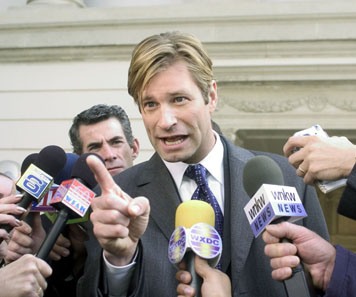
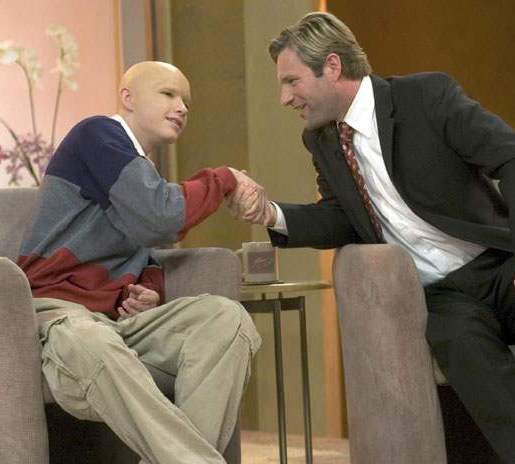
For those who haven’t seen the preview, the film follows the exploits of uber-charismatic cigarette lobbyist Nick Naylor (Aaron Eckhart, doing a friendlier variation on his In the Company of Men turn), a guy who basically has the heart of The X-Files‘s Cigarette Smoking Man in the body of Mr. Smith (Think Capra, not Matrix.) Sent on various charm offensives by his immediate boss (J.K. Simmons, pitch-perfect) and the head office in Winston-Salem (Robert Duvall, doing his R.E. Lee schtick again), Naylor must flatter, cajole, bluff, and wheedle his way past a number of moderately funny archetypes, including a Birkenstock-clad senator from Vermont (William H. Macy), a ruthless Orientophile Hollywood exec (Rob Lowe), their various flunkies (Todd Louiso, Adam Brody), and a thoroughly disgruntled Marlboro Man now suffering from lung cancer (Sam Elliott). Along for the ride on this tobacco tour is Naylor’s kid (Cameron Bright) — on loan from the ex-wife (Deadwood‘s Kim Dickens) and her new doctor boyfriend,(whose studiously scruffy beard is one of the many funny details herein) — and Nick spends much of the film trying to inculcate his son in the ways of activism for the amoral. (I have to admit, it’s hard to watch these scenes and not think of the author and his own dad, the venerable William F. Buckley, Jr..)

Like I said, for the most part Thank You for Smoking is a jaunty and amusing two hours, with enough clever moments to keep the general atmosphere lively and droll. Still, at times, it’s hard not to feel that there are opportunities missed here, particularly when the movie loses its step. (The climax, in which Naylor testifies before Congress, is basically a non-starter.) For one, the film occasionally jumps to voiceover (a la Lord of War), without ever really committing to it, and so it ends up feeling like lazy writing. And some potentially funny jokes just seem clumsily telegraphed — to take one small example, when Naylor’s gun lobbyist friend (Anchorman‘s David Koechner) has trouble with a security gate. Speaking of Koechner, he and Eckhart share several scenes with alcohol lobbyst Maria Bello (The Cooler, A History of Violence) as the “MOD” (“Merchants of Destruction”) Squad, which feel like they should be the centerpiece of the film. But Bello (an actress I’ll admit to rooting for) is almost criminally underused here — her best gag ends up being her quintessentially DC power-suit.

Not to miss the carton for the smokes, Thank You is a smart comedy that’s aimed at adults and funny enough to recommend…but I can’t help thinking it needed to be more rough around the edges, more stogie and less nicotine patch.