
Best brush up on those Thriller moves, y’all: AMC and Frank Darabont’s adaption of Robert Kirkland’s’ The Walking Dead gets a 4-minute trailer and a start date: Sunday, October 31st.
Author: KcM
After Happiness, Regret.
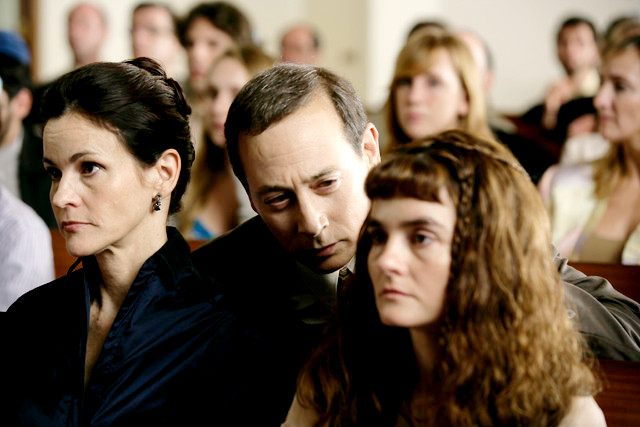
“This ain’t no party, this ain’t no disco. This ain’t no fooling around. No time for dancing, or lovey dovey — I ain’t got time for that now.” Ten years after 9/11, and twelve years after we last followed their…exploits, the collection of lost souls and tragic deviants that populated the pitch-black comedy Happiness have returned, sadder and wiser, in Todd Solondz’s Life During Wartime, an episodic, intermittently successful meditation on guilt and forgiveness. And, if nothing else, it’s safe to say the decade since we saw them last has not been kind to them, or their respective quests for contentment.
For all its bleakness, misanthropy, and inordinately dicey subject matter — pedophiles, obscene phone callers, suicides, and whatnot —Happiness, I am sure some of my fellow social misfits out there will agree, was a very, very funny film. It’s sort of a high-wire suspension act over a moral and existential abyss, and all the more hilarious because it constantly flirts with disaster. (If you haven’t seen it, the entire movie is on Youtube for some reason.) Alas, somewhere along the way — probably 9/11, it seems — the bottom seems to have finally dropped out of Solondz’s world. And now, rather than just trying to be happy, the damaged, compromised characters of the first film are sifting through the wreckage of their lives, trying to either pick up the pieces or bury them somewhere they can’t be found.
As a result, Life During Wartime is a subtler and more muted affair, and one that, unfortunately, is nowhere near as viscerally engaging as its predecessor. If the first film made the case that everybody, even the sick and twisted among us, are looking for happiness in their own way, Wartime suggests that everybody, no matter how reprehensible, also needs forgiveness, and finds forgiveness equally hard to grant. Arguably, Solondz is making the same argument as last time — In both films, basic human needs trump moral and political considerations. (In the end, terrorists, like pedophiles, are people too.) But Wartime has neither the manic good cheer nor the jet-black satirical zest of the first installment, and the laughs are definitely fewer and farther-between. I appreciated the film by the end, but it’s also overly didactic at times and, at times, quite frankly, a bit of a slog.
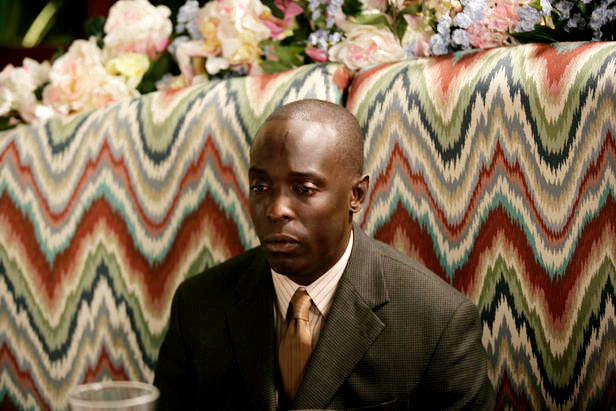
If you do decide to see Life During Wartime, I would highly recommend watching Happiness again beforehand. Having not seen the first film in a decade or so, I only realized after the fact — like, when writing this review — that the opening scene in Wartime deliberately echoes the pre-title vignette from the earlier movie. Except now, Jon Lovitz’s character is dead (but returns here nonetheless as Paul Reubens), Jane Adams’ Joy has become even more ethereal and bird-like in the guise of Shirley Henderson, and she’s somehow ended up with Phillip Seymour Hoffman’s obscene phone caller, Allen — now recombinated as Michael Kenneth Williams (Yep, Omar comin’) — whom she met as part of her job rehabilitating criminals. (Much like how she ended up with Jared Harris’ sketchy Russian emigre in the first film.)
Things, we soon discover, are not well between Joy and Allen on the domestic front, prompting the former to go visit her older sister Trish (once Cynthia Stevenson, now Allison Janney) in Florida. But Trish has her own problems: Trying to get back into the dating scene — she just wants to find a nice, normal Jewish guy, not unlike her new beau Harvey (Michael Lerner) — Trish finds that her younger children are starting to ask uncomfortable questions about the deeds of their dead father (once Dylan Baker)…who is not really dead, physically-speaking.
Rather, he’s been serving a decade-long stint for rape and pedophilia, during which he’s filled out and been weighed down by guilt enough to transmogrify into the consistently haunted Ciaran Hinds. Free once more, Bill wants to reconnect with the son (Chris Marquette) he sinned against all those years ago. But, as you might expect, that might make for a rather touchy father-and-son reunion…
In following the various characters from Happiness as they interrogate or shrink away from their ghosts, Life during Wartime hangs together less well than the original movie, and feels much more choppy and episodic. At one point, Joy goes out to California to see her other sister Helen (Once Lara Flynn Boyle, now Ally Sheedy), and, while it’s not a bad scene per se, it sorta feels thrown in just so the middle sister didn’t get entirely neglected. (Spoiler: She ended up with Keanu, who honestly doesn’t seem too happy either.) Then again, episodic can be good too — In a brief turn as a self-proclaimed “monster” in need of a good-time-man at the local watering hole, the inimitable Charlotte Rampling just about walks away with the movie.
Still, while I appreciated elements of Life During Wartime, I never really felt fully engaged by the movie, and can’t really recommend it, overall. As the miserable folks on-screen kept circling back to the same questions of guilt and forgiveness, the movie came to seem less like a cinematic experience and more just a filmmaker’s position statement, a dry academic treatise of sorts. And while there are moments of humor here and there — Lerner’s grown son (Rich Pecci) gets in a few good laughs in particular — none really compare to the often absurd, occasionally stunning shenanigans of the first film.
Life During Wartime‘s biggest draw in the end is that it allows us, a la The Godfather III or Before Sunset, to catch up with memorable characters we shared some moments with a long while ago. And, given that they inhabit a world created by Todd Solondz, I guess it’s no surprise that, in the end, living only left them sad.
Joe Wilson’s War (or: The Plame Game.)
Sean Penn and Naomi Watts reunite to tell the story of Valerie Plame and the imaginary yellowcake in the new trailer for Doug Liman’s Fair Game. Hmm, ok…but I’m getting a Lions for Lambs/Green Zone flavor from this trailer — edutainmenty and too little, too late. Still, it pretty much has to be better than 21 Grams.
Love in the Time of Konami.
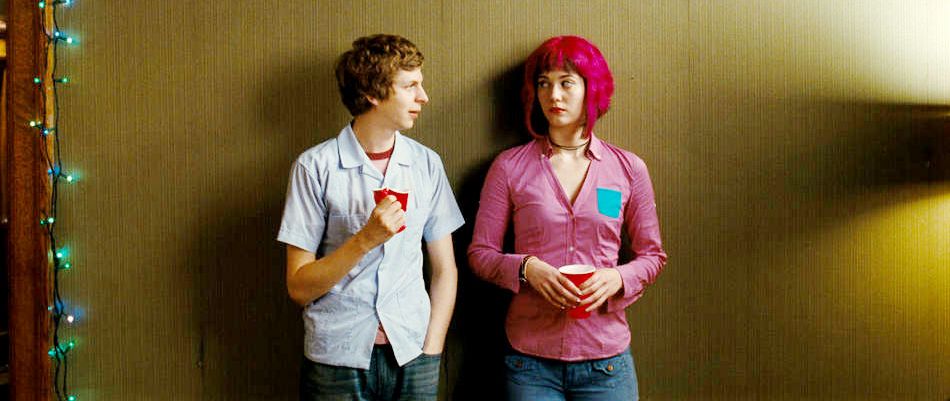
Now that I’m back in civilization (and particularly given that my apartment is having power issues, and thus Berk and I are living like the Amish this week), time to catch up on the recent movies I’ve missed. First up, Edgar Wright’s fun and propulsive adaptation of Scott Pilgrim vs. the World, based on the (vaguely problematic) indie comic by Bryan Lee O’Malley.
Sadly, it seems Pilgrim has already joined a film it shares a lot in common with in terms of visual inventiveness, the Wachowskis’ unjustly maligned Speed Racer, as something of a box office “bob-omb”. (That pun, by the way, was borrowed from one of the many Expendables fans on AICN strangely all-too-happy to dance on Pilgrim‘s box office grave.) And that’s really too bad. Because, even if I have some issues with the blatant fanboy (emphasis on “boy”) wish-fulfillment at its core, which I’ll get to in a bit, Scott Pilgrim deserves a wider airing.
For one, with its Wham-Pow! effusiveness and viscerally engaging superhero fights, it’s easily one of the most imaginative comic book renderings onscreen this side of Sin City. And comics are only half the story. From its 8-bit Universal opening (a la those great NES Pink Floyd mash-ups I linked to a few months ago), the movie also has one foot firmly entrenched in the world of old-school console gaming. If the dreamworlds of Inception felt like stages in a video game, this movie takes the conceit to the next level: Scott Pilgrim’s entire life unfolds in a Walter-Mitty-meets-Street Fighter, coin-operated Toronto (Trononto?) where g4m3r rules are a fact of life.
This allows for defeated villains turning into collectible coins, 1-ups around for psychic rejuvenation when needed, and — always a happy indication that the movie is about to get super-fun again — the Capcom “VS.” popping up whenever Scott (Michael Cera) must face off against another of his dastardly foes. Those would be the seven members of the League of Evil Ex’es, the sinister cadre of former significant others to the lovely Ramona Flowers (Mary Elizabeth Winstead) that have gathered together to block our hero from ever dating his dream girl.
And trust me — These Ex-Men (and one Ex-Woman) are no slouches. Among their number are not only Captain America (Chris Evans), here an action hero heartthrob and skater punk with a Jamie Madrox-style army of stunt doubles at his disposal, but the one and only Superman (Brandon Routh), now blonde, psychic, and, most dastardly of all, Vegan. (In the Pilgrimverse, Vegans operate like the Green Lantern Corps. Just ask Thomas Jane and Clifton Collins, Jr.) And they’re just the mini-bosses Scott will have to contend with before defeating Gideon (Jason Schwartzman, a bit anti-climatic, quite frankly — They should’ve sprung for Aldous Snow), the music biz impresario who still has an unholy thrall over Ramona, thanks to a chip implanted in the back of her neck.
Wait…a what? A chip, you say? That makes her a rather passive character, doesn’t it? Yeah, well, that’s the major problem with Pilgrim, which I attribute more to the source material than anything else. This is basically fanboy pr0n, and, in terms of the ostensible romance here, Pilgrim is as one-sided and overtly gendered a piece of rom-com wish-fulfillment as I imagine Eat, Pray, Love was in the theater next door. I mean, I get it: Saving the girl of your dreams from despicably evil forces has been a fanboy trope from Princess Leia to Princess Zelda (although, to her credit, Leia takes over the show as soon as she’s sprung from Detention Block AA-23.) And as one who’s eternally fond of Brazil, I’m not one to complain about a man going out on a limb for his dream-girl.
Still, something about Scott Pilgrim rankles. Sure, Michael Cera specializes in dweebs, but as George Michael in Arrested Development and in movies like Superbad, Juno, and Youth in Revolt, he still had a certain wry, self-effacing charm about him. But, as Scott Pilgrim, he’s just a lazy, whiny, self-entitled jerk, and seems unpossessed of any trait that would make him either desirable to the opposite sex or worth rooting for as a hero. (Well, I guess he does play the bass.) Meanwhile, Ramona is a very pretty cipher — She doesn’t bring much to the table either except Kate Winslet’s hair from Eternal Sunshine and the plot-driving baggage of seven evil ex’es. She’s more of a Macguffin than a fully-realized character.
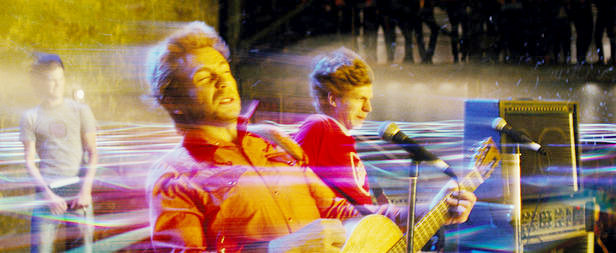
Don’t get me wrong: There’s a lot of joy to be had in Scott Pilgrim vs. the World, mostly due to Edgar Wright, after Spaced, Shaun of the Dead, and Hot Fuzz, really letting his freak flag fly. There’s almost always something fun and geeky going on in the margins of the screen or on the soundtrack, and the Brandon Routh fight and a later Battle of the Bands (between Scott’s outfit, Sex Bob-omb, and a pair of Japanese twins by way of Daft Punk) are both absolute showstoppers. (Maybe too much so, in fact — The final twenty minutes are muddled, and feel like a letdown after these earlier highs.)
Yet, despite the flaws of its titular hero, Scott Pilgrim is the most purely enjoyable roller coaster ride to come down the cinematic pike since Kick-Ass. And, sure, Scott Pilgrim probably doesn’t deserve the girl in the end (or maybe he does, given that she’s drawn as such a blank), but Scott Pilgrim vs the World definitely deserves your ten bucks regardless.
Pas de Deranged.
Ms. Kunis, Mr. Cassel, Ms. Hershey, Mr. Stans: To your places: Prima ballerina Natalie Portman looks to be going slightly mad in the first trailer for Darren Aronofsky’s ballet noir Black Swan, premiering at the Venice Film Festival later this year. Well, we all go a little mad sometimes.
How do you say “Hedaya” in Chinese?
Also in the trailer bin, Zhang Yimou of Hero, House of Flying Daggers, and Curse of the Golden Flower pays homage to the Coens with A Woman, A Gun, and a Noodle Shop, the Chinese remake of Blood Simple. (Also, dudes, “Chinamen” is not the preferred nomenclature.)
Regrets of the Jedi.

“The original idea was that they would recover [the kidnapped] Han Solo in the early part of the story and that he would then die in the middle part of the film in a raid on an Imperial base. George then decided he didn’t want any of the principals killed. By that time there were really big toy sales and that was a reason.“
Thirty years after Empire, and as “new” deleted scenes appear from the OT (just in time for the Blu-Rays), ousted Star Wars producer Gary Kurtz reveals his desired take on Return of the Jedi “The discussed ending of the film that Kurtz favored presented the rebel forces in tatters, Leia grappling with her new duties as queen and Luke walking off alone ‘like Clint Eastwood in the spaghetti westerns,’ as Kurtz put it.” [Pic via here (although I almost went with the Han Solo in carbonite desk.)]
One Hundred Years of Solitude.
“[W]e are entering an increasingly dangerous period of our history. Our population and our use of the finite resources of planet Earth are growing exponentially, along with our technical ability to change the environment for good or ill. But our genetic code still carries the selfish and aggressive instincts that were of survival advantage in the past. It will be difficult enough to avoid disaster in the next hundred years, let alone the next thousand or million. Our only chance of long-term survival is not to remain inward-looking on planet Earth, but to spread out into space. We have made remarkable progress in the last hundred years, but if we want to continue beyond the next hundred years, our future is in space.“
Once again, Professor Stephen Hawking makes the case for manned exploration, sooner rather than later — as in living off-world within the next century. In other words, we need to get busy living, or get busy dying.
Letters from a Birmingham Trek Convention.
“[W]hen I told Dr. King I was leaving the show, I never got to tell him why, because he said, ‘You can’t.’ He explained to me just what I’ve just said. ‘Here you are on the command crew in the 23rd century, fourth in command, while we’re marching in the streets for equality.’” Nichelle Nichols, a.k.a. Lt. Uhura, relates the story of Dr. Martin Luther King, Trekkie.
A Good Long Walk.

If you were wondering why it’s been so quiet round here again, I spent last week on vacation and away from all things political, cinematic, or electronickal in nature, as two old friends and I hiked the Olympic National Park in Washington State, from North Fork to Obstruction Point, by way of Hayden, Lost, Cameron, and Grand Passes — Total trip: 53 miles or so. [Some pics here.]
All in all, great fun. The only blemish on the trip, some soreness and sunburn notwithstanding, was my old boots deciding to spontaneously implode around Mile 15. Fortunately, duct tap and particularly a pair of Yak Trax saved the day on that front.