Dixieland.

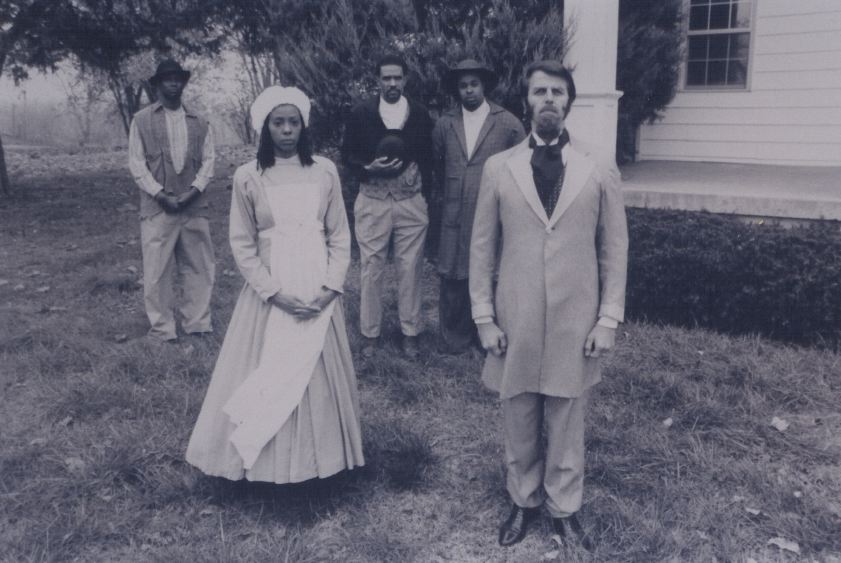
“If you are going to tell people the truth, you’d better make them laugh. Otherwise they’ll kill you.” This savvy George Bernard Shaw quote introduces Kevin Willmott’s razor-sharp documentary-satire C.S.A.: The Confederate States of America, which opened at the IFC Center tonight (followed by a Q&A), and, by that measure, Willmott’s film is a rousing success. At times both blisteringly funny and quietly devastating, C.S.A is a take-no-prisoners alternate history of our Confederacy — Yep, the South won — done in the style of Ken Burns’ The Civil War (or Andy Bobrow’s Old Negro Space Program), right down to bizarro versions of Shelby Foote and Barbara Fields. Punctuated throughout by offbeat television commercials that are eerily similar to today’s TV, C.S.A. is one of the best (and most ruthless and unflinching) satires I’ve seen in some time. And it illuminates a central fact often obscured in so many Brother-against-Brother tributes to America’s bloodiest conflict (as well as drek like Gods and Generals): The Civil War was begun and fought over slavery. In the words of C.S.A. Vice-President Alexander Stephens — in his inaugural address, no less — the Confederacy was founded “upon the great truth that the negro is not equal to the white man; that slavery –subordination to the superior race — is his natural and normal condition.

To kick off its conceit, C.S.A requires that you make two leaps of logic from the history of the Civil War: First, that, after the Emancipation Proclamation is issued, C.S.A. Secretary of State Judah P. Benjamin managed to convince England and France to join the war on the side of the Confederacy. (This was less likely, I think, than the film makes it out to be. Popular support in England — who had abolished slavery in 1833 — was pretty clearly on the side of the Union, particularly after Lincoln’s Proclamation, and “King Cotton diplomacy” just wasn’t going to work when England and France could import cotton instead from India, Egypt, and other waystations in their respective empires. And, even if the European powers had recognized the CSA, which they might’ve done had the South won more battles, they weren’t about to send troops across the Atlantic to fight on the side of slavery without severe popular repercussions.) Second, and more unlikely, is that, after capturing Washington DC, the South managed to subdue and annex the entire North, leveling Boston and Philadelphia (a la Sherman’s March) in the process. Even despite the Union’s hold on the Mississippi in the Western theater, the South might well have won the war, if Northern public opinion had collapsed in 1863 and 1864 (As it was, timely Union victories — and particularly the fall of Atlanta — buoyed Lincoln’s reelection.) But, had that happened, IMHO, there would likely be two nations uneasily living side by side for decades to come, as you find in Harry Turtledove’s How Few Remain series.
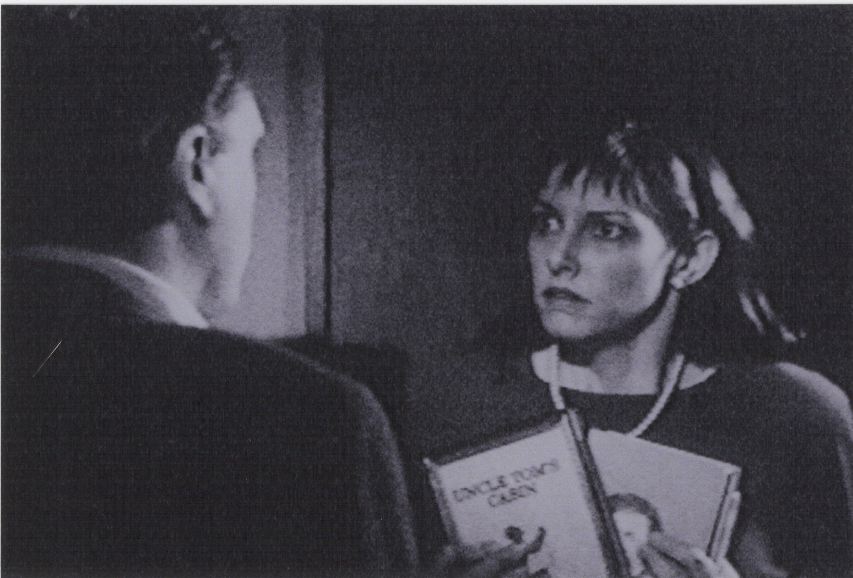
Ok, all that history geekery notwithstanding (which is somewhat unfair to the movie — it’s an alternate history satire, after all, which also explains the more recognizable battle flag replacing the official Stars and Bars on the moon and elsewhere), once you make the conceptual leap that the Confederacy managed to win the war and annex the Union, the rest of C.S.A is remarkably well-thought-out, and at times even scarily plausible. Like Jeff Davis, Lincoln is captured trying to escape in costume (on the Underground Railroad) and sent to Fort Monroe — Here, it’s dramatized in the 1915 D.W. Griffith film, The Hunt for Dishonest Abe. While the South contemplates various “Reconstruction” plans to reintroduce slavery to the North (and Nathan Bedford Forrest reenacts Fort Pillow over and over again), William Lloyd Garrison leads an abolitionist/transcendentalist contingent to Canada. Rather than the Chinese Exclusion Act, the C.S.A. passes a “Yellow Peril Mandate” providing for the enslaving of Chinese laborers. And, as in our world, the nation comes together again to fight a (here much broader) Spanish-American War.

As we get to the 20th century, C.S.A. continues to adroitly riff on American history. Audiences swarm to the Civil War musical, A Northern Wind. (“You tried to take my blacks, But I still want you back.“) In WWII, the C.S.A. plays nice with Germany while despising Japan. (Thanks to the service of Judah Benjamin, Jews can still live in the Confederacy, provided they stay on their “reservation” in Long Island.) Eventually, an armed, highly defended border — the “Cotton Curtain” — descends between Canada and the C.S.A., and ’50’s Confederates scour the nation for the “Abs” (abolitionists) in their midst. Later still, slave riots break out in Newark, Watts, and elsewhere in the turbulent ’60s, as many white Confederates reconsider slavery (due to global sanctions, give or take South Africa) and women begin to demand the vote.
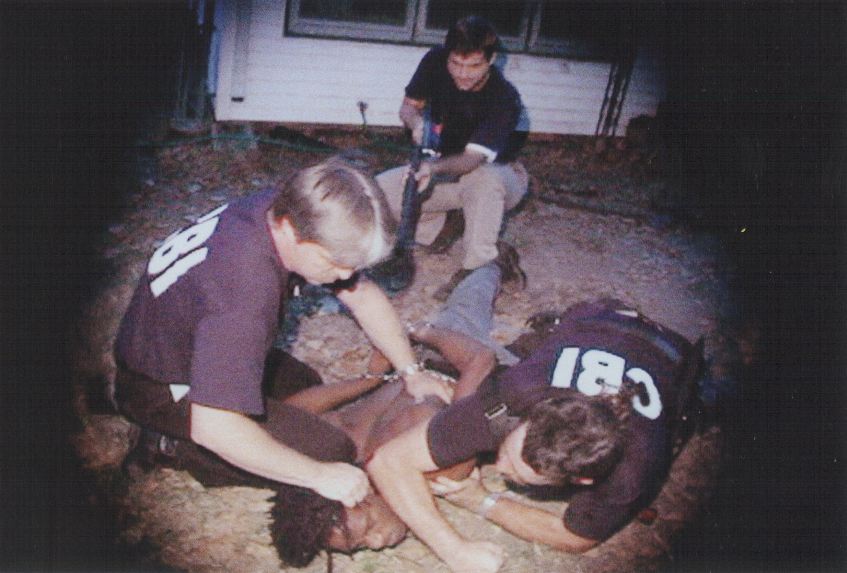
Equally as nimble as the mirror-image counterhistory of the CSA are the many commercial breaks throughout the fake documentary, with ads that are both jaw-droppingly brazen and laugh-out-loud funny. (You can get a sense of this from the trailer — Think Spike Lee’s Bamboozled, itself an excellent satire, to the nth degree.) They range from fake ads for unfortunately real products (Darky Toothpaste, Coon Chicken Inn) to all-too-possible modern innovations — The Slave Shopping Network, a LoJack “Shackle”, a Claritin-ish drug to treat drapetomania (the runaway disease “discovered” by Dr. Samuel Cartwright in 1851), a COPS-style show called RUNAWAYS, etc. etc. As you can see, this is withering stuff, and some might find it in horrible taste. But, there’s method to CSA’s madness. As I noted before, we tend to do a pitiful job of facing up to slavery, America’s Original Sin, and for ninety hilarious, cringeworthy minutes, CSA forces us to look the peculiar institution square in the eye. If we’re serious about our proclaimed role as a Beacon of Freedom to the world, that’s something we need to start doing a lot more often. (But, don’t worry — C.S.A. sweetens this tonic with quite a few laughs.) At any rate, if it’s anywhere near you, definitely go check it out.

Plot Foiled.

A quick book bash: I wasn’t going to write about Philip Roth’s The Plot against America, which I read a few weeks ago, until seeing C.S.A tonight crystallized my problems with it. I should say up front that I run hot and cold on Roth — I quite liked Portnoy and American Pastoral, but kinda loathed Goodbye, Columbus. And, while The Plot Against America is getting good reviews all around, I had a strongly adverse reaction to it. For those of you who haven’t heard anything about it, Plot describes an alternate USA in which famed aviator and rabid isolationist Charles Lindbergh defeats FDR in 1940, makes peace with Hitler, and begins a pogrom of sorts against Jewish-Americans, forcibly enrolling Jewish children (including the narrator’s brother) in Americanization programs and, eventually, attempting to relocate Jewish families to the Midwest. As per Roth’s usual m.o., the tale is told from the perspective of a Newark family trying to find their way — not very successfully — amid the deteriorating events.

As alternate histories go, it’s a great idea for a book, and I was really looking forward to seeing what Roth did with it. But, unlike CSA, which clearly showed an attentiveness to both what happened and what might have happened, Roth here has written an alternate history without seeming to give a whit about the history. In short, I found the book stunningly, almost narcissisticly, myopic. One gets the sense from reading Plot that the rift beween Jews and Gentiles in America was not only the most significant but the only ethnic or cultural schism in FDR’s America. This is not to say anti-semitism wasn’t rampant and widespread at the time — Of course it was, as attested by Father Coughlin, Breckinridge Long, and Lindbergh himself, who — in a speech that tarnished his reputation much more than Roth lets on — blamed support for the war on the “large ownership and influence [of Jews] in our motion pictures, our press, our radio, and our Government.” But, in The Plot Against America, no one else seems to even exist besides Jews and (White) Gentiles — To take the two most notable examples, there’s no mention of the fact that Africans-Americans were being lynched in staggering numbers in this period (the only lynching mentioned is that of Leo Frank), or that we actually did intern Japanese-Americans during the war. (As a point of contrast, C.S.A.‘s central thesis is about slavery, but it moves beyond white-black relations to explore, or at least reference, the place of Asians, Latinos, and gay Americans in the new Confederate system.)

This isn’t about tokenism — it’s about doing justice to the people and the history of the period you’re writing about. And, frankly, the history in The Plot Against America strains credulity time and time again. I’ll skip over the final twist so as not to give it away, and because it’s so ridiculously implausible that Roth couldn’t have intended for us to take it seriously. But, even despite that, Lindbergh’s popularity — and the public’s taste for isolationism — by 1940 seem significantly overstated throughout. (To take one example, there is no way that the Solid Democratic South would up and vote GOP that year — With the Civil War only recently out of living memory, the Dems could’ve run a wet paper bag in the South, so long as it wasn’t of the party of Lincoln and didn’t threaten to upset the Jim Crow racial order. That didn’t even begin to change until Strom in ’48.) And, while Walter Winchell plays a large role here in calling out the Nazi-American pact and resulting Jewish pogrom, he seems to be the only public figure in America doing so. Where’s everyone else? It doesn’t make sense.

Finally (and I’ll admit, this really ticked me off), Plot basically commits a character assassination of progressive/isolationist Burton Wheeler of Montana, who here appears as Lindbergh’s Vice-President (or, more to the point, his Cheney — I’m assuming that’s what Roth was getting at.) At a certain point in Plot, we’re supposed to believe that Wheeler — a guy who refused to prosecute alleged dissenters as Montana Attorney General during the hysteria of WWI, helped lead the investigation into the government corruption of Teapot Dome, and turned on FDR because he thought court-packing was an unconstitutional powergrab — is going to, out-of-the-blue, declare martial law and start rounding people up? That makes zero sense, and is, in effect, a slander on a real historical figure. Roth is obviously one of America’s most gifted writers — but, lordy, I thought The Plot Against America needed more research, more attention to historical nuance, and more sense that injustice and suffering in this country has often run along more than one axis of discrimination.

Senate Sideshow.

“‘I look around,’ Mr. Lott said, ‘and think, “Am I the only one who thinks this is stupid?”‘” Hearings into Katrina, foreign affairs, and other matters of state are postponed as the Senate commits to a day of stunt votes by both parties, mainly because Catkiller Frist had more pressing business — a fundraiser, of course — the prior evening. “Senator Ted Stevens, Republican of Alaska, said, ‘It’s sort of arrogant of us, isn’t it, scheduling them and then not keeping our appointments?’

Last Refuge of Scoundrels.

“It took a long time for Democrats to step up and challenge the administration’s baseless assertions that the Patriot Act could not be changed without threatening the security of the American people. When we finally did so, when we decided to make the case that we can fight terrorism and protect our American principles at the same time, it looked like Democrats were finally ready to stand on principle and offer strong leadership. Instead, too many Democrats have folded, and momentum for critical changes to the Patriot Act to protect our freedoms has been squandered.” In Salon, an angry Russ Feingold calls out his party for capitulating on the Patriot Act extension. Ugh. Are the Democrats irreparably broken at this point? Does our party leadership lack all conviction? At this point, the evidence is piling up against them, and, if we don’t get our act together, we’re going to lose our best chance in a decade to take back Congress this November. Update: Feingold filibusters alone.

Snowe melts, Hagel hesitates.

“If some kind of inquiry would be beneficial to getting a resolution to this issue, then sure, we should look at it. But if the inquiry is just some kind of a punitive inquiry that really is not focused on finding a way out of this, then I’m not so sure that I would support that.” Bad news for congressional oversight and the rule of law: After an “all-out” campaign of White House arm-twisting, crucial Senate Republicans — including Olympia Snowe and Chuck Hagel — appear on the verge of folding up the tent on the proposed NSA hearings. The critical vote will come tomorrow, but it’s iffy. “Two committee Democrats said the panel — made up of eight Republicans and seven Democrats — was clearly leaning in favor of the motion last week but now is closely divided and possibly inclined against it.

Rebel Pretensions.

After the GOP co-opt the Star Wars universe for their own nefarious purposes, George Lucas makes an appearance with House Democrats (including his own congresswoman, Nancy Pelosi.) The Republican video (shown at CPAC) “depicted GOPers as the virtuous rebels, being pursued by ‘Darth Nancy’ and her imperial henchmen, Minority Whip Steny Hoyer (D-Md.) and Democratic campaign chief Rahm Emanuel (D-Ill.).” Um, yeah, you guys own every branch of government, your boy in office is ignoring the law and desperately trying to wrest power from the Senate, and you’re the Alliance. C’mon now, at least the Yankees own up to it.

When Mal met Starbuck.

Firefly‘s Nathan Fillion and Battlestar Galactica‘s Katee Sackhoff will appear together in White Noise 2: The Light. Smart play by Rogue Pictures — maybe the Browncoats and Galacticaheads (Capricans?) will fill the seats for what’s essentially a straight-to-video property. (Did anyone even see White Noise? I know Michael Keaton was in it, that’s about it.)

Love Songs ’06.

Happy Valentine’s Day. In keeping with a GitM tradition started last year, and since y’all out there, dear readers, are once again my Valentines for the day whether you like it or not (I long ago stopped delving into personal detail around these parts — Suffice to say that, my fellow Americans, the State of the Love Life is, um, not good. In fact, like those pesky WMD, its existence has been almost entirely theoretical for some time…Ah, well.) — I’ve thrown up more tunes for your holiday perusal. At any rate, as per the usual mp3blog rules: the files will be only up for a day or two, right-click to save them, and please don’t link to them directly. Otherwise, enjoy!

Another lonely night
Stare at the TV screen
I don’t know what to do
I need a rendezvous

For sundry reasons involving the Internet Age, Kraftwerk’s “Computer Love” has taken on all kinds of ulterior meanings since it first debuted on 1981’s Computer World, when 300 baud modems (“I call this number for a data date“) and TRS-80s operating on tape decks were the order of the day. When these German electronica pioneers weren’t creating the music of the future, it seems, they were presciently anticipating our current era of Instant Messaging, online dating sites, and the like. Still, its newer resonances notwithstanding, I’ve always found something giddily innocent about this track. While the lyrics suggest a much more downbeat affair, the chirps and whistles in this song never fail to bring a big goofy grin to my face — particularly in this clubbier 1991 remix version, when those syncopated synths take off like a bird in flight. There are some songs that just make ya happy, no matter what — for me, this is one of those.


Computerlove — Kraftwerk (6.2MB, 6:37)
(song removed)
From The Mix.

[Update:]

***

And I feel your warmth
And it feels like home
And there’s someone
Calling on the telephone
Let’s stay home
It’s cold outside
And I have so much
To confide to you

As I’ve wrote in this review of Ultra years ago, Depeche Mode is a band that’s been misunderstood and misunderestimated by a lot of people here in America. Which is not to say they’re some hidden secret — obviously, they’re one of the biggest bands in the world, and have had a huge US following for decades now.

Still, even today, in the reviews of DM’s recent Playing the Angel, rock critics trod out the doom-and-gloom “Depressed Mode” copy that’s been circulating since at least 1986’s Black Celebration. But they miss the point. Very few DM songs — Ok, “Satellite,” from A Broken Frame is one — are out-and-out depressing in the way, say, most Nine Inch Nails songs are. Rather, almost all of the songs on Black Celebration, one of my Desert Island discs, work in the same groove, including this one, “Here is the House.” As one review of “Enjoy the Silence” summed it up, it’s “me and you against the world.”

Yes, Celebration argues, this earth can be a cruel, unrelenting place, filled with misfortune and disappointment. But, maybe, just maybe, you and I can rise above all that, and together light a candle that’ll warm us both through another unforgiving night. In sum, DM’s best romantic ballads aren’t depressing so much as poignant and ever-so-slightly hopeful. I’ll be the first to admit that the band has come close to over-mining this particular mode after 25 years, but still, when they do it right, it’s a thing of beauty. (Also, since I’m sure a lot of people out there already have this song in their collection, I’ve also posted Martin’s early demo version, which actually fits the song really well in a lo-fi Magnetic Fields kinda way.)


Here is the House — Depeche Mode (4.1MB, 4:19)
Bonus Track: Here is the House (Demo) — Martin Gore (4.3MB, 4:35)

(songs removed)
Original version on Black Celebration.

[Update:]

***

The blood of eden keeps running through me
running through my veins
the blood of eden keeps rushing through me
when I’m sure there’s none that remains

I had a hard time figuring out which song I wanted to post from Peter Gabriel’s sublime rumination on romance, Us (1992), ’cause almost every song — particularly on the A-side — is a certifiable classic. (A younger friend of mine once musically conflated Gabriel’s oeuvre with that of his Genesis bandmate Phil Collins, which almost drove me to apoplexy. I mean, I don’t hate Phil Collins or anything, but, c’mon now — Gabriel is a lot more than just “Sledgehammer,” and even “Sledgehammer” isn’t “Susudio.”)

In the end, I opted for this cut of “Blood of Eden” from Wim Wender’s Until the End of the World (which for some odd reason was left off that otherwise great soundtrack.) The Us version is disarmingly beautiful, but the lack of Sinead O’Connor’s backing vocals here lend the track a different resonance.

On the album, you can actually hear “the union of the woman and the man” in O’Connor and Gabriel’s lush harmony, but here, with Gabriel plaintive and alone, it’s just a fading memory, the echo of happier times. And yet, at certain moments (such as in the bridge), the memories come flooding back. “The blood of eden keeps rushing through me, when I’m sure there’s none that remains.” With love in the rear-view mirror, disappearing over the horizon, Pete still has the echoes of the past to keep him keepin’ on.


Blood of Eden (Wim Wenders Version) — Peter Gabriel (6.2MB, 6:40)
(song removed)
From Blood of Eden (Single).

[Update: The Wim Wenders version is hard to find on the tubes, but below is the original version with Sinead O’Connor.]

***

Most of the time
It’s well understood,
Most of the time
I wouldn’t change it if I could,
I can’t make it all match up, I can hold my own,
I can deal with the situation right down to the bone,
I can survive, I can endure
And I don’t even think about her
Most of the time.

Speaking of which, nobody does keep-on-keepin’-on like its coiner, the inimitable Bob Dylan. From “Don’t Think Twice” to “Like a Rolling Stone” and Blood on the Tracks to Time out of Mind, one of Bob’s career trademarks has been the post-mortem relationship song. Some are angry and vindictive, some are haunted, some are jaunty and could care less, some are resigned and reflective, some are (love)sick with remorse and regret. There are so many great songs that could have gone here, but I ended up choosing “Most of the Time,” from the somewhat underappreciated Oh Mercy (1989), the forerunner to Dylan’s recent revival. In this song, Bob’s basically got his act together and has moved on from an old love…most of the time. In direct contrast to Gabriel in “Eden,” the past here is treacherous. (“Most of the time, I can’t even be sure, if she was ever with me or if I was ever with her.“) Dylan’s learned to live with his scars, but at any moment — a passing haircut, a fleeting remembrance, a scent of perfume in the air — and he is undone once again, as if it were yesterday. After all, even for a guy like Bob Dylan, who once seemed to carry the weight of the world as if it were nothing, you don’t get very far in life without some ghosts in the machine.


Most of the Time — Bob Dylan (4.5MB, 5:03)
(song removed)
From Oh Mercy.

[Update:]

Ok, hopefully five tunes won’t kill my bandwidth…Have a safe and happy Valentine’s Day out there, y’all. (And, as a side note, if you’re looking for more quality music, be sure to check out the splendiferous Fluxblog almost-daily, and don’t miss out on the Max Music Mixes every month at Lots of Co.)