// archives

Bob Dylan

This category contains 83 posts

Llewyn Davis’ 115th Dream.

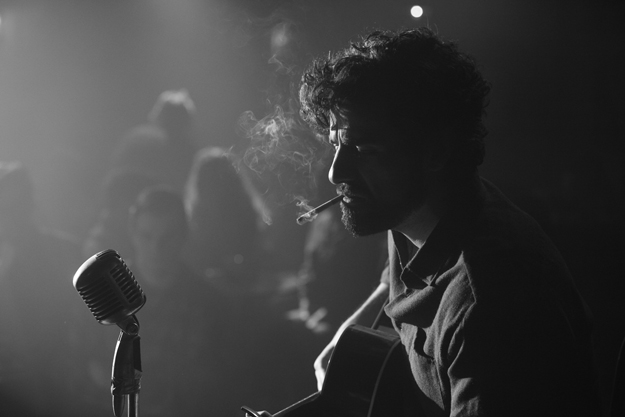
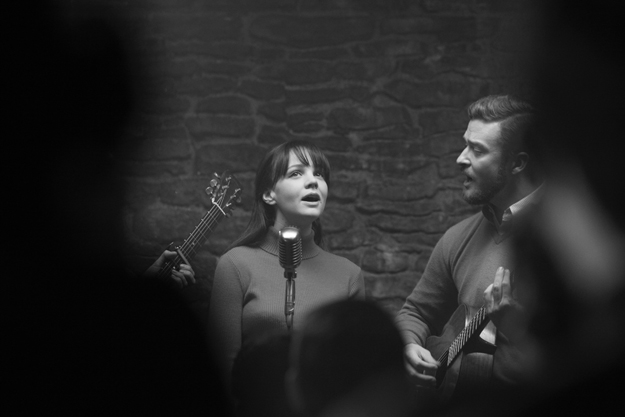
The Coens’ Inside Llewyn Davis, whose trailer I posted a few weeks ago, gets a domestic distributor in CBS Films. “[T]he film stars Oscar Isaac, Carey Mulligan, John Goodman, Garrett Hedlund, F. Murray Abraham and Justin Timberlake.” That’s Isaac — the best thing about a couple of underwhelming films so far — above, and Mulligan and JT below.

The Freewheelin’ Llewyn Davis.


“Oh, hello! I’ve heard your music, and heard many nice things about you from Jim and Jean and from others.” One of my most anticipated films of 2013 gets a trailer: Inside Llewyn Davis, a.k.a. the Coens’ riffing on Dave Von Ronk‘s memoir and 60′s Greenwich Village, featuring Oscar Isaac, Carey Mulligan, Justin Timberlake, John Goodman, Garrett Hedlund, Adam Driver, and F. Murray Abraham. Looks like it was filmed through Todd Haynes’ Claire and Robbie filter. Can’t wait.

Tempest Fugit.

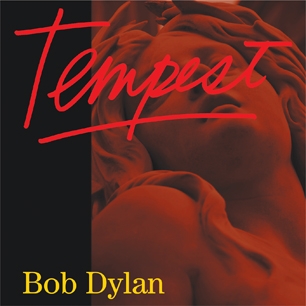
Today sees the release of the 35th studio album of Bob Dylan’s career, Tempest. The album is great, and of course it’s great—at this point, 15 years after Time Out of Mind announced his return to some entirely new type of form, that statement seems expected and unremarkable, and that unremarkableness is nothing less than astonishing

Fifty years after his first album, and eleven years after a memorable 9/11 also brought forth Love and Theft, Bob Dylan’s Tempest drops today.

Update: Been settling in with the album tonight, and it’s already my favorite since Time Out of Mind. It’s very dark — Bob’s in full-on Blind Willie apocalyptic mode. This is dead land, this is cactus land. Eliot’s in the captain’s tower & the Titanic sails at dawn.

Speaking of which, what with the 14-minute titular track about the Titanic, “Desolation Row” obviously comes to mind. But there’s a little John Wesley Harding here as well — My early favorites are “Scarlet Town” and “Tin Angel,” the latter very much a frontier tale like “Frankie Lee and Judas Priest” or “Lily, Rosemary, and the Jack of Hearts,” and the opening track and first single, “Duquesne Whistle,” is much like “I’ll Be Your Baby Tonight” in that it doesn’t seem to fit the rest of the album. Anyways, a few listens in, I really like it.

Whistle while you Work.

The music starts faintly, as if in a vintage pleasure palace, with the band…playing rock and roll ragtime off in the corner. The electric guitars sound almost like clarinets. Everybody’s swinging! But what’s that in the distance?

NPR’s All Songs Considered gets their hands on “Duquesne Whistle”, the first track from Bob Dylan’s forthcoming Tempest, due out September 11th. True, there is something Basement Tapesy about it upon first listen.

Another Night of Poetry and Poses.


At the Lincoln Center talk, the Coens compared their movie to “Margot at the Wedding” (Noah Baumbach was on stage with them) suggesting that, like that film, their new work will offer natural dialogue and a feeling of being dropped into the middle of a world. They also said they expected the film to contain musical performances.

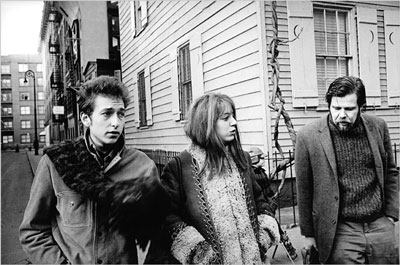
As breaking over the weekend, the Coens’ next project may well be a look at the sixties folk scene in Greenwich Village, based on the life of Dave Von Ronk — above, with Dylan and Suze Rotolo — and his memoirs, The Mayor of McDougal Street. He shouldn’t overpower the story, but I do hope Jack Rollins get his due.

The Man in the Long Black Coat.


I love to hear a song that changes everything. That’s the reason I’m in a band: David Bowie’s “Heroes,” Arcade Fire’s ‘Rebellion (Lies),’ Joy Division’s ‘Love Will Tear Us Apart,’ Marvin Gaye’s ‘Sexual Healing,’ Nirvana’s “Smells Like Teen Spirit,’ Public Enemy’s ‘Fight the Power.’ But at the top of this dysfunctional family tree sits the king of spitting fire himself, the juggler of beauty and truth, our own Willy Shakespeare in a polka-dot shirt. It’s why every songwriter after him carries his baggage and why this lowly Irish bard would proudly carry his luggage. Any day.

As part of Bob Dylan’s 70th birthday celebration in the pages of Rolling Stone — the actual date is May 24th — Bono, as one of many artists picking their favorite Dylan songs, sings the praises of the magazine’s namesake. Also of note: Sinead O’Connor on “Idiot Wind”: “The way he delivers the words is fantastic. This voice just snarling, not bothering to hide anything. The rest of us are all busy trying to be nice people, when actually we’re f**king bastards underneath it all – whereas he was quite comfortable letting the bastard hang out. He was way ahead of his time on that. The only people getting close to him now are rappers.

And Rolling Stone isn’t alone with the encomiums: See also AARP Magazine’s 70th birthday tribute, which includes comment from Maya Angelou, Bill Bradley, Michael Bloomberg, Paul Shaffer, Bruce Dern, and a host of others. For example, here’s Nick Cave:

I was sitting, on my own, in a bar, in New York — it was the first time I’d ever been to that city — and I went over to the jukebox to have a look at what was on offer. I saw a song, ‘Gotta Serve Somebody’ by Bob Dylan, and thought that that was a great title for a song, so I put it on, and that, as they say, was that. I was knocked down. What I heard seemed so simple, yet so full of ideas — chilling, funny, absurd, perverse, audacious, but heartfelt and mind-bendingly beautiful. I felt like grabbing the guy next to me and saying, ‘Did you hear that song?’ I felt like running out on the street and waving my arms around and yelling, ‘Hey! Has anyone ever heard of Bob Dylan?’ It was like I’d missed the moon landing or something.

So, I started a slow trawl backwards, down the years, through the records, and it was like stepping into Aladdin’s Cave — there it was, oceans of the stuff — all the terrible love and beauty you could ever want to hear.

She once was a true love of mine.


[S]he read modern poetry, studied art and drawing, and immersed herself in Bertolt Brecht and other avant-garde playwrights. When they became a couple, Rotolo introduced Dylan to these worlds. Close friends noticed the change: ‘You could see the influence she had on him,’ said Sylvia Tyson of Ian & Sylvia. ‘This is a girl who was marching to integrate local schools when she was 15.‘”

Suze Rotolo, author, activist, and Dylan muse, 1943-2011. “‘A Freewheelin’ Time’ is one of the first histories of the folk music years written from a woman’s perspective…it goes beyond gossip to ask a pointed question: How did it feel? Rotolo writes the era mattered because ‘we all had something to say, not something to sell.’

Tales of Yankee Power.

What better way to celebrate eleven years of GitM than a ninth cuppa Bob (and my first in three years)? (1, 2, 3, 4, 5, 6, 7, 8) The freewheeling Bob Dylan continued his never-ending tour Saturday night at George Washington University, and while the haters are hatin’, I knew what I was getting into — Dylan croaking his way through rockabilly versions of his classics — and had a grand ole time. Here’s the setlist:

Rainy Day Women #12 & 35 | Senor (Tales Of Yankee Power) | Just Like Tom Thumb’s Blues | Just Like A Woman | Rollin’ And Tumblin’ | Tryin’ To Get To Heaven | Summer Days | Desolation Row | High Water (For Charley Patton) | Simple Twist Of Fate | Highway 61 Revisited | Ain’t Talkin’ | Thunder On The Mountain | Ballad Of A Thin Man

Encore: Jolene | Like A Rolling Stone

So, if you’re keeping score, that’s a full five tracks from 1965′s Highway 61 Revisited. For me, the highlights of the evening were Ballad of a Thin Man, from that album, and especially Senor, from 1978′s Street Legal — one of my top 10 favorite Dylan songs (and one I missed during Bob’s 2005 Beacon stand.)

As far as the new stuff goes, I’d rather have heard any other Time Out of Mind track over “Tryin’ to Get to Heaven” (well, except “Make You Feel My Love“), and “Ain’t Talkin’,’” off of 2006′s Modern Times sounds to me like Dylan trying a bit too hard to be Dylanesque. That being said, “High Water (for Charley Patton)“, off of 2001′s “Love and Theft (is that album really a decade old now?) sounded as lean, mean, and vital as I’d ever heard it. It’s rough out there, high water everywhere…but it’s good to know Bob’s still keep on keepin’ on regardless.

You Will Start Out Standing.

Since then, Dylan has changed, nearly died, been reborn, gone electric, gone Christian, and gone back to his roots. But this recording captures him before all of that has happened, at age 22, eager, in a hurry, and alone in a tiny room on 51st Street in Manhattan.

Slate columnist and Dylanologist John Dickerson spends some time with The Witmark Demos. “There are secret songs that would never be published and storytelling of a kind he later abandoned. We get to sit in on the sessions where his songwriting evolved, as he takes on the subjects of love, death, and war first from one angle and then another. And some of the songs are beautiful.

For Christmas, Buy her a Drum(stick).

Songs performed by Dylan on this new album include, ‘Here Comes Santa Claus,’ ‘Winter Wonderland,’ ‘Little Drummer Boy’ and ‘Must Be Santa.” Put away the Mannheim Steamroller — In order to help Feeding America, the freewheelin’ Bob Dylan will release a holiday album, Christmas in the Heart, October 13. “It’s a tragedy that more than 35 million people in this country alone — 12 million of those children – often go to bed hungry and wake up each morning unsure of where their next meal is coming from. I…hope that our efforts can bring some food security to people in need during this holiday season.

THAT Direction Home.

Motorists who follow Dylan’s directions, however, may take some time to reach their destination. “I think it would be good if you are looking for directions and you heard my voice saying something like, ‘Left at the next street…. No, right… You know what? Just go straight.’ He added: ‘I probably shouldn’t do it because whichever way I go, I always end up at one place – Lonely Avenue.’” By way of a friend, Bob Dylan plans to voice a satellite navigation system. Yes, please.

Trickster on the Borderlands.

Ask Muhammad All why he fights one more fight. Go ask Marlon Brando why he makes one more movie. Ask Mick Jagger why he goes on the road. See what kind of answers you come up with. Is it so surprising I’m on the road? What else would I be doing in this life — meditating on the mountain? Whatever someone finds fulfilling, whatever his or her purpose is — that’s all it is.” As a companion to Douglas Brinkley’s recent cover story on “Bob Dylan’s America”, Rolling Stone publishes excerpts from their various interviews with Dylan over the years. (I haven’t read the Brinkley article — it’s not online — but that “United States of Bob” conceit is one Greil Marcus already pretty thoroughly explored in The Old, Weird America (nee Invisible Republic) — listen to “Bob Dylan’s 115th Dream” for a good intro on the subject, or consider how much antebellum history Dylan was able to squeeze into three verses in “As I Went Out One Morning.”)

In other Bob news, and in keeping with the trickster on the borderlands” persona Dylan adopts for much of the zydeco-flavored Together Through Life, there’s a thin line between love and hate in the surprisingly violent new video for “Beyond Here Lies Nothin’,” exclusively over on IFC. “Subterranean Homesick Blues,” it isn’t. At best, you can consider it in keeping with a traditional murder-ballad-type ditty like “Delia’s Gone,” I guess. But those who believe Dylan has serious problems with women are going to find plenty of ammunition here. (And that’s before they even get to “My Wife’s Home Town.”)

The Ship Comes In.

There he lies. God rest his soul, and his rudeness. A devouring public can now share the remains of his sickness, and his phone numbers. There he lay: poet, prophet, outlaw, fake, star of electricity. Nailed by a peeping tom, who would soon discover…even the ghost was more than one person.

Whatever happens in IN and NC, at least we’re all assured of one excellent piece of news on Tuesday: My favorite film of 2007, Todd Haynes’ I’m Not There, comes out on DVD tomorrow. (See also my pre-Oscar Youtube appreciation.) Due to my imminent move, I’m mostly divesting myself of extraneous possessions at the moment. Still, I’m very much looking forward to picking this up tomorrow.

No…McCain, a monomaniac? C’mon!

Lisa Bonet ate no basil, Warsaw was raw. Was it a car or a cat I saw? Rise to vote, sir. Do geese see God? ‘Do nine men interpret?’ ‘Nine men,’ I nod.” By way of THND, Weird Al Yankovic channels Dylan through palindromes, in the manner of “Subterranean Homesick Blues,” I’m Not There, and “Royal Jelly.” (McCain palindrome via here.)

It’s Not There!

As the Oscars are tomorrow night (remember to get your entries in for the annual Web Goddess Oscar Pool), as my favorite film of 2007 got snubbed in most categories, and as I spent an hour or two last night trawling around Youtube (which reminded me, for example, how irredeemably goofy the ending of There Will Be Blood was), here are some musical clips from the year’s maligned masterpiece, Todd Haynes’ I’m Not There. (Note: The Weinstein Company has posted almost all of Cate Blanchett’s performance for Oscar purposes, but I wouldn’t recommend watching those clips unless you’ve already seen the movie, since they’re taken from all over the place and disrupt the careful interweaving of all 6 Dylans.)

Subterranean Homesick Blues“: I’d never seen this before, but here’s the international trailer for the film, featuring all six incarnations doing the classic video from Don’t Look Back.


I Want You“: Robbie (Heath Ledger) and Claire (Charlotte Gainsbourg) fall in love (directly following this scene.) Note the freewheelin’ beginning and that fateful motorcycle.


Ballad of a Thin Man“: There’s something happening here, but BBC’s Keenan Jones (Bruce Greenwood) don’t know what it is…other than that it somehow involves Jude Quinn (Cate Blanchett), Stephen Malkmus, circus geeks, and the Black Panthers.


Going to Acapulco“: In downtown Riddle, Billy Story (Richard Gere) attends the public funeral of young Mrs. Henry. She has slit her own throat, an ominous harbinger of dark times to come. (That’s Jim James of My Morning Jacket in the Dylanesque whiteface, along with Calexico.)


When the Ship Comes In“: Wunderkind Woody Guthrie (Marcus Carl Franklin) wows some kindly Middle American folk with his musical wherewithal.

The trailer for I’m Not There, opening…uh…a few months ago (and available on DVD May 6.)

A Hard Walk’s Run.

Charles, Cash, Curtis, Dylan, Strummer…Given the glut of rock biopics and documentaries we’ve seen in recent years, it’s well past time that influential musical chameleon Dewey Cox got his due. Unfortunately, just as James Mangold’s Walk the Line felt too staid and conventional to capture the true appeal of the Man in Black, Jake Kasdan’s Walk Hard: The Dewey Cox Story — which I saw in the days before Christmas — never really gets inside the head of the Giant Midget. Sure, it covers most of the important facts about his life — the childhood tragedy, the struggle with smell-blindness, the breakout single, the dark f**king middle period, the LSD decade, the selling out. But, while John C. Reilly does what he can as Cox (and the resemblance is admittedly uncanny), I never felt while watching Walk Hard that Kasdan actually “got” the man or his music…or his monkey or giraffe, for that matter. Given his famous father and his earlier affiliation with Freaks & Geeks, Kasdan seemed like he would be the guy to do Cox justice, but this is sadly a missed opportunity. It’s just too bad Todd Haynes was busy with I’m Not There…Once again, nearly fifty years after the fact, Zimmerman will be walking-hard away with all Dewey’s laurels.

Kasdan’s take on Dewey’s story begins just before Cox’s final performance at the Lifetime Achievement Awards — You may remember Eddie Vedder’s memorable tribute speech, and the Jewel/Lyle Lovett/Jackson Browne/Ghostface Killa mash-up of “Walk Hard” got a lot of radio run over that summer — before flashing back to that defining moment in the White Indian’s life as a boy, the famous accidental cleaving-in-two of his prodigy brother. (“I’m cut in half pretty bad, Dewey.“) Rallying to his brother’s fallen musical standard, the teenage Dewey soon finds himself thrown out of the house, married young (to Edith, as played by SNL’s Kristen Wiig), and working as a busboy at a local black club, where he one day wows the crowd with a version of his early hit, “(Mama) You Got to Love Your Negro Man.” Soon thereafter, he lands a band and a record contract, and after the cutting of “Walk Hard,” the rest is history: Cox buys a monkey, lapses into a vicious drug habit, falls for his voluptuous backup singer Darlene Madison (Jenna Fischer), gets clean, lapses into another vicious drug habit…well, you know the rest.

Ok, ok, let’s go ahead and break the fourth wall. As a played-straight parody of the rock biopic genre, Walk Hard is admittedly uneven most of the time. But, it makes for a relatively amusing two hours if you’re in the mood for it. It’s nowhere near as funny as the original Airplane or Top Secret, but I’d say it holds its own with the Hot Shots flicks, and it’s miles above Scary Movie and its ilk. Yes, the film can be unfocused and scattershot (There’s even a decently funny recurring gag involving the kitchen sink.) A lot of the jokes seem like leftovers from the last Will Ferrell script, and, like Trey Parker and Matt Stone’s Team America, Walk Hard occasionally follows the beats of its object of parody so closely that the movie loses its edge. Still, there are definitely some quality moments therein, from Tim Meadows trying not to seduce a naive Dewey into a marijuana habit to Cox meeting Buddy Holly (Frankie Muniz, inspired casting) and the Fab Four (Surprisingly, Justin “Mac Guy” Long is far and away the funniest as George, while Jack Black’s Paul is woefully bad and Paul Rudd’s John is just…strange.)

At any rate, I’m not going to give all the jokes away here, suffice to say that Cox’s black-and-white Dylan period tickled my funny bone the most. Dewey does two Dylanesque ditties here: The first, “Royal Jelly”, is a gloriously inscrutable poetic epic a la “Desolation Row” (“Mailboxes drip like lampposts from the twisted birth canal of the coliseum, rimjob fairy teapots mask the temper tantrum, O say can you see ‘em?“) [See it live.] The other, “Let Me Hold You (Little Man)“, is an un-PC The Times They Are A Changin’ screed directed at the injustice faced by all the, uh, little people. (“Let me hold you, midget man, pretend that you’re flying in space. Let me hold you, little man, so the dog will stop licking your face.“) High art it’s not, and I can’t recommend rushing out and seeing it or anything. But, for a few solid chuckles over the course of two hours, Dewey Cox and Walk Hard deliver the goods decently enough. Someday — perhaps soon, given that Forgetting Sarah Marshall, Pineapple Express, and Drillbit Taylor are all due next year — the helium will probably leak out of the Judd Apatow comedy factory’s balloon. But Cox, thankfully enough, isn’t the canary in the coalmine just yet.

His Back Pages.


A song will lift, as the mainsail shifts, and the boat drifts on to the shoreline.” If you’ve been reading this site for any length of time, you probably already know that I drank the Bob Dylan kool-aid a good while ago. So, more than likely, my opinion of Todd Haynes’ I’m Not There, which I raced down (on the D-train, no less) to catch at the Film Forum this morning, should be taken with at least a shaker of salt. And, to be honest, it’s hard to imagine how this film plays to people who aren’t all that into Dylan — If you don’t already have a basic sense of his story and his various periods, I could see it being as incoherent and irritating as Southland Tales (although it’s assuredly better-made.) But, if you do have any fondness for Bob, oh my. The short review is: I loved it. Exploding the conventional music biopic into shimmering, impressionistic fragments, Todd Haynes has captured lightning in a bottle here. The movie is clearly a labor of love by and for Dylan fans, riddled with in-jokes, winks, and nods, and I found it thoughtful, funny, touching, and wonderful. Put simply, while No Country for Old Men is right up there, I’m Not There is my favorite film of the year. I can’t wait to see it again.

Like Navin Johnson, Bob Dylan was born a poor black child. (Marcus Carl Franklin) Ok, perhaps not. But Hayne’s movie doesn’t really aim to tell the story of one Robert Zimmerman of Hibbing, Minnesota. anyway. — He’s not there. Instead I’m Not There refracts Dylan through a prism of sorts, giving us multiple versions of the man (and myth) at various stages in his life and work. And, so, after a first person POV shot of “Dylan” (us?) taking the stage in ’66, and a title shot involving a potentially-momentous motorcycle, we are introduced to one Woody Guthrie (Franklin), an 11-year-old folk wunderkind traveling hobo-style along the rails, singing union songs and making up his past as he goes along. But the times they-are-a-changin’, and, as a kindly matron informs Woody, the old songs don’t necessarily do justice to the problems of 1959. Enter Jack Rollins (Christian Bale), an earnest young troubador who once lit Greenwich Village on fire with his ballads of social protest (“finger-pointin’ songs”), and, having rejected the folk scene and found Jesus, is now the subject of a No Direction Home-style documentary. (Julianne Moore does a Joan Baez impression here, straight out of Scorsese’s doc, which is pretty hilarious, and maybe even a little mean — note the business with the cat.)

By now, you probably see where this is going. Post-Newport, Cate Blanchett shows up as Jude, a.k.a. the reedy, combative, drugged-out, and dog-tired Dylan of (blonde on) Blonde on Blonde and Don’t Look Back. (It takes a woman like her, to get through, to the man in him.) Ben Whishaw shares the load of society’s probing as Arthur Rimbaud, a Bob who spends most of the movie facing down some unknown interlocutors. Heath Ledger’s Robbie is the romantic and the womanizer, the Dylan who woos the heartbreakingly beautiful Claire (Charlotte Gainsbourg, playing an amalgamation of Suze Rotolo and Sara Lownds), looks for solace in a normal life outside Woodstock, and eventually stares into the abyss of Blood on the Tracks. And Richard Gere is Billy, an aging outlaw hiding out in Riddle, MO, part of the mythical American landscape conjured by Bob in “Bob Dylan’s 115th Dream,” “Desolation Row,” John Wesley Harding, The Basement Tapes, “Blind Willie McTell,” and countless other songs.

Each of this fellowship of Dylans does quality work in the role. Cate Blanchett is getting the most press these days, perhaps deservedly so, but I was as impressed with Bale, Whishaw, Franklin, and particularly Ledger — After seeing the extent of his range here, it’s pretty clear he’s going to kill as the Joker next summer. And other actors resonate here as well. I already mentioned Julianne Moore and the exquisite Charlotte Gainsbourg. (My crush on the latter, already simmering after The Science of Sleep, will no doubt grow by leaps and bounds now, particularly once you factor in her fragile, breathy version of “Just Like a Woman” on the soundtrack. With a face that’s at once honest, open, statuesque, and melancholy, she’s the perfect sad-eyed lady of the lowlands.) Also notable is David Cross, the spitting image of Allen Ginsberg, Michelle Williams invoking Factory Girl Edie Sedgwick, and a well-preserved Richie Havens delivering a Joe Cocker moment with his version of “Tombstone Blues.” Bruce Greenwood (of Thirteen Days, The Sweet Hereafter, and recently John from Cincinnati) does particularly impressive work as Jude’s nemesis, a BBC newsman who wants to pin both the mercurial singer and the meaning of his (her) music to the wall like a butterfly. Clearly, something is happening here, but he don’t know what it is…

Do you need to know a lot about Dylan going in? Well, it undoubtedly helps. I’m Not There is rife throughout with Dylanalia, and, yes, at times it’s dropped as blatantly as the groaners in Across the Universe: Jude mutters “Just like a woman!” at one point as a punchline, and an LBJ on the wall during a party strangely exclaims “It’s not yellow, it’s chicken.” But, others are more obscure, hidden in the fabric of the film like a crossword puzzle for Dylanophiles. Many of the strange denizens of Gere’s Riddle recall characters in songs or various Dylan incarnations, from the whitefaced troubador at Ms. Henry‘s funeral to the Union solders and passing Lincoln on stilts. As Robbie and Claire (Renaldo and Clara?) have one of those tired, terse phone discussions that signifies the end is near, a movie poster over her shoulder reads “CALICO” (i.e. “Sara,” the “calico sphinx in a scorpio dress (you must forgive me my unworthiness.)“) Or, in the scene accompanying one of Dylan’s masterpieces, “Visions of Johanna,” the Ledger Dylan, a movie star of sorts, is bored on the road and skirt-chasing one of his co-stars. As this goes down, we happen to see some elderly crones in neck braces (“the jelly-faced women all sneeze“), Ledger walking in a museum (“Inside the museum, Infinity goes up on trial“), the Mona Lisa (who “musta had the highway blues, you can tell by the way she smiles“), and the co-star he’s tailing, of course, is named Louise. (“Louise, she’s all right, she’s just near. She’s delicate and seems like the mirror. But she just makes it all too concise and too clear that Johanna’s not here.“)

If this all is starting to sound like two and half hours of insufferable inside-baseball for Dylanheads, well, I guess it might be. But I really don’t think it plays like that. (And I also don’t think that was the appeal for me either. Both Masked and Anonymous and Twyla Tharp’s The Times They Are-A Changin’ trafficked in similar inside gags, and I didn’t enjoy those anywhere near as much as this film.) Basically, I’m Not There is too vibrant and enthusiastic to feel smug, remote, or exclusive about its fondness for Dylan. It never purports to define the meaning of any particular song, showing instead that more often than not their beauty lies in their ambiguity. (For example, both defenders of the cultural Old Guard and the Black Panthers feel “Ballad of a Thin Man” is about them.) And it often pokes fun at the Dylanophiles among us, throwing in a number of disgruntled fans at various times (particularly after Bob plugs in) and having Jude get pestered by an overeager amateur Dylanologist after hanging with the Beatles (a very jolly cameo indeed.) Plus, for all the reverence, Dylan himself isn’t as whitewashed as he was in No Direction Home — His drug habit, his youthful arrogance and occasional thin skin, and some questionable views on women poets are all on display here.

A talented artist in his own right (case in point: Safe and Far from Heaven), Haynes employs all the magic of the movies to tell Dylan’s story. The Robbie-and-Claire scenes are filmed in color occasionally as riotous as in Hayne’s homage to Douglas Sirk, Jack’s social protest and Christian periods are told in faux-documentary fashion, and Jude’s England tour is all black-and-white cinema verite, a la Don’t Look Back. That’s why I’m pretty sure i’m Not There will work even for people who don’t know the first thing about Dylan. It remains visually interesting throughout, and never falls into the usual biopic rut, that standard, hackneyed rise, fall, and rise again narrative which tends to bring down even otherwise well-made entrants in the genre like Walk the Line.

And, of course, it benefits from having one of the better soundtracks out there, and Haynes has expertly weaved Dylan’s music (and some quality cover versions) into almost every moment of the film. Let me put it this way: Within the first five minutes, I’m Not There features some period NYC subway footage set to the irrepressibly toe-tapping “Stuck Inside of Mobile With the Memphis Blues Again.” (Also another visual pun — the subway folk are “stuck inside of mobile.”) From that moment on, the movie pretty had much me. In the end, I don’t know if non-Dylan folk will vibe into it or not, but I found I’m Not There a splendid gift from one Dylan fan to the rest of us, and assuredly one of the more inventive and captivating biopics in recent filmdom. “And the sun will respect every face on the deck, the hour that the ship comes in.

Drivin’ in the flats in a Cadillac Car.

You know what’s even better than a great road tune? Not having some DJ talkin’ all over it…unless, of course, that DJ is me.” Sigh. On behalf of his XM radio show, Bob Dylan hawks Cadillacs. To be honest, I much preferred when he was pushing ladies’ lingerie. At least that’s a product I can get behind.

Where is the harmony, sweet harmony? (Pst…in Conn!)

So where are the strong? And who are the trusted?> Why, Bob and Elvis, of course, and they’re in the Nutmeg State, or at least they were last night. As promised, I caught the traveling Dylan-Costello tour over the weekend in (relatively) nearby Bridgeport, CT. The setlists:

Elvis: (The Angels Wanna Wear My) Red Shoes | Either Side of the Same Town | Veronica | The River in Reverse | Down Among the Wine and Spirits | Bedlam | From Sulfur to Sugar Cane | Radio Sweetheart/Jackie Wilson Said | (What’s So Funny ‘Bout) Peace, Love and Understanding? | The Scarlet Tide

Bob: Leopard Skin Pill-Box Hat | It Aint Me, Babe | I’ll Be Your Baby Tonight | You’re a Big Girl Now | Rollin’ and Tumblin’ | Workingman’s Blues #2 | ‘Til I Fell In Love With You | When the Deal Goes Down | Honest With Me | Spirit on the Water | Highway 61 Revisited | Nettie Moore | Summer Days | I Shall Be Released

Encore: Thunder on the Mountain | Like a Rolling Stone

Taking the second act first (well, third — as in Bob’s Beacon stand in 2005, Amos Lee was the *real* opener), Bob’s set — as you can see — was heavy on the Modern Times, which is an album I never really listened to all that much. (It came out just before I was kicked to the curb last year, at which point it just got consigned to the iPod shuffle dustbin.) And, as I’ve said before, when it comes to new Bob, I prefer the looming darkness of Time Out of Mind to the rockabilly antics of Love & Theft, which was also represented here a few times. Still, there were a few gems interspersed throughout the set. Bob’s post-apocalyptic croak these days doesn’t really suit tender ditties like “I’ll Be Your Baby Tonight,” and on “I Shall Be Released” I was thinking it might even be time to go the Leonard Cohen backup-singer route. But he still got a fair amount of mileage out of “Like a Rolling Stone” and the raucous opener, “Leopard Skin Pill-Box Hat,” and he looked spry as ever while playing most of the new stuff. Plus on this, my eighth Dylan show (1, 2, 3, 4, 5, 6, 7), I happily got to scratch off “You’re a Big Girl Now” on my own mental checklist of songs to hear the man play live. And, while I’m not sure last night’s version quite did the song justice — A line like “I’m going out of my mind with a pain that stops and starts!” needs the plaintive howl of 1975, not the world-weary rasp of 2007 — I was glad to hear it made the list regardless.

If I’m being a bit harder on Dylan than usual, it may be because Elvis had just left the building, and he pretty much tore the roof off the place in his set. When I heard he was on the bill, I was wondering who his back-up band might be: The Attractions, The Imposters, or some other permutation thereof. Well, as it turned out, this was a solo stand: just Elvis in black, a few guitars, a spotlight, a microphone, ten chords, and the truth. He played more of his standards when I saw him at the Beacon, but that wasn’t a problem here; His too-brief set included a few well-known hits (“Veronica,” “PLU”), some golden oldies (“(The Angels Wanna Wear My) Red Shoes”, “Radio Sweetheart”), some as-yet-unreleased songs (“Down Among the Wine and Spirits,” “From Sulfur to Sugar Cane”), and even a cover of Van Morrison’s “Jackie Wilson Said,” and each one burned with clarity and conviction. Among the highlights for me were “Either Side of the Same Town,” my favorite song from The Delivery Man, “The River in Reverse” (from his album with Alan Toussaint — it was a blistering call-and-response number last night), and the anti-war lament “The Scarlet Tide” (also from Delivery Man.) (To his credit, Costello also had a remarkable amount of Bridgeport-specific stage patter last night, from name-dropping the old arena there to paying respect to the father of show business, Bridgeport native P.T. Barnum. Somebody had done his homework.)

Yes, I received your letter yesterday.

Johnny’s in the basement, mixing up the medicine, I’m on the pavement, thinking about the government. And Tessa? Well, she’s sending me this swanky link to the new Dylan messaging site, where you can create your own version of the seminal 1965 Subterranean Homesick Blues video. (Also up here is the video for Mark Ronson’s brand new remix of “Most Likely You’ll Go Your Way (And I’ll Go Mine.)” I’m not sold on the horn section, to be honest, but it’d be hard to improve on Blonde on Blonde in any event. Time will tell, just who fell, and who’s been left behind…)

But he breaks like a little girl.

She’s got everything she needs, she’s an artist, she don’t look back. (Although if I had to guess, she’s been watching the heck out of Don’t Look Back lately.) With (a non-levitating) Bruce Greenwood in tow, Cate Blanchett channels Blonde on Blonde-era Dylan and meets never-nude Allen Ginsberg (David Cross) in this brief You-tubed clip from Todd Hayne’s forthcoming I’m Not There. Other Dylans in the production: Christian Bale, Marcus Carl Franklin, Richard Gere, Heath Ledger, and Ben Whishaw.

Seuss Gave Names to All the Animals.


It doesn’t seem to play nice with Internet Explorer at all, but this parody mash-up, Dylan Hears a Who: Seuss via Zimmerman — sent via my sister Tes — is definitely worth checking out. The joke aside, whoever put this together did a great job of capturing that vintage Dylan sound — I particularly like the “Ballad of a Thin Man”‘ed up version of “Miss Gertrude McFuzz,” but all seven tracks are surprisingly catchy and on point. Huzzah.

Play a Song for Me.

The freewheelin’ Bob Dylan has a lot to answer for in this intermittently amusing Post Show send-up of Dylan’s No Direction Home. Admittedly, this guy’s singing-Bob impression is pretty funny. (By way of Tes.)

Distant Thunder.

The pistols are poppin’ and the power is down, I’d like to try somethin’ but I’m so far from town…” Ok, I’ll admit it — I reupped for more time, to catch up on political news. And, while doing so, I discovered that Slate, of all places, is not only premiering Bob Dylan’s new video for Thunder on the Mountain, which is chock-full of vintage Dylan footage, but offering a chance to win a guitar signed by the man himself. Cool…but is it strung lefty?

Cate’s in the Well.

Found while looking for an online version of the recent Rolling Stone story on Todd Haynes’ I’m Not There (which includes a shot of Cate Blanchett as the Blonde on Blonde-era Dylan), writer Jonathan Lethem picks out some forgotten Dylan gems as a sidebar to his recent cover story on Modern Times.

Gotta Serve Somebody.

As part of his Modern Times publicity blitz, Bob Dylan hawks iPods in a new commercial. Call him a sell-out, but, hey, things have changed. And besides, I have no real problem with iPods…or lingerie, for that matter. And, also in recent Dylanalia, Louis Menand reviews Bob Dylan: The Essential Interviews for The New Yorker (courtesy of Ralph Luker at Cliopatria.)

Ragged & Dirty.

I hate to break it to Justin Timberlake, but a wheezy old man has recorded the best make-out songs of 2006. Put Modern Times in the CD player, pull your sweetheart close, and — as a young man advised a lifetime or so ago — shut the light, shut the shade.” Also in Slate, Jody Rosen swoons over Bob Dylan’s new album, which I’m listening to for the first time right this minute. So far, it sounds like a more accessible version of Love and Theft…I think I kinda dig it.

Pre-Modern Balladeer.

What we do understand, if we’re listening, is that we’re three albums into a Dylan renaissance that’s sounding more and more like a period to put beside any in his work. If, beginning with Bringing It All Back Home, Dylan garbed his amphetamine visions in the gloriously grungy clothes of the electric blues and early rock & roll, the musical glories of these three records are grounded in a knowledge of the blues built from the inside out…Dylan offers us nourishment from the root cellar of American cultural life. For an amnesiac society, that’s arguably as mind-expanding an offering as anything in his Sixties work. And with each succeeding record, Dylan’s convergence with his muses grows more effortlessly natural.” In the new Rolling Stone and on the eve of Modern Times (due out this Tuesday), author Jonathan Lethem interviews Bob Dylan. (Via Ed Rants.)

Visions of Alicia.

I’m wondering where in the world Alicia Keys could be, I been looking for her even clean through Tennessee.” Dylanologists, get your pencils ready: Word is Bob namedrops Alicia Keys on the first track of his new album, Modern Times, due out August 29.

The Times They Are A-Changin’.

I’m a bit late in hearing this excellent news: Bob Dylan’s 44th album, Modern Times (and his first album of original material since Love & Theft, released on 9/11) comes out next month: August 29, to be exact. Tracks include “Thunder on the Mountain,” “Spirit on the Water,” “When the Deal goes Down,” and “Beyond the Horizon.”

Forever Young.

Salute him when his birthday comes…a very happy 65 to the freewheelin’ Bob Dylan. May your heart always be joyful, may your songs always be sung. Update: My fellow Americans: The State of the Dylan is strong.

Settin’ my dial on the radio.

Don’t call it a comeback, he been here for years, rocking his peers, putting ‘em in fear, making tears rain down like a monsoon, explosions overpowerin’, over the competition LL Cool J is towering. LL Cool J — stands for Ladies Love Cool J.” On the eve of the premiere of his new XM “Theme Time Radio Hour” (which premieres Wednesday,) Bob Dylan shares some of his early show playlists (organized around themes such as the weather, mothers, drinking, and cars) and his on-air comments about some favorite selections.

Lay Down Your Weary Tunes.

Also in music news, the freewheelin’ Bob Dylan is in the studio working on his 31st studio album (and the follow-up to 2001′s Love and Theft.) “Work…began early this month with four days of rehearsals with his touring band at the Bardavon 1869 Opera House in Poughkeepsie, New York. The crew have now moved to Manhattan to record the songs.” And, for the Springsteen fans out there, the story also reports that the Boss is currently cutting an album of Pete Seeger covers, The Seeger Sessions.

The Last Radio is Playing.

Johnny’s in the basement mixing up the medicine, and Bob’s in…the DJ booth? Apparently Dylan will host his own show on XM Radio beginning in March. “Dylan will offer regular commentary on music and other topics, host and interview special guests including other artists and will take emails from XM subscribers.

Understand Your Man.

While there’s no one hard and fast rule to a good artist biopic (and, indeed, last week’s Capote belies to some extent what I’m about to say), it should capture what’s innovative and idiosyncratic about its subject, and help to explain why we should care about their artistry. And, while James Mangold’s reasonably entertaining Walk the Line has its moments, and Joaquin Phoenix and Reese Witherspoon are both excellent, I ultimately found this movie somewhat frustrating. For, except for occasional flashes, the movie, I think, misses the chance to do Johnny Cash justice — you never really get a sense of what was so unique and extraordinary about him. And, even considered solely as the romance of the Man in Black and his long-suffering muse, June Carter (of the fabled Carter Family,) Walk the Line stumbles ever so slightly. If you came into this film knowing nothing about Johnny Cash or June Carter Cash, I’m not sure this movie makes their case. Too often, it follows a standard Behind the Music “rise, drug-addled-fall, and rise again” structure, which makes it feel like it could be about, well, anybody.

To its credit, the film starts off well — We begin on a chilly day outside Folsom Prison in 1968, as a guard nervously listens to an ominous throb emanating from and through the high, grey walls. Slowly, it resolves into a readily identifiable Cash backbeat, and we go inside to find the Man in Black’s band waiting for him to take the jailhouse stage. But Cash is lost in reverie, struck by the sight of a buzzsaw blade in the prison shop room. For a soon-to-be-obvious reason, it takes him back to his boyhood days picking cotton in rural Arkansas, where the sounds of trains going someplace else are always in the distance, and the only respite from the sweltering heat is the voice of young June Carter on the radio. Ok, so far, so good…Mangold has shown that he’s not afraid to keep everything a little impressionistic, to color his palette with iconographic Cash-isms and help the man’s music breathe through the picture.

Unfortunately, though, most of the film thereafter feels depressingly literal. After apprising us of a childhood tragedy, the film takes us through Cash’s early days in the Air Force, his increasingly loveless first marriage to Vivian Liberto (Ginnifer Goodwin, looking like Audrey from Twin Peaks and feeling like a stock biopic trope), his rise to fame, his subsequent addiction to Go Pills, and his ultimate redemption thanks to a good-hearted woman, always there to help out a good-timin’ man in his hour(s) of need. This is all capably handled, I guess, but too often it feels rote, in an Insert-Rock-Star-Here kinda way. Worse, aside from one discerning monologue by rock-n-roll impresario Sam Phillips (Dallas Roberts) at Cash’s first audition, the film never really gets to the bottom of the singer’s appeal. We see Cash on his all-star Sun Records tours — and thus get impersonations of Elvis Presley, Jerry Lee Lewis, Roy Orbison, and Carl Phillips, among others — but the film never explains what was unique about Cash among Phillips’ impressive stable of talent. (No Dylan here later on, though…but Cash’s close friendship with Bob is explicitly referenced several times, including a timely cover of “It Ain’t Me, Babe” and a lively use of “Highway 61“‘s police whistle intro.)

In fact, allow me to digress — one of the many fascinating aspects of the Dylan-Cash camaraderie (also briefly featured in one of the most memorable moments of the recent No Direction Home) is that, aside from a shared affinity for murder ballads and mind-altering substances, they were a study in contrasts, at least in the Sixties. Often, the young Dylan seems impetuous and invincible. Keenly aware of injustice, he nevertheless remains unfazed. He’s unrepentant in his anger — To paraphrase Herbert Croly‘s colorful description of Theodore Roosevelt, the early Dylan wields righteousness like a hammer, throwing the sins, taunts, and ridicule of this world right back from whence they came. Or, at many of his best moments, he turns his back on it all. Instead, he illuminates our experience by imagining the world anew, conjuring a landscape (what Greil Marcus has called the “invisible republic”) that renders both grievous sins and exalted sacraments to be often socially conditional, if not absurd and irrelevant.

But Cash — Cash can’t escape his critics, because his worst critic is himself. Nor can he either simply condemn or intricately reimagine Evil, because he has been Evil’s instrument. He’s a man of our world — In fact, he’s the Last Man, the Fallen Man. (“But just so we’re reminded of the ones who are held back, Up front there ought ‘a be a Man In Black.“) Forget righteousness: Cash’s characters are just as cognizant of injustice as Dylan’s, but they also know they’ve done wrongs that can’t and never will be forgiven. They’ve been living desperate for so long they’ve become resigned to it. They walk the line, because they know what it’s like to stray far off the path, and they’ve paid the price in spades. And their adherence to their creed — be it a woman, the Savior, or something else, depending on the song — is all the more heartfelt and admirable because it has been tested, and even broken. In short, Cash has suffered grave consequences, and persevered in spite of them. He’s been through the Ring of Fire and out the other side, and his gravelly-delivered tales of guilt and penitence have set the stage for any number of later artists, including Tom Waits, Nick Cave, Leonard Cohen, and, by no coincidence at all, the older Bob Dylan.

Well, that’s my take on Cash, and there are many others (For example, Ed Champion had a nice read on him last week contrasting Cash with Franz Ferdinand.) But, back to the movie — I barely got any sense of a Cash critique at all in Walk the Line. At best, it assumes you already have an opinion and appreciation of the man coming in, which may be true but still seems like lazy writing. (Or, alternatively, I guess you could say that it attempts to explode the Cash myth — “He wasn’t really a jailbird!” — but that gets us back into staid Behind the Music territory again.) That being said, the fault with the film is not Joaquin Phoenix’s by any means. Admittedly, his singing voice is off — although, whether it be to his getting better or my brain sorting out the cognitive dissonance — he improves as the film goes along. But, otherwise, Phoenix goes for it, and despite often seeming physically and vocally far afield from Cash, he delivers a powerful performance from the inside-out. As Dave Edelstein noted, it’s hard to watch him wrestle with drug abuse and the memory of his dead brother here and not think of River Phoenix. (If anything, I was reminded of Anthony Hopkins in Oliver Stone’s Nixon, which is another brilliant performance, although arguably one that doesn’t suggest Tricky Dick to anyone who remembers him.)

Reese Witherspoon is also superb (indeed, award-worthy) as June Carter, who, as in life, I suppose, was both a vivacious stage presence and a model of forbearance. (It’s also great to hear a genuine, unaffected southern accent onscreen. Too often, they sound actorly and are off by hundreds of miles — I’m looking at you, Cold Mountain.) But, the romance at the heart of the film is missing that certain je-ne-sais-quoi. From what little I know about it, Johnny and June Carter Cash are one of those love stories for the ages. She was his angel, his ray of light in the dark (images which the film does try to bring to life.) But, here, and I’m not quite sure exactly who’s at fault, Johnny Cash just comes off as a disciple of the mega-creepy Anakin Skywalker school of courting — i.e., act like a stalker for long enough and eventually she’ll come ’round. Again, I don’t really blame the actors. They do what they can with what they’ve got (although perhaps memories of Phoenix’s turn as Gladiator‘s Commodus are partially at fault.) But, to my mind, if the movie tried harder to sell us on Cash’s unique artistry, perhaps we’d have a better sense of what June, daughter of an estimable clan of folkies, saw in him. As it is, he just seems like an extremely lucky, albeit talented, amphetamine junkie.

And, to close an overextended review, that’s the basic problem with Walk the Line. The parts are all here, but, aside from the occasional flicker of life, the soul of Cash is mostly absent. Perhaps it’d be impossible to do right by him, to capture all the mystique of his music and his persona on celluloid. But, that doesn’t make this film any less frustrating. Try as Walk the Line might, the elusive and unforgettable Johnny Cash remains a ghost rider in the sky.

…For that home across the road.

Just a reminder: Bob Dylan: No Direction Home, the Martin Scorsese-assembled documentary that’s been getting middling to great reviews, premieres tonight on PBS at 9pm (check local listings.)

Politics of Ancient History?

Our generation has envied our elders’ experiences more often than we’ve questioned them. Growing up in the shadow of the ’60s, we couldn’t help viewing the political involvement of the age as nobler, the culture and the music as more vital, the shattering of social norms more exciting, than the zeitgeist of our own formative years.Slate‘s David Greenberg invokes popular culture’s (and the academy’s) rampant Sixties-ism to suggest why post-John Wesley Harding Dylan gets so little love.

Way down on Highway 61.

As we pulled up in front of the Rollingstone Feed & Grain store, the first-take bootleg album version of the song blasted by chance from the car’s CD player. ‘Coincidence?’ Doc said, hinting that the unseen hand was mine, ‘or science?’” Bob fan Steve Dougherty ventures down Highway 61 in search of Dylanalia.

Blood, sweat, and dust.

In the trailer bin, Philip Seymour Hoffman channels In Cold Blood-era Truman Capote — I presume that’s how he actually sounded — in the preview for Capote, also with Catherine Keener and Chris Cooper. Elsewhere, 1880s Aussie Guy Pearce gets an offer he probably should refuse in The Proposition, written by Nick Cave and also starring Ray Winstone, John Hurt, Danny Houston, David Wenham, and Emily Watson. Finally, I should’ve posted this before, but only now found it: the trailer for Martin Scorsese’s Dylan-doc No Direction Home, appearing on PBS Sept. 26th and 27th.

Don’t go mistakin’ Paradise…

The official Bob Dylan site retools for No Direction Home, a 2-hour documentary on Bob circa 1961-1966 and directed by none other than Martin Scorsese. It’ll premiere on PBS on 9/26 and 9/27 (and on DVD 9/20), and will be accompanied by a seventh volume in the Bootleg series.

Photos on flickr

Twittering

Pinterested

Followed by: 25 people, Likes: 0
Follow Me on Pinterest 
My Pinterest Badge by: Jafaloo. For Support visit: My Pinterest Badge

Visions


The Great Gatsby (7.5/10)

Visions Past

Iron Man 3 (8.5/10)
Oblivion (6.5/10)
To the Wonder (3/10)
Side Effects (6/10)
West of Memphis (7/10)
GitM BEST OF 2012
GitM Review Archive

Currently Reading


Hidden Cities, Moses Gates

Recently Read

What It Takes, Richard Ben Cramer
Founding Finance, William Hogeland
Twilight of the Elites, Chris Hayes
Last Chance to See, Douglas Adams
The Forever War, Joe Haldeman
Uphill all the Way, Kevin Murphy

Omsbudsdog.

Syndicate this site:
RSS 1.0 | Atom (2.0)

Unless otherwise specified, the opinions expressed here are those of the author (me), and me alone.

All header images intended as homage. Please contact me if you want one taken down.

Archives